
What an Ireland Wedding Costs
An Ireland wedding runs €60,000 to €300,000 all-in for 40 guests, €100,000 to €600,000 for 80, and from €200,000 at 150. Catering is €115 to €325 a head before drinks. Magic Day weddings in Ireland start from €100,000.
An Irish budget is a different shape from a French one, and the difference catches people out in both directions.
Most of these houses are not selling you a room. They are selling you the house, for two or three nights, with every bedroom in it, and the price is the same whether you bring 40 people or 120. Ashford Castle requires sole use above 40 guests, for two nights at least. Ballyfin, Ballynahinch and Luttrellstown all work the same way.
So the floor is high and the slope is gentle.
That is bad news at 40 guests and good news at 140. A couple pricing a small wedding in Ireland against a small wedding in Provence will find Ireland dearer, because Provence will rent them a terrace for an evening and Ireland will not. At 150 the comparison inverts, and by then the Irish figure includes accommodation for most of the party, three days of the estate and a dinner on the Friday that would be a separate hire anywhere else.
What genuinely costs less here is everything you build. Ireland has a deep supplier base, an established wedding industry and no import problem, so flowers, production and crew are local and priced accordingly.
What costs more is the weather plan. Every outdoor element needs an indoor answer that is good enough to use, and paying for a marquee you may not need is not waste, it is the price of the date.
Ireland Wedding Venues
Nine properties, and unlike some pages on this site that is a selection rather than a census. Ireland has dozens of castle wedding venues and these are the nine we argue for, chosen because we would put a wedding in each of them for a reason we can state.
The table sorts by seated capacity. Read the bedrooms column beside it, because in Ireland that is the number that actually binds.
Almost every house here requires sole use and a two-night minimum, which turns the question from how many people fit in the dining room into how many sleep on the estate. Ballyfin seats 130 and has twenty bedrooms. That gap is the whole planning problem in one line.
Adare Manor Wedding
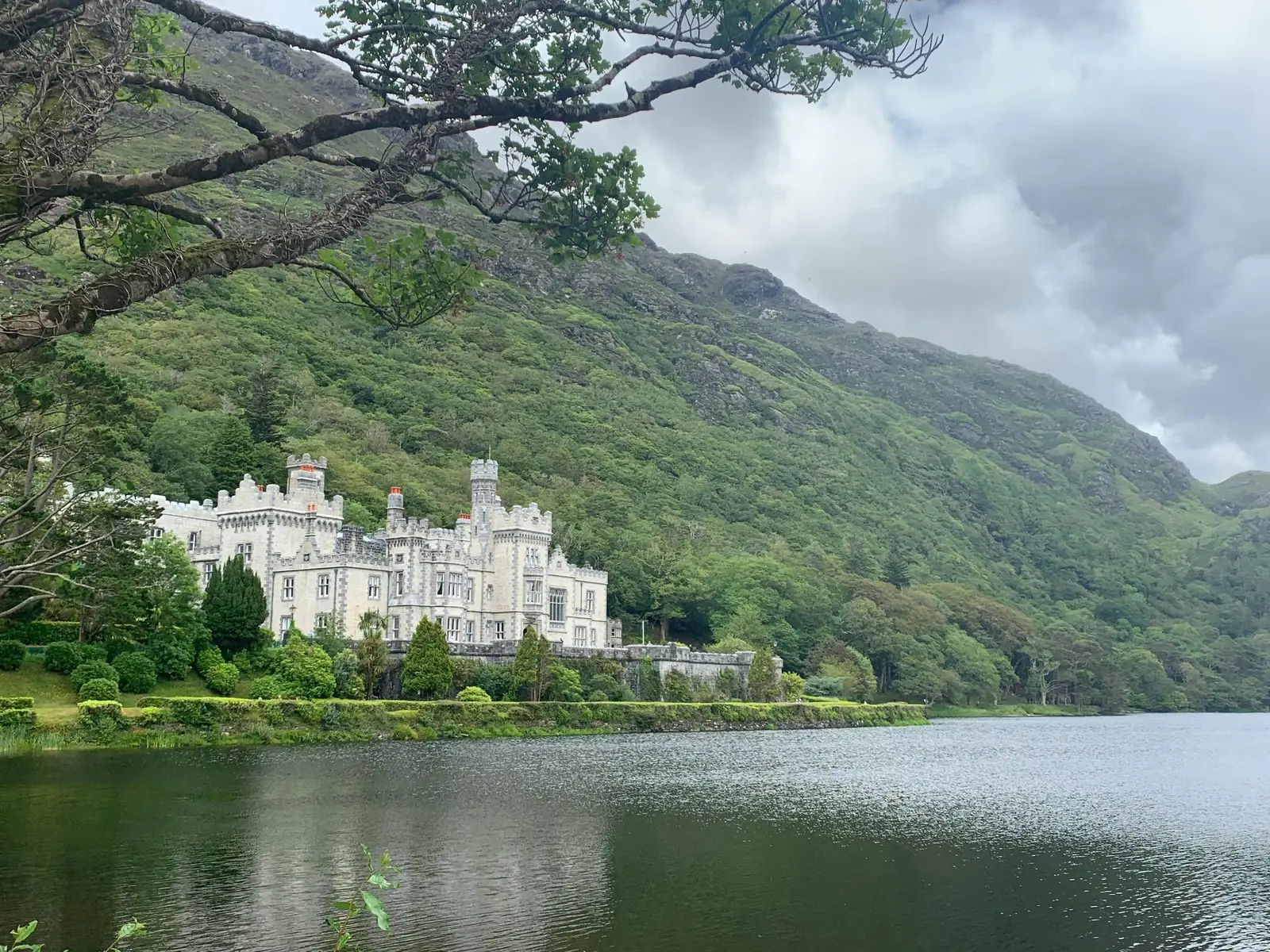
A Neo-Gothic manor of the 1830s on 840 acres in County Limerick, rebuilt over five years and reopened in 2017, with a Ryder Cup golf course wrapped around it and the River Maigue along one side.
The Grand Ballroom seats 300, which makes Adare the largest serious wedding room in Ireland, and there are 104 bedrooms across the Manor House, the River Wing and the West Wing. A wedding here asks for a minimum of 150 guests, a two-night stay and at least 25 bedrooms held.
This is where we send a large wedding that wants everything finished. Adare is the most polished property in the country and the least surprising, in the sense that nothing will go wrong and nothing will feel improvised.
What you give up is intimacy and idiosyncrasy. It is a resort as well as a house, with golf and other guests, and a couple who wants a castle that feels like theirs alone should look at Ballyfin or Ashford instead.
Castle Leslie Estate Wedding
A thousand acres of lakes and woodland in County Monaghan, held by the Leslie family since 1660, with a Victorian castle at the centre of it and a village at the gate.
The castle itself takes 70 and only midweek. The Pavilion, overlooking Glaslough Lake, seats up to 260, and there are around 95 bedrooms spread across the castle, the Lodge and the Old Stable Mews.
Castle Leslie is the answer to a problem the rest of this list cannot solve: a big guest list that all sleeps on the estate. Most Irish castles seat far more people than they can house, and this one closes that gap better than any of them.
It is also the least formal place here, in a way we mean as praise. There is a hunting lodge, a bar the family drink in, and a wedding at Castle Leslie feels like a house party that got large rather than a function that got dressed up.
Luttrellstown Castle Resort Wedding
A 15th-century castle on 567 acres of walled parkland at Castleknock, twenty minutes from Dublin Airport and inside the M50, which is a combination nothing else in Ireland offers.
The Van Stry ballroom seats 120 and the Kentian Room another 60, for a castle maximum of 180. There are 20 bedrooms in the castle and five more in the Gardener’s Cottage. The castle goes on sole hire.
The location is the argument. Guests fly into Dublin and are at the gate before they have finished complaining about the flight, which for a wedding with a scattered international list removes an entire day of transfers.
The trade is that the parkland has a city on the other side of the wall. Luttrellstown feels remote from inside and is not, and couples who came to Ireland for Connemara will feel that. For a two-night wedding with 90 guests flying in from four countries, it is the most sensible venue in the country.
Powerscourt House Wedding
A Palladian mansion above the Dargle valley in County Wicklow, with 47 acres of formal gardens falling away in terraces toward the Great Sugar Loaf, and a house gutted by fire in 1974 and partly rebuilt.
The double-height Georgian ballroom seats up to 180. The house has no bedrooms, which is the fact that shapes everything else about a Powerscourt wedding.
Forty-seven acres of formal terraces laid out over more than a century, and the ballroom opens straight onto them. For photographs there is nothing on this page in the same conversation.
But you are hiring a room in a house that closes to the public at five, not taking an estate for the weekend. Guests sleep elsewhere, which in Enniskerry and around Wicklow is easy and means coaches at the end of the night. Note that the Powerscourt Hotel is a separate business on the same estate, holds far more people, and is not this venue.
Ashford Castle Wedding
Eight hundred years of castle on the shore of Lough Corrib at Cong, County Mayo, Guinness family property for a century, and since a long restoration one of the two or three most decorated hotels in Europe.
Eighty-three rooms and suites, and celebrations of 40 to 160 guests. Above 40 the castle goes on sole use with a two-night minimum. There are two churches on the estate.
This is the one people picture when they say an Irish castle wedding, and for once the picture is accurate. Taking Ashford whole means the drawing rooms, the George V dining room, the wine cellar and the grounds, with no other guests anywhere in it.
The honest note is the number. Ashford is the most expensive wedding in Ireland by a distance and it does not have a smaller version of itself above 40 guests. The Lodge, a separate property on the same estate, reaches 186 in its Harbour Ballroom and is where we send couples who want Cong at a different budget.
Bantry House Wedding
An 18th-century house above Bantry Bay in west Cork, seat of the Earls of Bantry, with seven Italianate terraces climbing the hill behind it and a hundred-step staircase to a view down the whole bay.
The library and dining room take 90 to 120, and a marquee in the East Stables courtyard reaches 150.
West Cork is a long way from everywhere and that is the reason to come. Bantry is the least polished house on this list and the most atmospheric, a family home with the wear that implies, and the terraces at the back are one of the great settings in Ireland.
Two limitations, both real. It is three hours from Dublin and an hour and a half from Cork airport, so a guest list flying long-haul loses the better part of a day. And the house does not sleep a wedding, so accommodation is spread around Bantry town and the peninsula.
Ballynahinch Castle Wedding
A castle on a private 700-acre estate in the middle of Connemara, County Galway, with a salmon river running past the terrace and the Twelve Bens behind it.
Forty-eight bedrooms, and a reception of between 100 and 140 guests. A weekend wedding takes all 48 rooms for a minimum of two nights, so the whole house is yours and the whole house is also your responsibility to fill.
Connemara is the landscape people mean when they imagine the west of Ireland, and Ballynahinch sits in the middle of it without a neighbour in sight. The hotel takes very few weddings a year, which is a policy rather than a limitation and it shows in how the place is run.
The minimum is the thing to check first. A hundred guests is a floor, not a target, and a couple planning 60 people cannot have this venue for a weekend at any price.
Ballyfin Demesne Wedding
A Regency house of the 1820s on 614 acres in County Laois, restored over nine years at a cost nobody has ever fully disclosed, and reopened as a twenty-bedroom house that takes one booking at a time.
The ballroom seats 130 with the lake through the windows, and the house goes on sole use for a minimum of two nights. Twenty bedrooms plus a one-bedroom Gardeners’ Cottage.
Ballyfin is the most completely realised country house in Ireland and possibly in these islands. Nothing in it is approximate. For a wedding of 40 to 60 where everybody sleeps in the house and nobody leaves the estate for three days, there is no better answer anywhere on this page.
The gap between 130 seated and 40 sleeping is the constraint. Above about 60 guests a Ballyfin wedding becomes a logistics exercise with cars at midnight, and at that point the house is fighting you.
Ballintubber Abbey Wedding
A church founded in 1216 on a site where Saint Patrick is said to have baptised in 441, in County Mayo, and the only church in Ireland founded by a king where Mass has been celebrated continuously ever since.
This is a ceremony venue and nothing else. There is no reception, no dinner and no accommodation, and the row in the table above is lopsided for that reason. Booking is through the abbey directly.
It is twenty-five minutes from Ashford Castle, which is the reason it belongs on this page. A Catholic ceremony in a church that has held them without a break for eight hundred years, then Cong for the weekend, is a combination Ireland can offer and almost nowhere else can.
If neither of you is Catholic this is not your venue, and the abbey will say so kindly. Where it does apply, book the church before the castle: the abbey’s calendar is the less flexible of the two.
Castle Weddings in Ireland
A castle wedding in Ireland is a specific commercial arrangement, not just a backdrop, and understanding it early changes which venues a couple even looks at.
At almost every house on this page you are taking the building. Sole use, two nights minimum, every bedroom, and the property closed to anyone who is not at your wedding. That is the standard model here rather than an upgrade, and it is why the Irish floor price is high and the Irish top end is more relaxed than the French one.
Three consequences follow, and they surprise people in order.
The first is that bedrooms cap the wedding, not chairs. The second is that the weekend becomes the unit: a Friday dinner, a Saturday wedding and a Sunday lunch are all inside the hire, so what looks expensive against a French venue hire is being compared against the wrong thing. The third is the good one, and it is the licensing point below: with the house taken whole, everybody present is a resident.
Not everything here is a castle, and two of the strongest choices are not.
Powerscourt is a house you hire a room in and Ballintubber is a church, and both are on this list because they do something the castles cannot. Ireland’s country-house tradition runs wider than its castle tradition, and a couple set on turrets will walk past Ballyfin, which would be a mistake.
Where to Marry in Ireland
Ireland is not a coast, and the drive times matter more than a map suggests.
Nine venues sit across eight counties and four provinces, and the two-hour difference between Wicklow and Connemara decides what kind of weekend a guest has.
The east, meaning Dublin and Wicklow, is where a wedding goes when the guest list is international and short on time. Luttrellstown is twenty minutes from the airport and Powerscourt about forty, so people land and arrive.
The west, Mayo and Connemara, is where a wedding goes when the landscape is the point. Ashford, Ballynahinch and Ballintubber are here, three hours from Dublin and an hour and a half from Shannon, and nothing about the drive is a hardship.
The south, Limerick and west Cork, holds the two extremes of this list. Adare is the most finished property in Ireland and Bantry House the most weathered, and they are two and a half hours apart.
The midlands and the border, Laois and Monaghan, is where the two great sole-use estates are. Ballyfin and Castle Leslie are both roughly ninety minutes from Dublin and both feel considerably further, which is the point of them.
One planning note that applies everywhere. Ireland has no high-speed rail worth the name and coach transfers are the norm, so a venue’s distance from an airport is a real cost in both money and goodwill.
Can You Legally Marry in Ireland?
Yes, and unlike France this is not a technicality that gets worked around. The ceremony your guests watch in Ireland is the ceremony that marries you.
There is one requirement that governs everything, and it is a date rather than a document. You must give three months’ notice to a civil registrar before the wedding, whatever your nationality and wherever you live. No exceptions worth planning around, and no residency requirement to go with it.
For a couple living abroad, the notice starts by post. You contact an HSE Civil Registration Service office, they send the forms, and the completed notification has to be back with the registrar no later than three months before the date. You then attend a meeting in person before the wedding, and the registrar issues a Marriage Registration Form.
Without that form there is no legal wedding, whatever else has been arranged.
Where the ceremony can happen depends on who conducts it. A civil registrar can marry you at a registry office or at a venue the registrar has approved, and an approved venue costs an additional fee. A religious ceremony is legally binding in its own right, which is why a Catholic wedding at Ballintubber followed by dinner at Ashford is one legal event rather than a performance following a formality.
Bring original birth certificates or certified copies. If yours was issued outside the EU it will likely need an apostille, which is the step most often left too late.
Compare that with France, where a foreign couple cannot legally marry at all and the ceremony on the day is symbolic by necessity. Ireland asks for three months of paperwork and gives you a real wedding at the end of it.
Planning a wedding in Ireland?
INQUIREMusic Curfew and Late Licences in Ireland
This is where Ireland quietly beats most of Europe, and almost nobody selling Irish weddings explains why.
The limit here is a licensing question rather than a noise one. There is no prefectural arrêté setting an hour for outdoor music the way there is across France, because these are large private estates with no neighbour to protect. What binds instead is what time a bar may serve.
A standard bar licence runs to 00:30 and a late licence to 02:30. Then comes the clause that matters: a hotel may continue to serve its own residents after the public licence ends, with no fixed hour attached.
Now put that beside the sole-use model. At a house taken whole, every guest at the wedding is a resident of the hotel.
The public closing time stops applying to a wedding where there is no public. That is the structural reason Irish castle weddings run to three and four in the morning while a Saint-Tropez wedding is loading coaches at half past eleven, and it is worth more to the shape of a night than any amount of production.
Two cautions. It varies house by house, so confirm which licence your venue holds and what it actually does after 02:30 rather than assuming. And a venue that is not taken whole, Powerscourt House being the obvious case here, does not get the benefit at all.
Getting Guests to Ireland
Ireland is the easiest destination on this site to reach from the United States, and the reason is a piece of administration rather than a flight.
Dublin and Shannon both hold US Customs and Border Protection preclearance, which only sixteen airports in the world do. American guests clear US immigration and customs in Ireland before boarding the flight home, then land in the States as domestic passengers with no queue at the other end. For an older guest list at the end of a long weekend this is a genuine kindness.
Direct routes run from around fifteen US cities including New York, Boston, Chicago, Washington, Los Angeles and San Francisco. The east coast flights are overnight and about six hours.
Dublin serves the east: 20 minutes to Luttrellstown, about 40 to Powerscourt, and roughly 90 minutes to Ballyfin or Castle Leslie.
Shannon serves the west and is the better airport for four of these venues. Adare is about 40 minutes away, Ashford and Ballynahinch around an hour and a half.
Cork carries UK and European routes rather than transatlantic ones, and is the airport for Bantry at about ninety minutes.
Then the part to plan properly. Ireland has no useful rail for these journeys and the roads west are single carriageway for long stretches, so guests move by coach and the transfer is a real leg of the weekend rather than a detail. We build the arrivals plan around two airports rather than one whenever the list is transatlantic, and we send people to Shannon far more often than they expect.
Season and Weather in Ireland
May to September, and June and September are the two we recommend.
The honest position on Irish weather is that it is changeable rather than bad. Rain arrives in bands, crosses in twenty minutes and leaves the light that everyone photographs, and a day here will often give you sun, cloud and a shower before dinner. What it will not reliably give you is a guaranteed dry afternoon in any month.
Plan so that nothing essential depends on the sky.
Every house on this page has an indoor ceremony option and most of them are better rooms than the lawn they replace, which is the difference between an Irish wedding and a Mediterranean one where the indoor fallback is a function room nobody wants. Booking a marquee you may not use is not waste; it is the cost of holding the date.
June has the long evenings, with usable light until after ten at night this far north, and that single fact reorganises the day: ceremonies can run later, dinner can start at eight, and the photographs happen after the main course rather than instead of it. September is drier than August and the houses are easier to book.
Winter weddings do happen here, mostly at the houses with big fires, and Bantry House works in winter by design.
Where Guests Stay in Ireland
The sole-use model answers this question and then creates a second one.
At most of these venues the wedding party sleeps in the house, which removes transfers, removes the end-of-night taxi problem and turns the weekend into one continuous event. That is the version of a destination wedding everyone hopes for, and in Ireland it is the normal one.
The second question is what happens to everyone who does not fit.
Ballyfin has 20 bedrooms against 130 seats and Luttrellstown 25 against 180. At those houses more than half of a large guest list sleeps off the estate, and the surrounding accommodation varies from excellent to thin depending on the county. Wicklow and Dublin are easy. Laois and Monaghan need more work, and west Cork needs the most.
Castle Leslie and Ashford are the two that come closest to housing everybody, at around 95 and 83 rooms.
Ireland does have a full range of prices, unlike Monaco, so guests can choose their own level once you are past the estate itself. Country house hotels, town guesthouses and a deep rental market all exist within a half-hour of most of these venues.
We hold estate rooms as soon as the date is fixed, because sole use means the house is allocating all of its inventory to one wedding and there is no later.
Magic Day Insights
Count beds before chairs. Every Irish venue conversation should start with how many people sleep on the estate. The seated capacity is the number in the brochure and the bedroom count is the number that shapes the weekend.
Give notice at three months and treat it as immovable. The three-month notification is a legal deadline, not an administrative one, and no venue, registrar or planner can compress it. It is the single most common reason an Irish date has to move.
The residents’ bar is the whole night. Confirm in writing what the house does after 02:30 and whether your booking gives everyone resident status. It is worth more than an extra band.
Send people through Shannon. Guests default to Dublin and then drive three hours west. For Adare, Ashford and Ballynahinch, Shannon is closer, quieter and has the same preclearance.
Book the church before the house. Where a religious ceremony is part of it, and at Ballintubber especially, the church calendar is less flexible than the castle’s.
Buy the marquee you might not need. An Irish weather plan that exists only on paper is not a plan. Price the wet option at the start so nobody has to make that decision in the week of the wedding.
Sole use cuts both ways. Taking the house whole means no strangers, and it also means minimum guest counts, minimum nights and a floor price that does not care how small your wedding is. Ballynahinch will not do a weekend under 100 people.
Adare and Ballyfin are not competitors. They are the two ends of Irish hospitality: one is a resort that does everything at scale, the other is a house that does one thing at a time. Couples who like both usually have not worked out what they want yet.
Wedding Planner Ireland
Magic Day has been established in Dublin at 68 Merrion Square S since 2021. By appointment only.
Magic Day has planned weddings across 11 countries since 2008, and Ireland is the one where the venue conversation is really a hotel conversation. That changes what a wedding planner in Ireland is actually for.
What a hire covers here is unusually large: the house, every bedroom in it, two or three nights, and the grounds with nobody else on them. What it does not cover is everything that makes those nights work. Sole use means you have taken on a small hotel for a weekend, with arrivals, meals, transfers and a schedule for sixty to a hundred and fifty people who are all in the same building and all your responsibility.
Then the legal side, which is a calendar problem more than a paperwork one. Three months’ notice to a registrar, a meeting in person, a Marriage Registration Form, apostilled birth certificates for anyone born outside the EU, and a decision early on about whether a registrar or a religious solemniser is conducting the ceremony, because that decides where it can happen.
The rest is Irish geography and Irish weather. Two airports, eight counties, coach transfers of up to three hours, and a plan for rain that has to be good enough that using it feels like a choice.
Tell us the guest count, the month and whether the ceremony is civil or religious, and we will tell you which of these nine will actually hold your wedding.
Common Questions
How much does an Ireland wedding cost?
An Ireland wedding runs €60,000 to €300,000 all-in for 40 guests, €100,000 to €600,000 for 80, and from €200,000 at 150. Catering is €115 to €325 a head. The shape of an Irish budget differs from a French one: most of these houses require sole use and a two-night minimum, so the floor is high and each additional guest costs comparatively little. A wedding of 40 here is not a small budget. Magic Day weddings in Ireland start from €100,000.
Can you legally get married in Ireland?
Yes, with one hard requirement: three months' notice to a civil registrar before the date, whatever your nationality and wherever you live. Couples living abroad can start it by post through an HSE Civil Registration Service office, then attend a meeting in person before the wedding, and the registrar issues a Marriage Registration Form without which no ceremony is legal. There is no residency requirement and no minimum stay. A civil ceremony happens at a registry office or a venue the registrar has approved; a religious ceremony is legally binding in its own right.
What are the best wedding venues in Ireland?
Nine we argue for, out of a much longer field. Adare Manor in Limerick seats 300 and Castle Leslie's Pavilion 260, which makes them the two answers to a large guest list. Ashford Castle in Mayo takes 160 with the castle taken whole. Ballyfin in Laois seats 130 against twenty bedrooms and is the most complete country house in the country. Ballynahinch sits on 700 acres of Connemara, Powerscourt opens onto 47 acres of formal terraces, and Bantry House looks down its own terraces at the bay.
What time does music have to stop at an Irish wedding?
Later than almost anywhere in Europe, and it is a licensing question rather than a noise one. A standard bar licence runs to 00:30 and a late licence to 02:30, and after that a hotel may serve its own residents with no fixed end. That last clause is why Irish castle weddings run so late: at a house taken whole every guest is a resident, so the limit that empties a French wedding at midnight does not apply. Confirm which licence your venue holds, because it varies house by house.
How many guests can you have at an Irish castle wedding?
Up to 300 at Adare Manor and 260 in Castle Leslie's Pavilion. Below that, Luttrellstown and Powerscourt both reach 180, Ashford Castle 160, Bantry House 150 with a marquee, Ballynahinch 140 and Ballyfin 130. The number that binds is usually bedrooms rather than seats, because most of these houses require sole use and a two-night stay: Ballyfin seats 130 and sleeps about 40, so the guest list splits between the house and the villages around it.
Which airport is best for an Ireland wedding?
Dublin for most guests, Shannon for the west. Both hold US Customs preclearance, which only sixteen airports in the world do, so American guests clear US immigration in Ireland on the way home and land as domestic passengers. Direct routes reach around fifteen US cities including New York, Boston, Chicago, Los Angeles and San Francisco. Dublin is 20 minutes from Luttrellstown and 40 from Powerscourt; Shannon is closest to Adare, Ashford and Connemara. Cork serves Bantry.
When is the best time to get married in Ireland?
June and September. The season runs May to September, and Ireland's weather is changeable rather than bad: rain arrives in short bands and clears, which is why every one of these houses has an indoor ceremony option that is not a compromise. June has the longest evenings, with light until after ten at night. September is drier than August and the houses are easier to get. Plan the day so nothing depends on the sky.
Do you need a wedding planner in Ireland?
For a wedding at one of these houses, yes, and for a specific reason: almost all of them are sole-use properties taken for two or three nights, which means you are not booking a reception, you are running a small hotel for a weekend. Add the three months' notice, the Marriage Registration Form, a guest list arriving through two airports into eight counties, and a weather plan that has to be real rather than decorative. Magic Day has planned weddings across 11 countries since 2008.
Planning a wedding in Ireland?
Thank you — we have it.
One of our planners will be in touch personally, usually within one working day.