
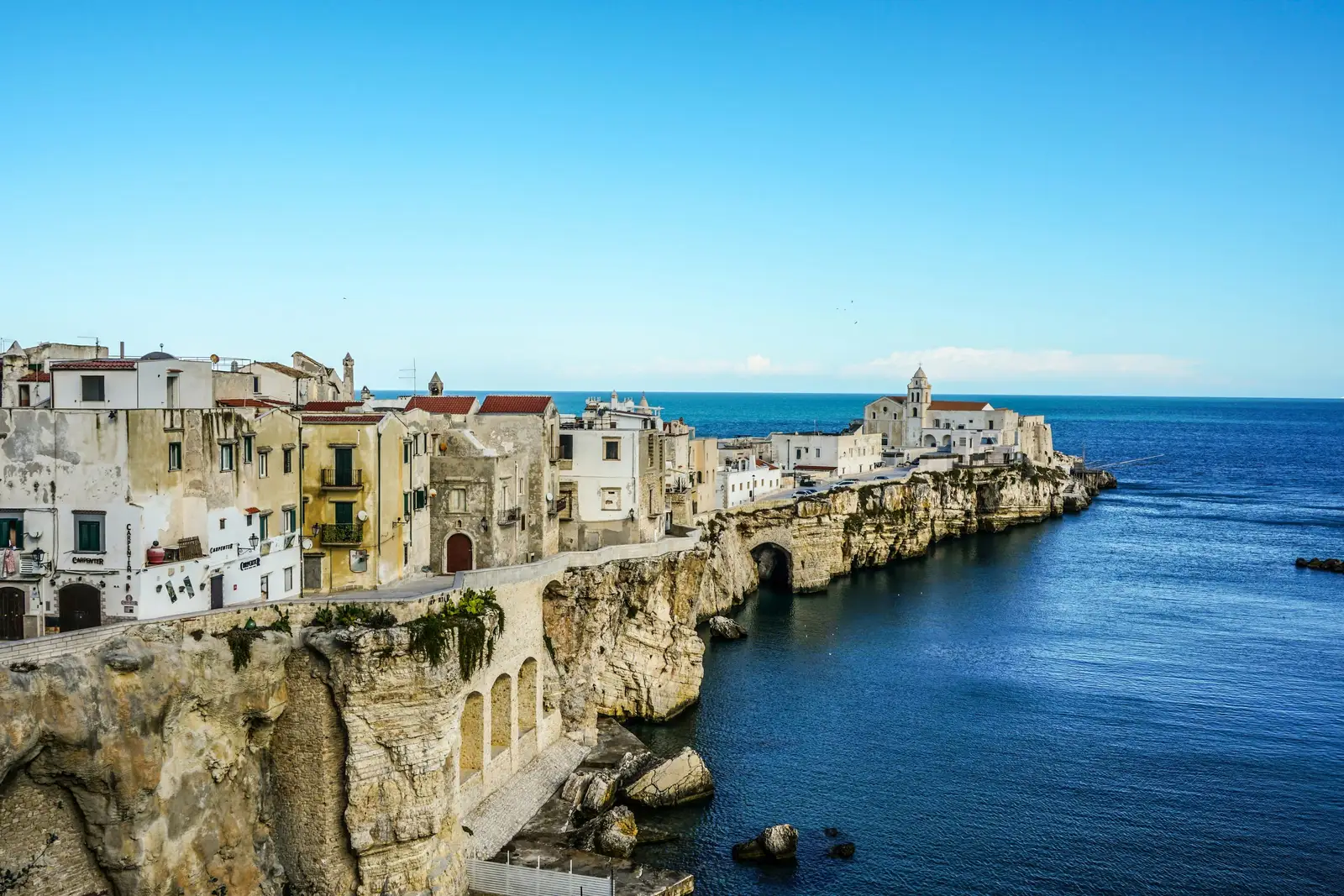
What a Puglia Wedding Costs
A Puglia wedding runs €30,000 to €250,000 all-in for 40 guests, €60,000 to €600,000 for 80, and from €150,000 at 150. Catering is €150 to €350 a head before drinks. Magic Day weddings in Puglia start from €100,000.
Puglia has the widest price range of any region in Italy, and the reason is that it is two markets wearing the same landscape.
At one end are the Salento conversions: an eight-bedroom former monastery or a nine-suite masseria outside Lecce, taken whole for a weekend at a figure that would rent a modest villa in Tuscany. At the other is the Savelletri cluster, four properties within fifteen minutes of each other operating at international resort prices, one of them at a level nothing else in the region approaches. At Borgo Egnazia, the one at the top, a wedding runs €550,000 to €2.5 million all-in.
A couple who has read two Puglia articles has usually seen prices from both ends and averaged them, which produces a number that describes nothing.
Against the rest of Italy the picture is simpler. Puglia is materially cheaper than the Amalfi Coast or the Italian Lakes at a comparable standard, and the gap is largest on accommodation, because Puglia has depth at three and four stars that Ravello and Como simply do not.
What costs more here than people expect is production. A masseria is a converted farm: beautiful, old, and frequently without the power, the kitchen or the covered space a wedding of 150 needs. Generators, marquees, mobile kitchens and the crew to run them arrive by lorry, and on a rural property that bill is a real fraction of the total rather than a line at the bottom.
The other cost is distance. Puglia is long, and a venue in Salento with guests in Ostuni is an hour of coaches in each direction.
Puglia Wedding Venues
Twenty-two properties, and unlike a French region page this is a selection out of a large field rather than anything close to a census. Puglia has hundreds of masserie taking weddings. These are the ones we would argue for, and they are chosen to cover the range rather than to crown a winner.
Read the seated column against the rooms column, because in Puglia those two numbers disagree more than anywhere else on this site.
Masseria Le Carrube seats 300 and sleeps 19. That is normal here, not an outlier, and it is the single most important thing to understand before falling for a photograph: a Puglian masseria is a party venue with a small hotel attached, not a hotel that also does weddings.
Borgo Egnazia
A village built from scratch in Apulian limestone above the Adriatic at Savelletri, with a piazza, a clock tower, and olive groves on three sides of it. La Piazza seats 350 under the tower and the property sleeps more than 300 across 185 rooms, suites and villas, which makes it the only venue in Puglia that can hold a large wedding and house it at the same time. It is the largest thing on this page and the most expensive, and its own page carries the cost, the spaces, the room block and the season.
Masseria Torre Coccaro
A sixteenth-century fortified farm at Savelletri with a watchtower over it, thousand-year-old olives around it and a beach club cut into the rocks below. The party ends underground in the old olive mill, where there is no music limit at all.
Read the full Masseria Torre Coccaro wedding guide for its spaces, the rooms it can and cannot offer, and what a wedding there costs.
Masseria Le Carrube Wedding
At the foot of Ostuni, the white town on the hill, in a garden of orange trees and old olives with an ancient oil mill at the centre of the building.
Le Carrube seats 200 inside the mill among the millstones, or up to 300 outdoors in the orange groves and the Mediterranean garden. Nineteen keys, 12 rooms and 7 suites.
The oil mill is the reason to come. A wedding dinner underground among stone presses is a room nobody else on this page can offer, and it solves the weather question and the heat question in the same move.
Ostuni is fifteen minutes up the hill, which matters more than it sounds: it is the most photographed town in Puglia and it has the hotels and restaurants a wedding weekend needs. The gap between 300 seated and 19 rooms is the widest here, so plan the accommodation before the guest list.
Castello di Ugento Wedding
A 17th-century castle in the historic centre of Ugento, deep in Salento, restored over years with Norman frescoes in the ballroom and a walled kitchen garden behind.
The castle takes up to 250 across its spaces, with the courtyard seating 90 of them under the walls. Eight suites in the castle itself and twelve more at Masseria le Mandorle five minutes away, with a shuttle between them. Weddings require a stay of at least two nights, and the castle quotes its hire on request.
This is the answer for a couple who wants a castle rather than a farm, and Puglia has surprisingly few. The courtyard at night with the walls lit is the strongest single space in Salento, and the ballroom gives you a real wet-weather room rather than a compromise.
Ugento is an hour and a quarter from Brindisi and nearly two from Bari, which is the trade. Salento is the better half of Puglia and the further half, and a guest list arriving from three countries will feel those extra forty minutes.
Masseria San Domenico
A fifteenth-century watchtower farm on the coast at Savelletri, now a five-star hotel in 150 acres of olives, with a free-form pool of filtered seawater cut into the rock. Two private beach clubs, a thalassotherapy spa and a golf course fill the days either side.
Read the full Masseria San Domenico wedding guide for its spaces, the buyout and what a wedding there costs.
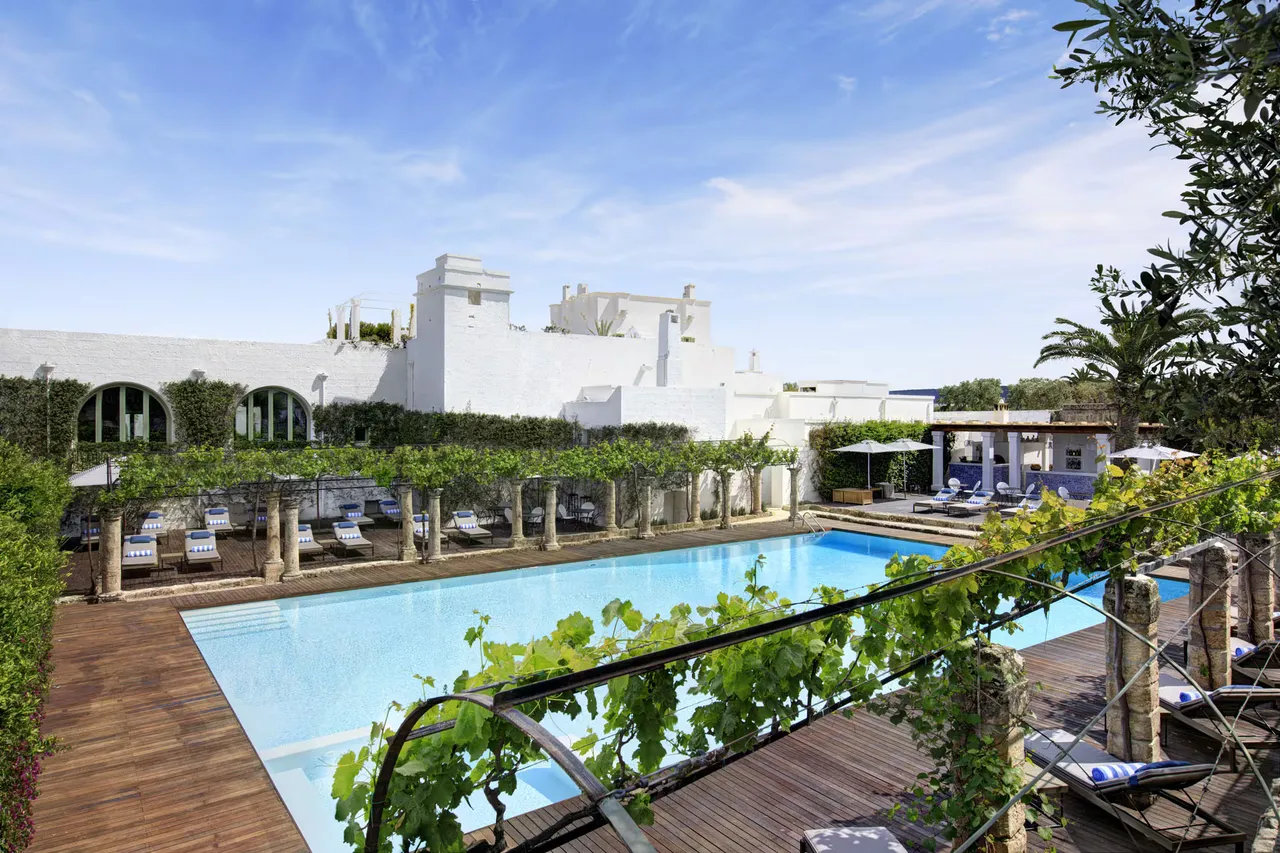
Masseria Torre Maizza
A sixteenth-century masseria at Savelletri rebuilt by Rocco Forte into 51 rooms and suites, with a nine-hole course through the olives, a beach club on the rocks and a rooftop that faces the sunset. A wedding takes the whole hotel for three nights.
Read the full Masseria Torre Maizza wedding guide for its spaces, the sole-use terms and what a wedding there costs.
Masseria Trapanà Wedding
Six hectares of olive grove outside Lecce, a restored masseria of nine suites, ten minutes from the Adriatic and about the same from the baroque centre of Lecce.
Nine suites, two of which combine, and the whole property goes as one booking. There is no seated figure, because at a hire like this the number is a function of what you build in the garden rather than a room the property publishes.
Trapanà is the Salento version of taking a house, and it is the most personal wedding on this page. Everybody sleeps in the same building, dinner happens in the grove, and there is no other party, no day guest and no schedule but yours.
Nine suites is the constraint stated plainly. This works at 30 to 50 people with a handful staying in Lecce, and it does not stretch. Lecce being fifteen minutes away is the reason it works at all.
Convento di Santa Maria di Costantinopoli Wedding
A 500-year-old former Franciscan monastery on the edge of Marittima in deep Salento, near the Adriatic cliffs, restored as an eight-bedroom house and filled with the owners’ collection rather than decorated.
Eight bedrooms, and the property goes whole.
This is the smallest and the most particular venue on the page, and for the right wedding there is nothing else like it in Italy. A cloister, a walled garden, and a house that feels lived in rather than staged.
It suits a wedding of about 30 and it will not pretend otherwise. Marittima is a long way from both airports, there is very little around it, and that isolation is either the whole appeal or a reason to look at Lecce instead. We would not put a first-time destination wedding here without a conversation about the drive.
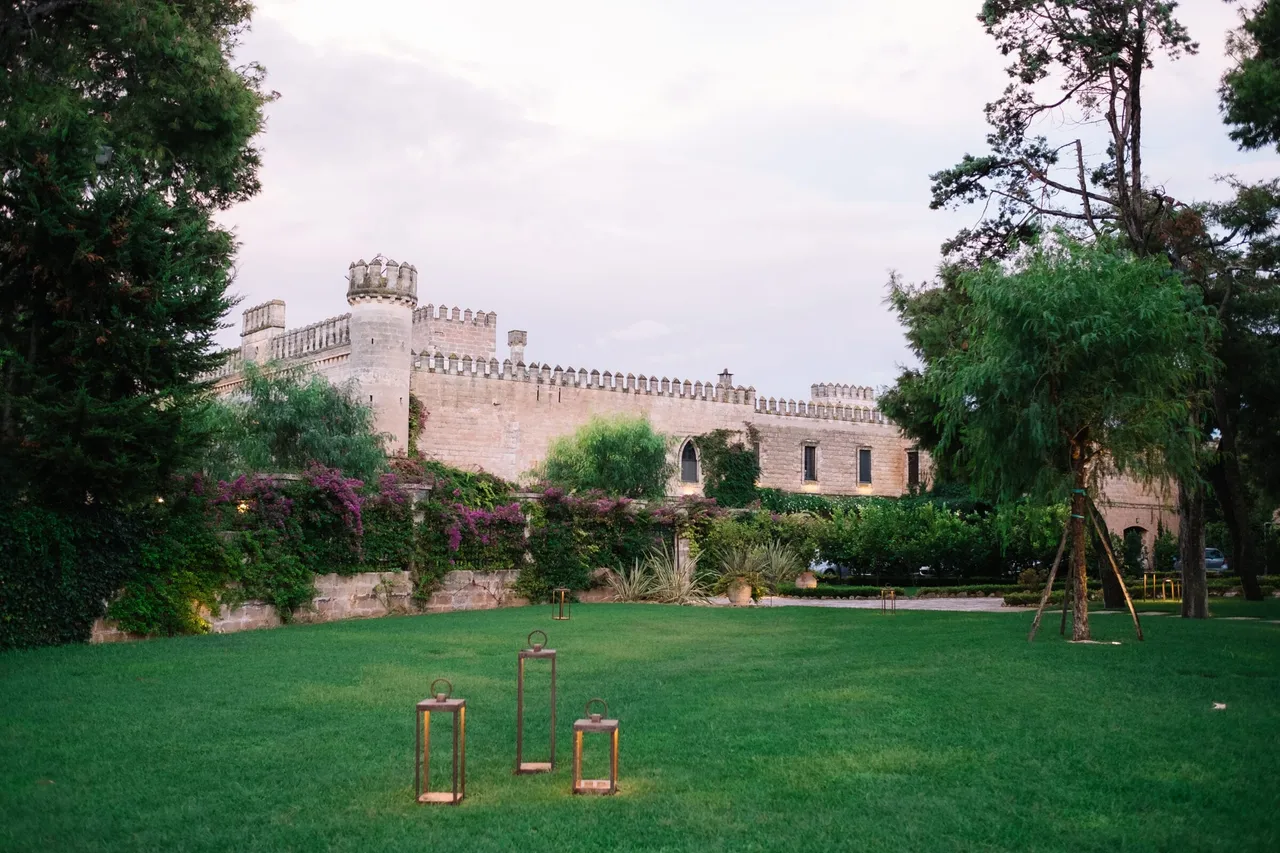
Castello Monaci
A castle of the 1500s in the middle of Salento, with a eucalyptus avenue leading in and a working winery in the cellar under the courtyard. It is one of the few properties in Puglia licensed for a legally binding civil ceremony, and the hire runs to two in the morning with no restriction on the music.
Read the full Castello Monaci wedding guide for its spaces, the rooms and what a wedding there costs.
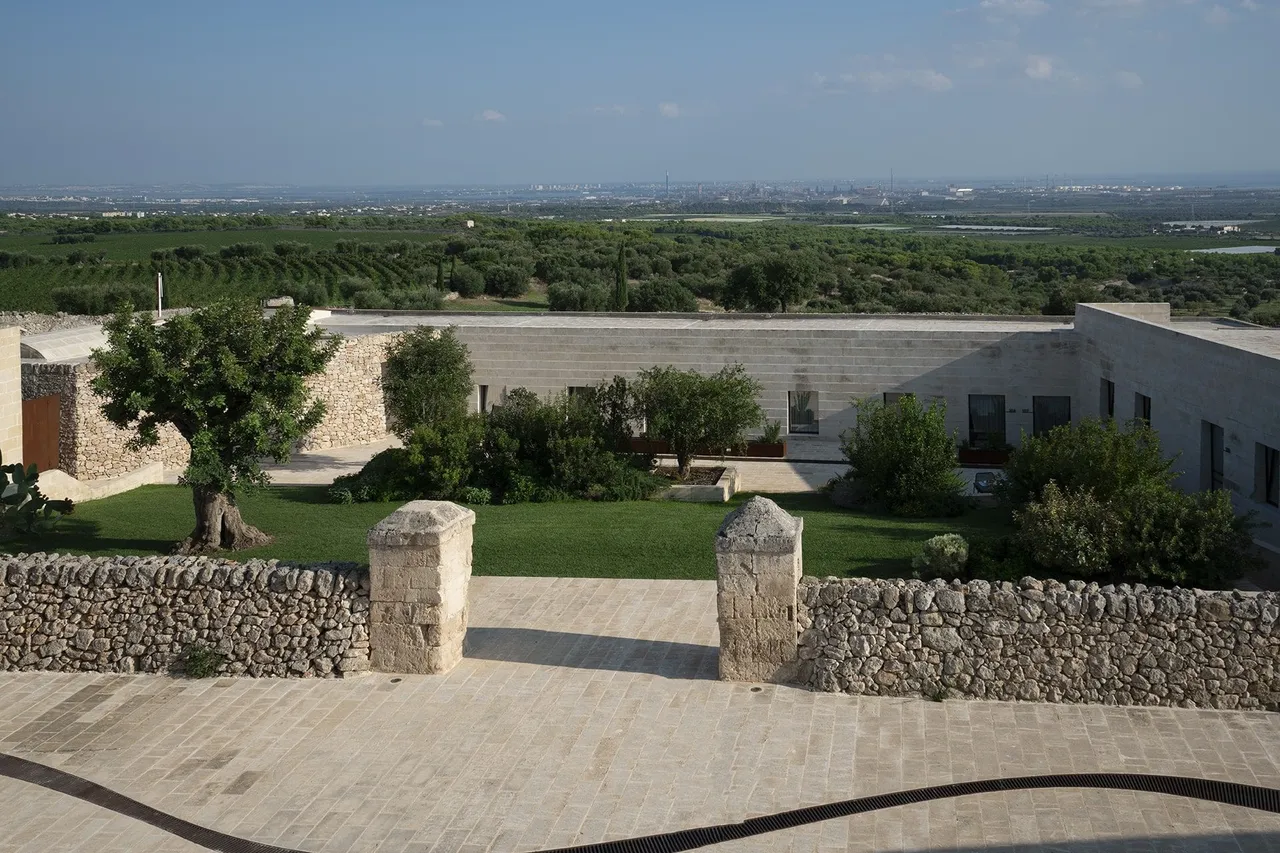
Masseria Amastuola
A fifteenth-century farmhouse on a ridge in the Parco delle Gravine, restored as a wine resort, with a hundred hectares of vineyard that Fernando Caruncho laid out in waves. A civil ceremony is registered here through the comune of Crispiano.
Read the full Masseria Amastuola wedding guide for its spaces, the buyout and what a wedding there costs.
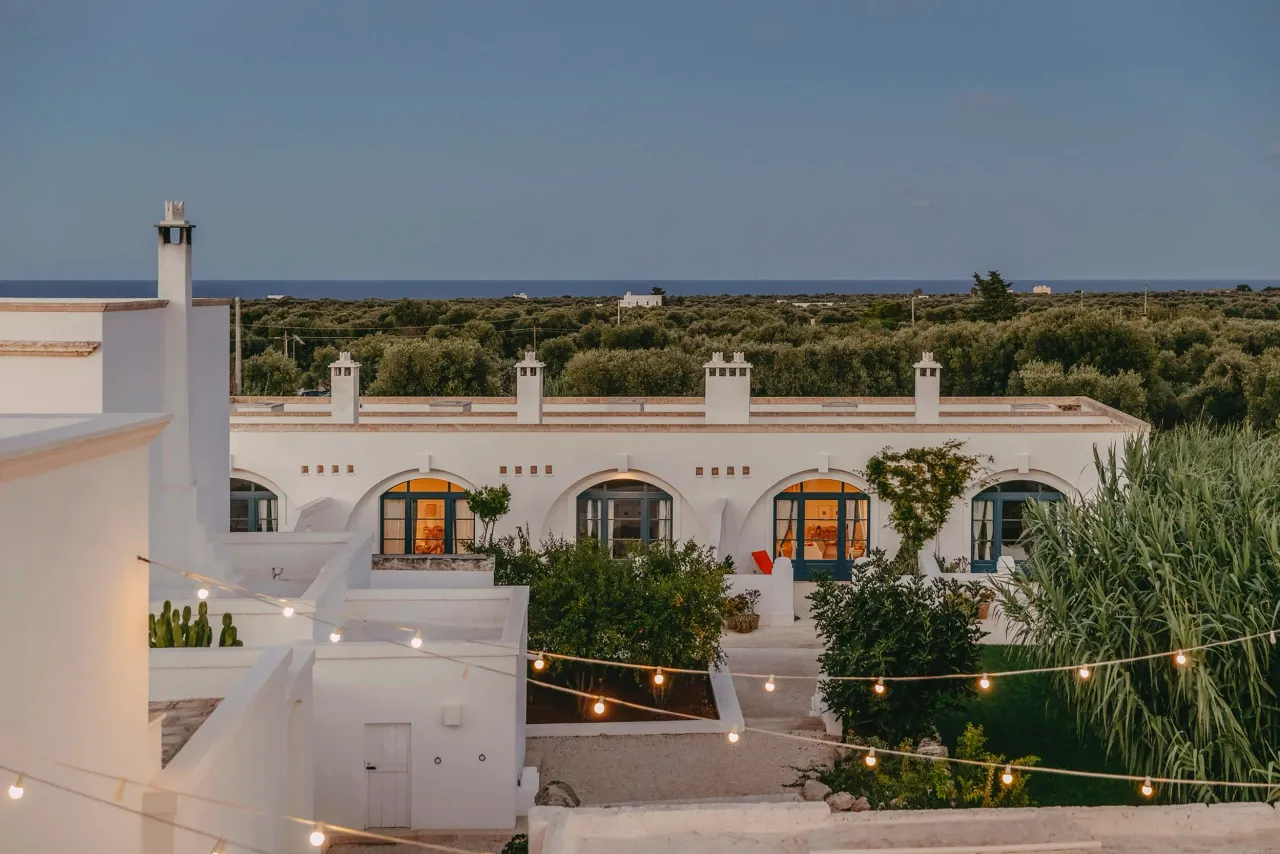
Masseria Calderisi
A long white masseria in olive country four kilometres inland of Savelletri, with a heated pool, twenty-four rooms and a beach club of its own on the coast. The outdoor music runs to three in the morning and the old olive mill takes it to five, which is the latest on this coast.
Read the full Masseria Calderisi wedding guide for its spaces, the sole-use terms and what a wedding there costs.
Masseria Don Luigi
A white masseria outside Fasano with a lagoon pool, a lemon garden and an olive grove strung with lights that seats more than 300. It is an official municipal house, so the civil ceremony happens on the lawn rather than at a town hall.
Read the full Masseria Don Luigi wedding guide for its spaces, the fees and what a wedding there costs.
Masseria Auraterrae
A masseria on the high ground above Polignano a Mare, looking over vineyards and centuries-old olives to the Adriatic, with a chapel of its own. It holds civil ceremonies, which most of the region cannot, and it is the closest venue on this page to an airport and to a town worth an evening.
Read the full Masseria Auraterrae wedding guide for its spaces, the buyout and what a wedding there costs.
Masseria Potenti
A working organic farm near Manduria that one family bought as a ruin in 2003, pressing its own oil, bottling its own primitivo and milling its own flour. It is the one venue in this region that sets no time limit on the party at all.
Read the full Masseria Potenti wedding guide for its spaces, the sole-use terms and what a wedding there costs.
Masseria Montenapoleone
An organic farm ten minutes above Savelletri with a lagoon pool, a bio restaurant and a treatment room that makes its own preparations from Puglian plants. Three things are bought together here: three nights, all 24 rooms, and an event on every day of the stay.
Read the full Masseria Montenapoleone wedding guide for its spaces, the guest floor and what a wedding there costs.
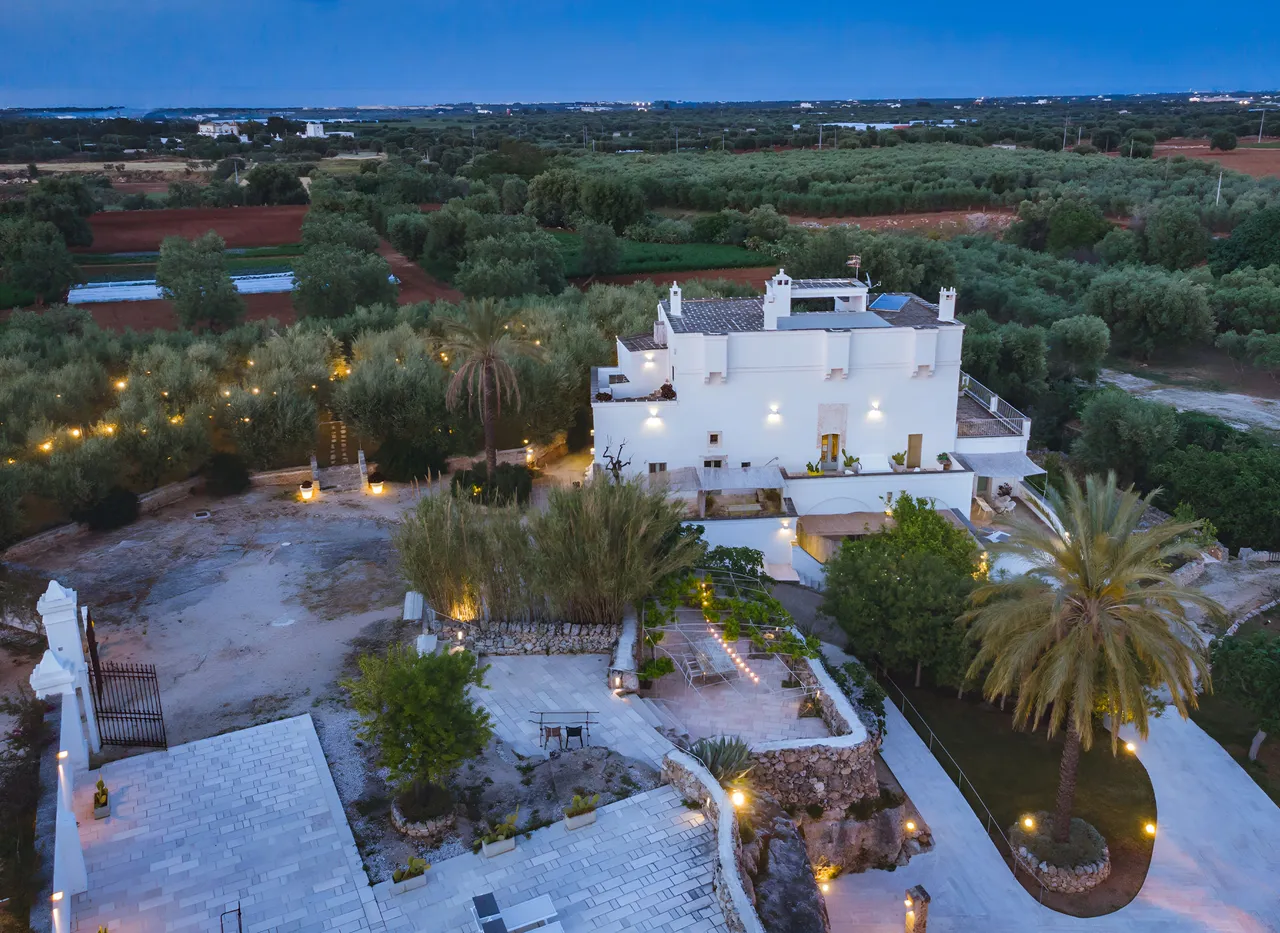
Masseria Alchimia
A small Swiss-run masseria behind Savelletri, with an Apulian piazza for the dinner and an old olive mill cut into the rock for the party. Civil ceremonies are held here, the grotto has no curfew at all, and 75 further beds lie within walking distance.
Read the full Masseria Alchimia wedding guide for its spaces, the package and what a wedding there costs.
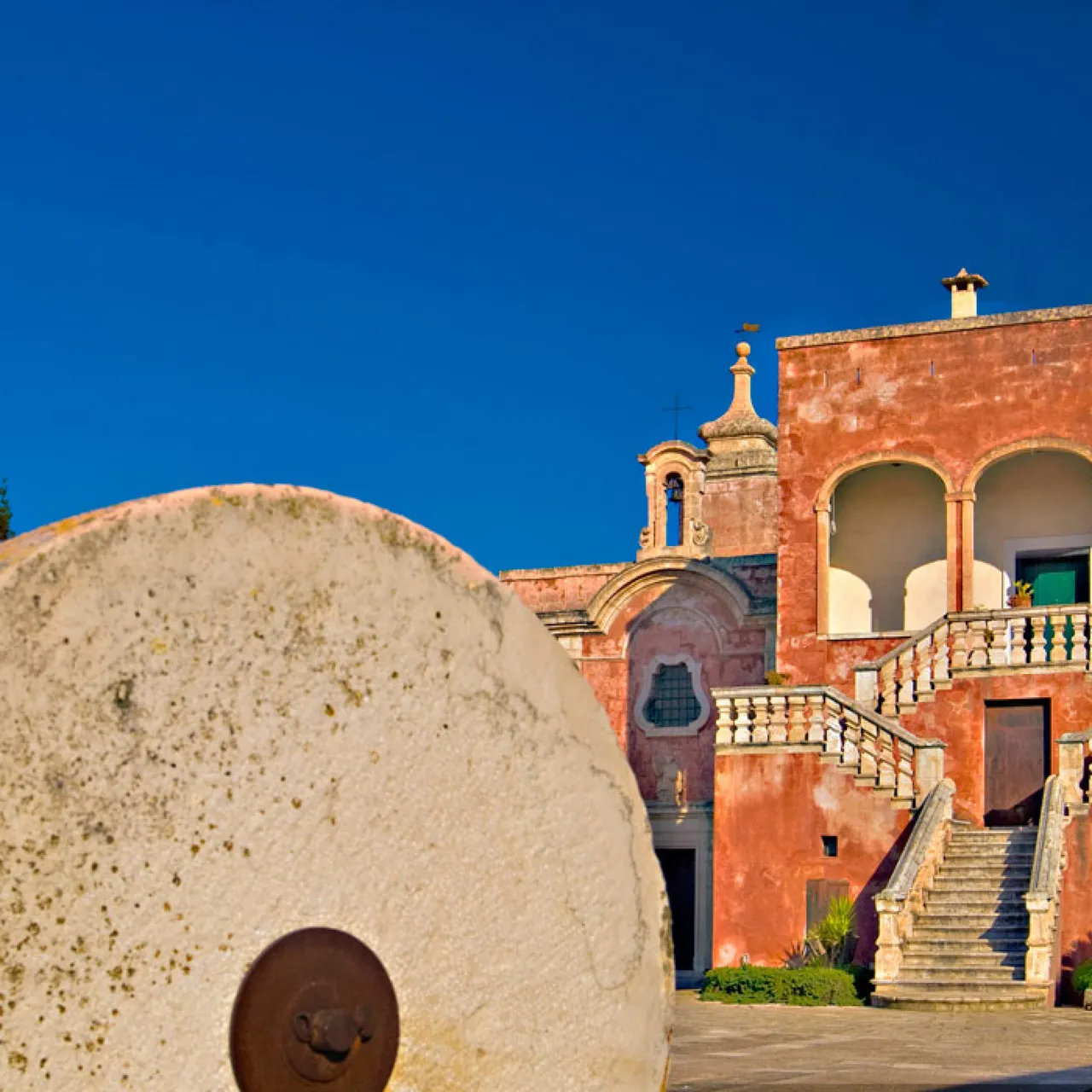
Masseria Spina
A fortified farm in Monopoli’s rural park with a red-ochre baroque façade, a watchtower looking at the sea and an olive mill cut into the rock beneath it. The music runs to three in the morning if the residences are taken and stops at half past eleven if they are not.
Read the full Masseria Spina wedding guide for its spaces, the residences and what a wedding there costs.
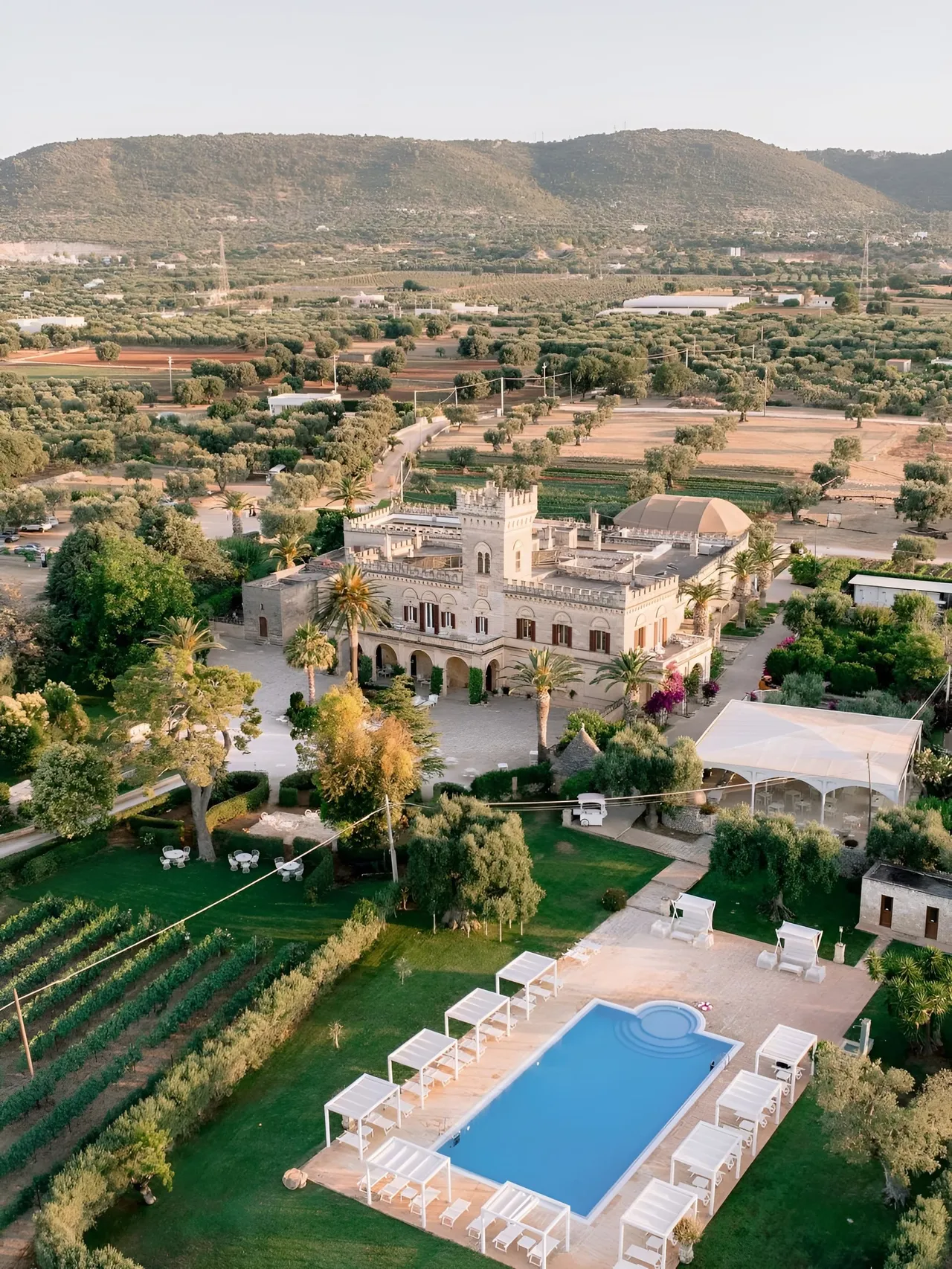
Masseria Salamina
A crenellated manor of the 1600s at Pezze di Greco, with arcaded loggias, a chapel and a tiled staircase hall hung with family portraits. A civil ceremony is arranged through the registry office at Fasano, and its indoor rooms make an autumn wedding a plan rather than a gamble.
Read the full Masseria Salamina wedding guide for its spaces, the private use and what a wedding there costs.
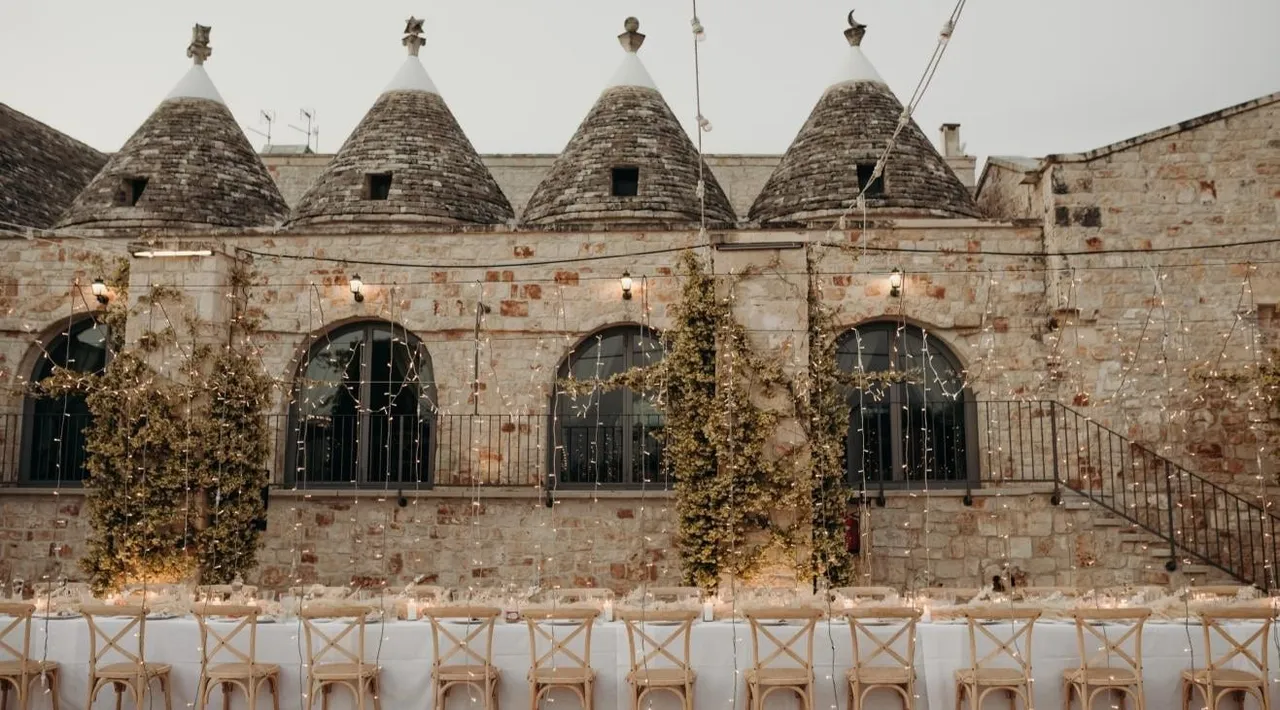
Masseria Grieco
A two-storey masseria six minutes from Ostuni with eight conical trulli standing round its square, reached down a long drive between dry-stone walls. The curfew is the strictest in the region and the masseria says in writing that it cannot be extended.
Read the full Masseria Grieco wedding guide for its spaces, the hours and what a wedding there involves.
Masseria Santo Scalone
A white masseria in the olive groves outside Ostuni, with its own chapel, a pool edged in agapanthus and a vaulted dining room under hanging lights. It charges the same for three nights midweek as at a weekend, which nothing else here does.
Read the full Masseria Santo Scalone wedding guide for its spaces, the three services and what a wedding there costs.
Masseria Moroseta
A white stone farmhouse on a ridge above Ostuni, built new in the old manner and one of the most photographed buildings in Puglia. Ninety guests is a hard ceiling, six bedrooms sleep the closest, and the masseria hosts no wedding without a professional planner running it.
Read the full Masseria Moroseta wedding guide for its spaces, the sole-use terms and what a wedding there costs.
Palazzo Daniele
A nineteenth-century palazzo on the main street of a village at the bottom of the heel, with a great arcaded courtyard and frescoed ceilings above rooms stripped back to bare plaster. The ceremony can only be symbolic and the music stops at about half past midnight.
Read the full Palazzo Daniele wedding guide for its spaces, the buyout and what a wedding there costs.
Venue guides in Puglia
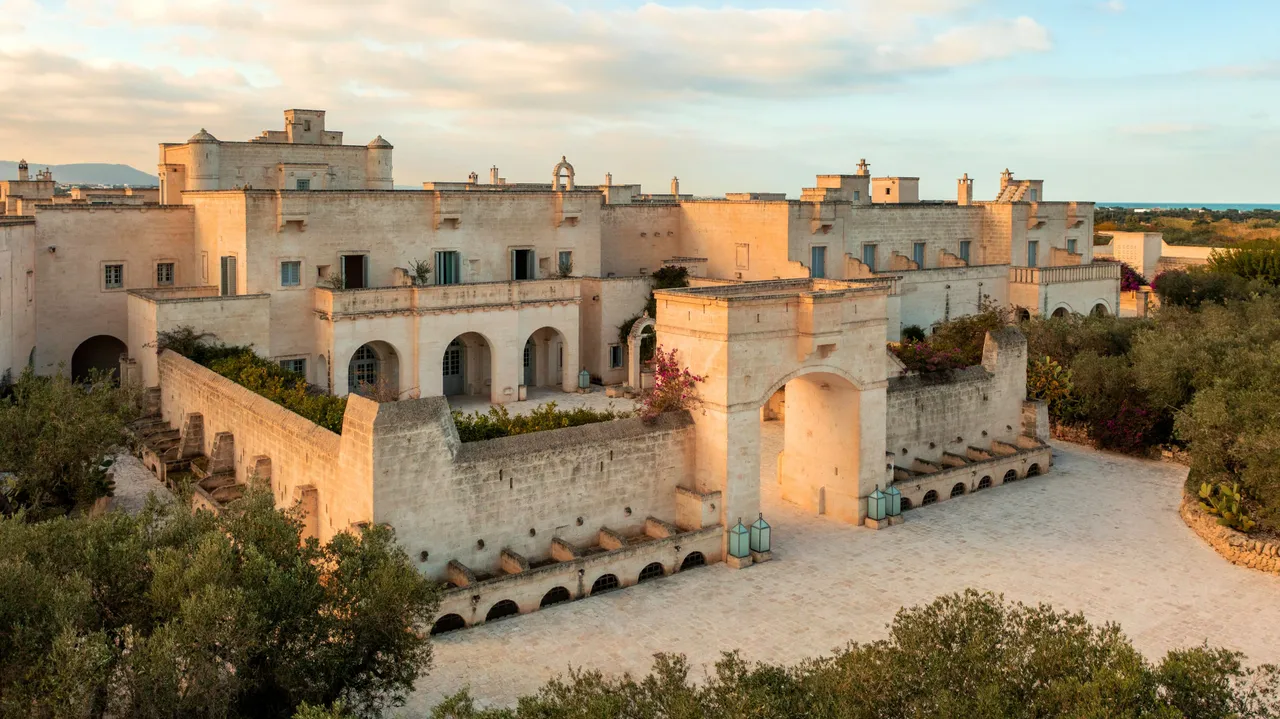 Borgo Egnazia
- Maximum capacity
- 350 guests
- Starting budget
- €550,000+
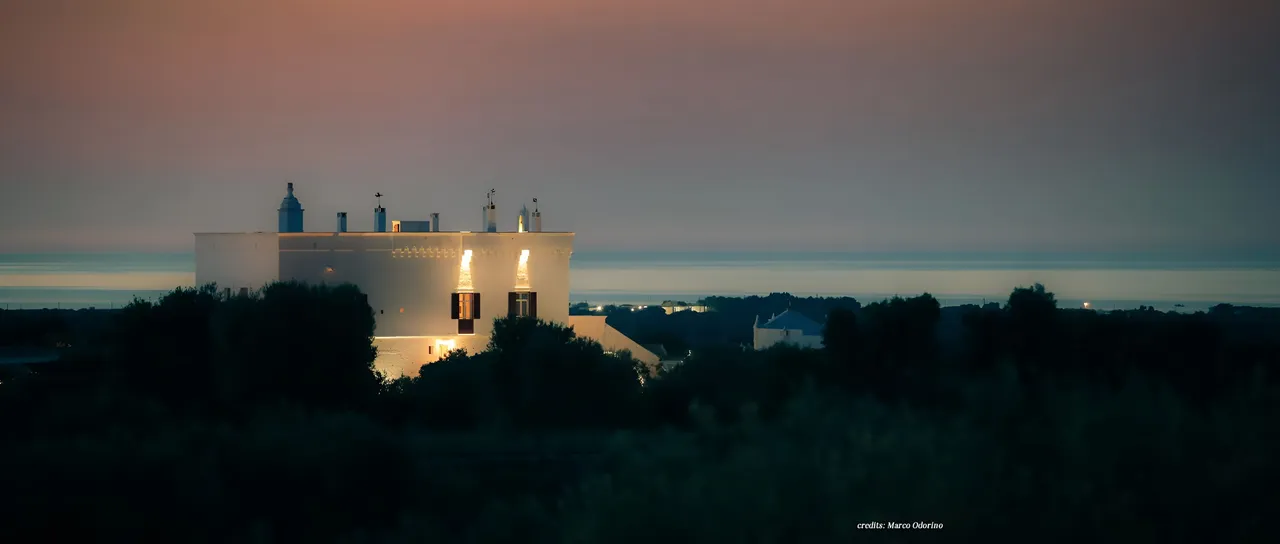 Masseria Torre Coccaro
- Maximum capacity
- 120 guests
- Starting budget
- €100,000+
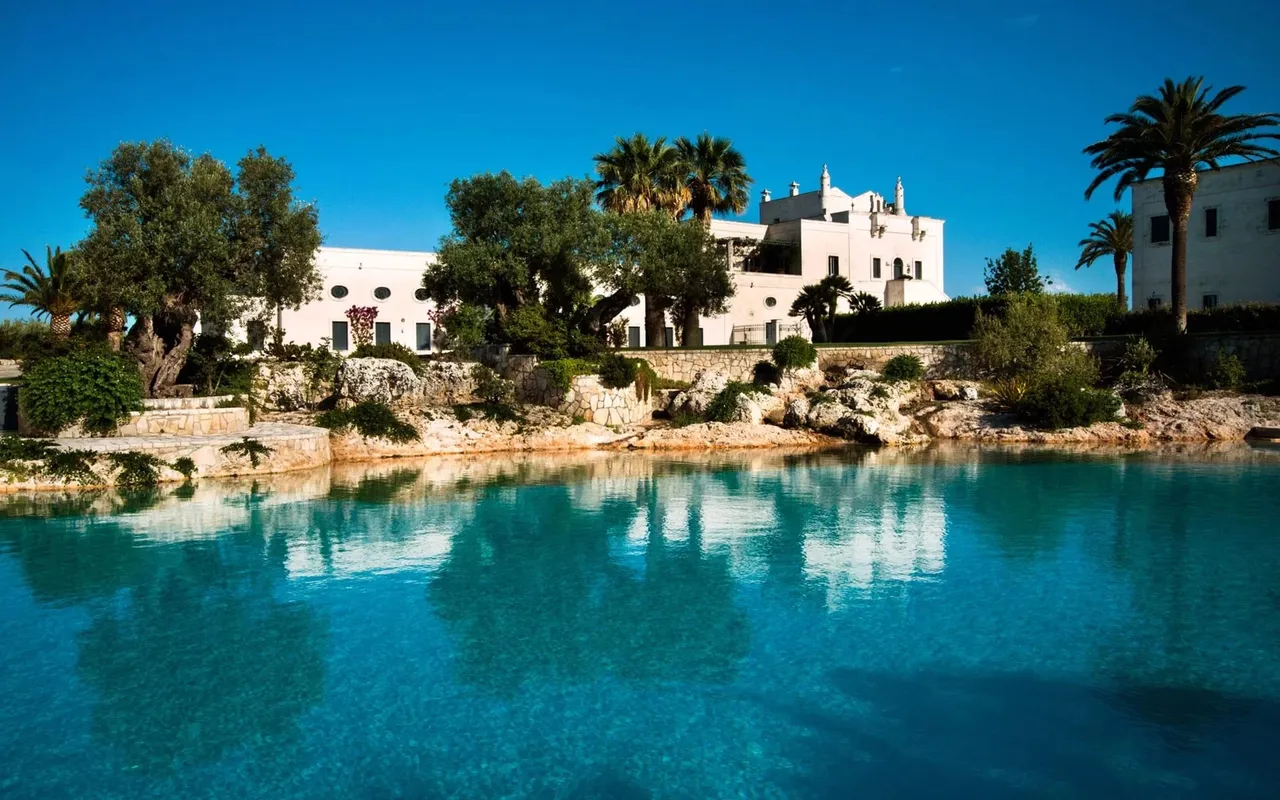 Masseria San Domenico
- Maximum capacity
- 300 guests
- Starting budget
- €300,000+
 Masseria Torre Maizza
- Maximum capacity
- 100 guests
- Starting budget
- €450,000+
 Castello Monaci
- Maximum capacity
- 350 guests
- Starting budget
- €100,000+
 Masseria Amastuola
- Maximum capacity
- 350 guests
- Starting budget
- €100,000+
 Masseria Calderisi
- Maximum capacity
- 300 guests
- Starting budget
- €150,000+
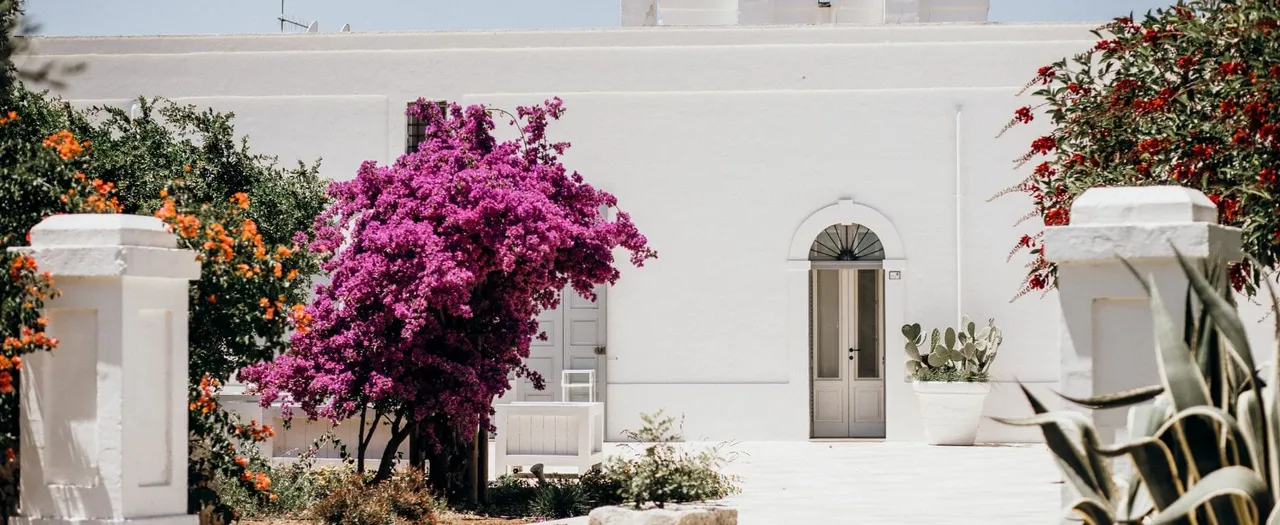 Masseria Don Luigi
- Maximum capacity
- 300 guests
- Starting budget
- €100,000+
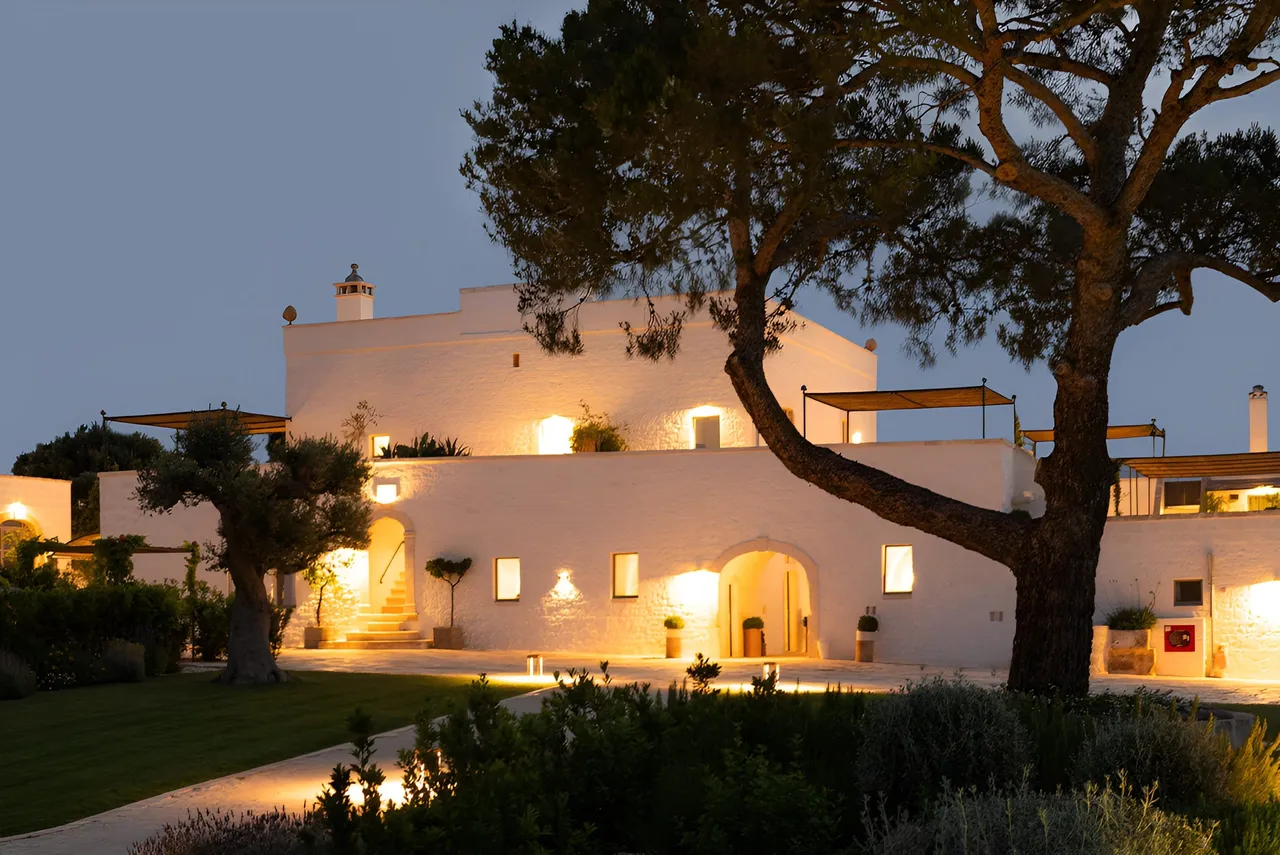 Masseria Auraterrae
- Maximum capacity
- 300 guests
- Starting budget
- €150,000+
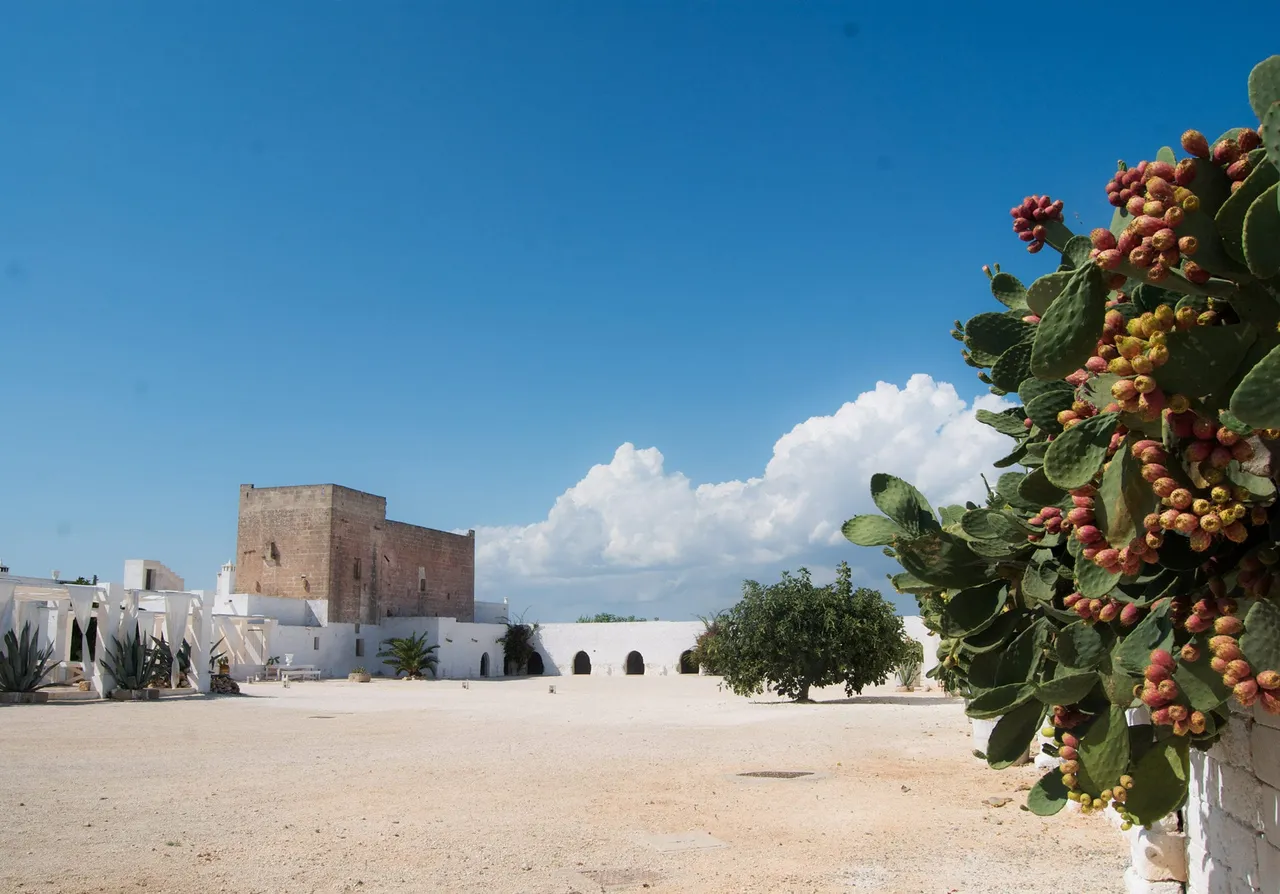 Masseria Potenti
- Maximum capacity
- 250 guests
- Starting budget
- €150,000+
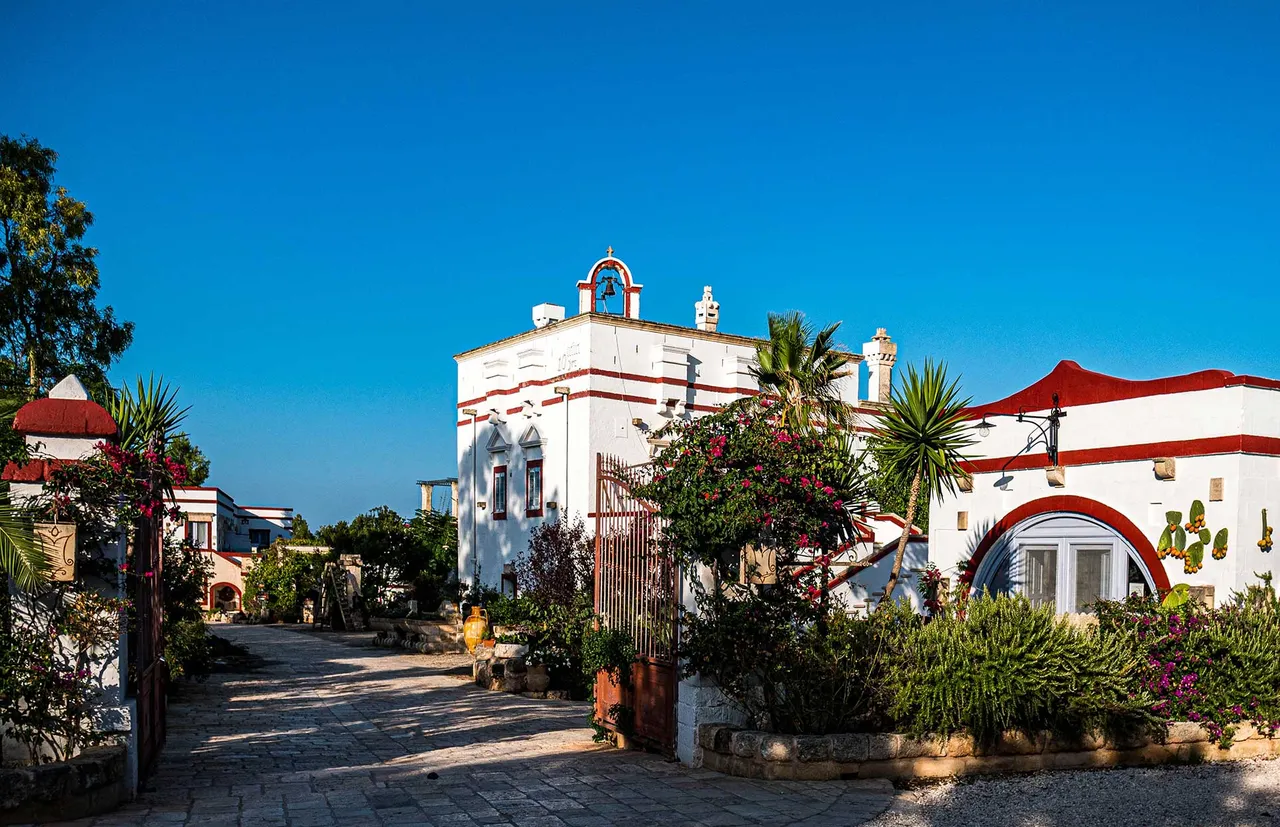 Masseria Montenapoleone
- Maximum capacity
- 250 guests
- Starting budget
- €150,000+
 Masseria Alchimia
- Maximum capacity
- 200 guests
- Starting budget
- €100,000+
 Masseria Spina
- Maximum capacity
- 140 guests
- Starting budget
- €100,000+
 Masseria Salamina
- Maximum capacity
- 120 guests
- Starting budget
- €100,000+
 Masseria Grieco
- Maximum capacity
- 100 guests
- Starting budget
- €100,000+
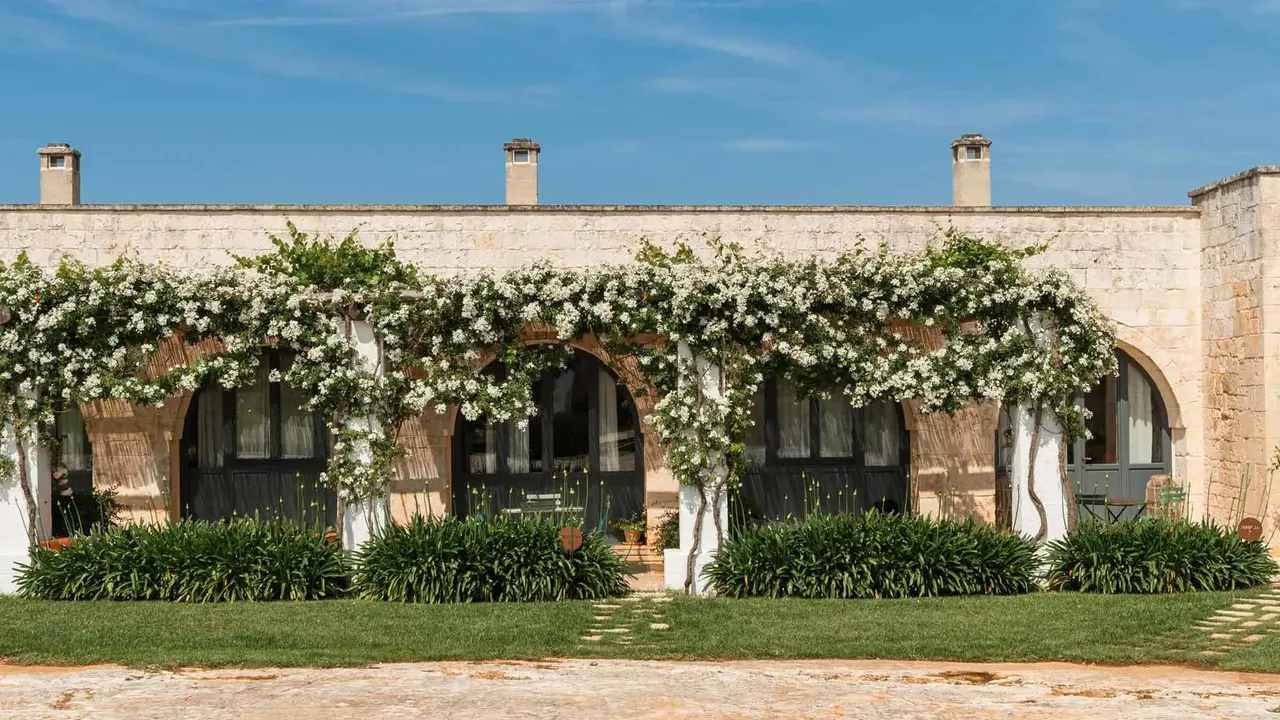 Masseria Santo Scalone
- Maximum capacity
- 100 guests
- Starting budget
- €150,000+
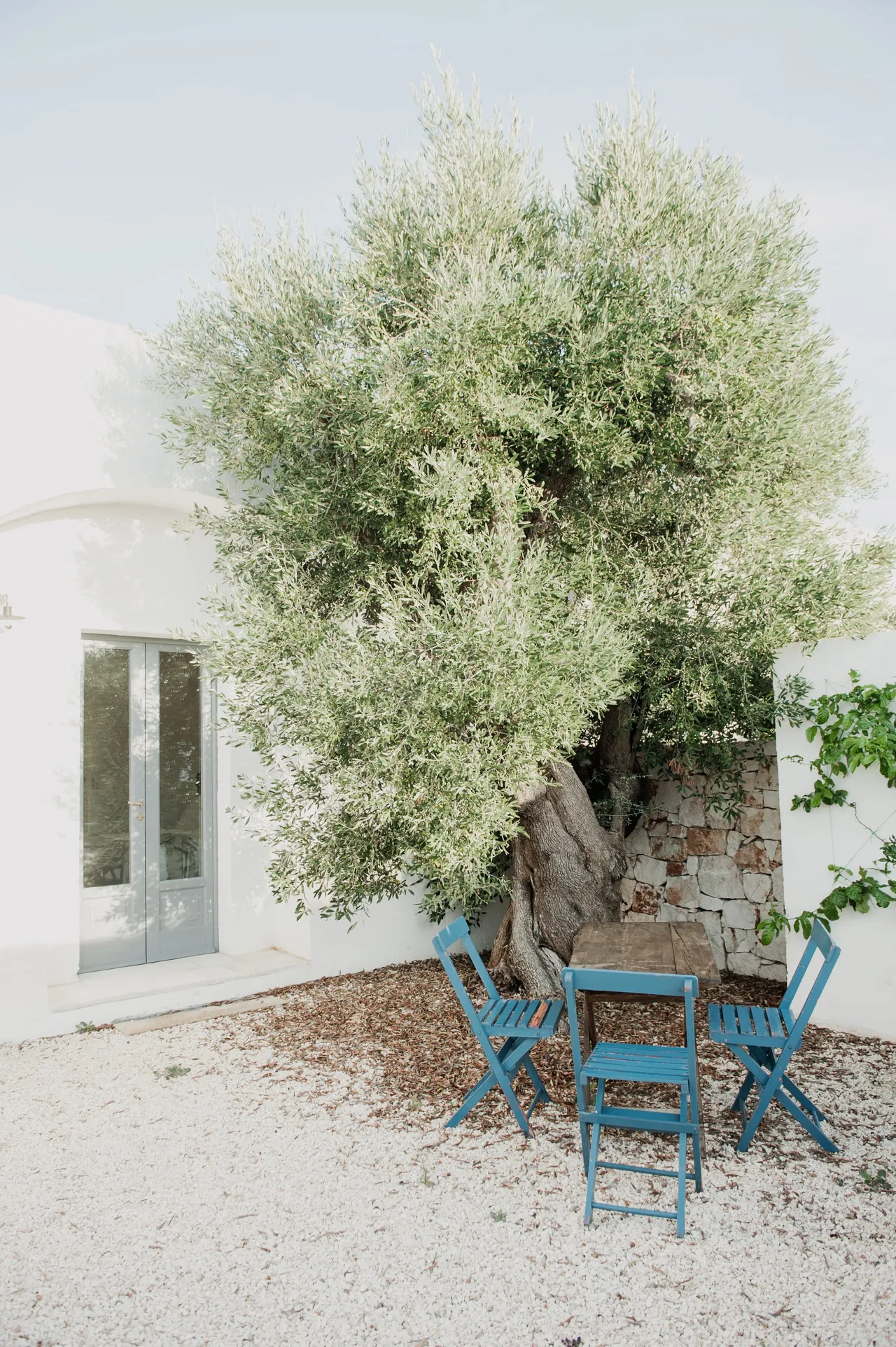 Masseria Moroseta
- Maximum capacity
- 90 guests
- Starting budget
- €100,000+
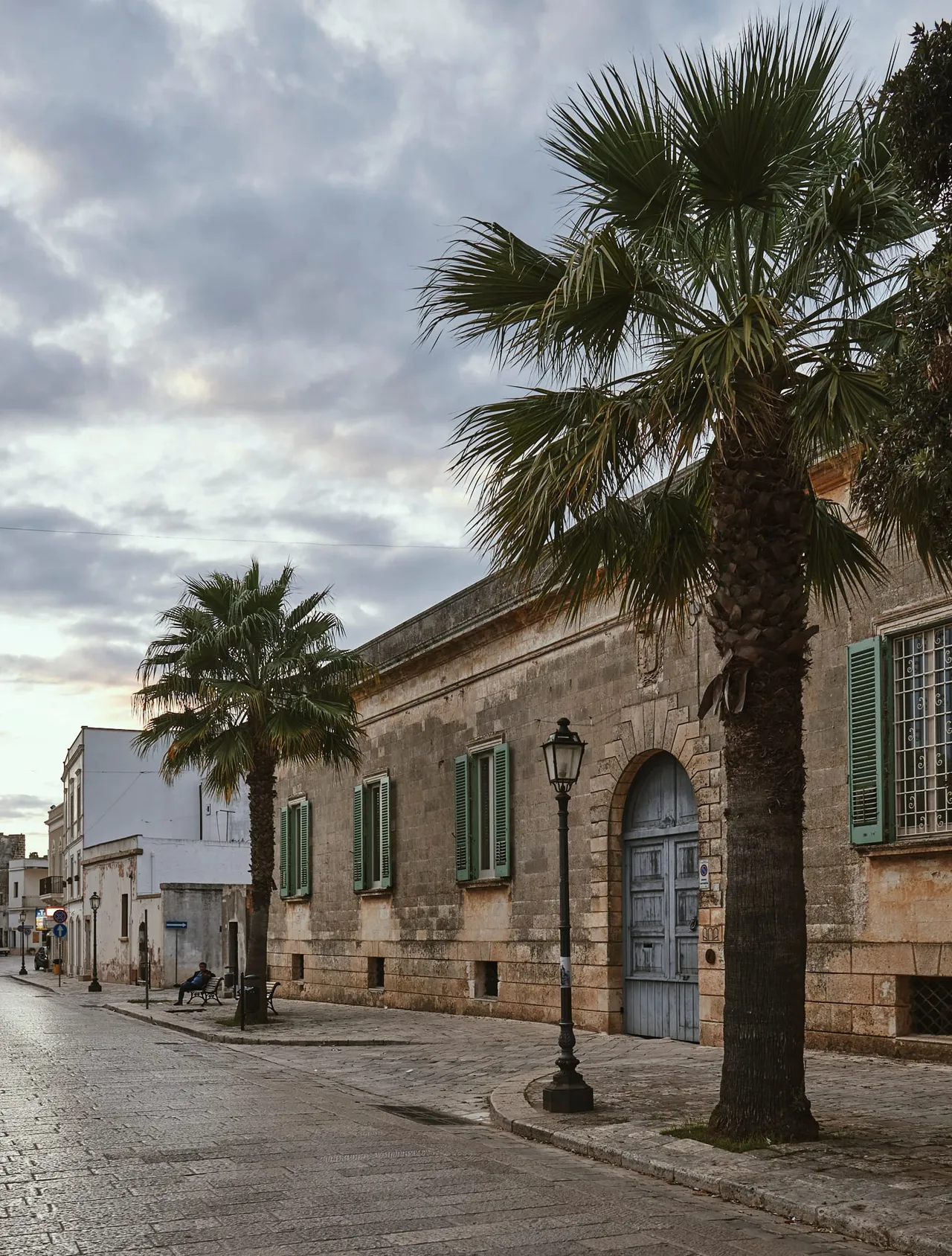 Palazzo Daniele
- Maximum capacity
- 80 guests
- Starting budget
- €150,000+
Where to Marry in Puglia
Puglia is 400 kilometres long and the mistake everyone makes is treating it as one place. A venue near Bari and a venue in Ugento are further apart than London and Birmingham, and the guest experience is entirely different.
Three areas hold everything on this page.
The Adriatic coast around Savelletri and Fasano is the five-star cluster and the reason Puglia is on the international wedding map at all. Nine of these properties are within fifteen minutes of each other in the comune of Fasano, with the sea on one side and olive groves inland. It is the easiest part of the region to run a big wedding in, because the infrastructure exists.
The Valle d’Itria, just inland, is the Puglia of the postcards: Ostuni white on its hill, Locorotondo, Cisternino, and Alberobello with its trulli. Le Carrube sits at the foot of Ostuni. This is where couples fall in love with the region and it is fifteen minutes from the coast, which means you can have the landscape and the logistics at once.
Salento, the peninsula below Lecce, is the far south and the better half by most measures: emptier, hotter, with two coastlines and a baroque city at the top of it. Castello di Ugento, Masseria Trapanà and the Convento are all here.
The trade is the drive. Salento adds an hour to every transfer from Brindisi and closer to two from Bari, and for a guest list flying in from several countries that hour is real.
One thing that surprises people: the two seas. Salento has the Adriatic on its east coast and the Ionian on its west, forty minutes apart, and they look and behave completely differently.
Can You Legally Marry in Puglia?
Yes, and Italy makes it more straightforward than France does, with one procedural question that decides the shape of your day.
There is no residency requirement for foreign couples. The civil ceremony performed in Italy is a legal marriage recognised at home, and a Catholic ceremony carries civil effect in its own right through the concordat, so a church wedding here is legally a wedding rather than a blessing.
What you need is the nulla osta. It is a certificate from your own country stating there is no impediment to the marriage, obtained through your embassy or consulate, and it sits alongside passports, birth certificates, sworn translations into Italian and apostilles where your documents were issued outside the EU. A declaration of intent goes to the comune where the marriage will take place.
Allow three to six months, and start with the embassy rather than the venue.
Now the question that actually shapes the wedding, and the one most couples do not know to ask. A civil ceremony in Italy belongs to the comune, and the default place for it is the town hall. Many comuni have approved external venues where a registrar will travel, and many have not, and the list varies from one to the next.
So the honest answer for Puglia is that it depends which comune your masseria falls in. Fasano, Ostuni, Lecce and Ugento each answer this separately. It is the first question we ask about a venue, before the price, because it decides whether your guests watch the legal ceremony or a symbolic one held after a trip to a municipal office on the Friday.
Where the answer is no, the usual solution is the same as France: marry legally at home or at the comune quietly, and hold the ceremony you want at the venue. It works, and it is worth knowing in month one rather than month six.
Planning a wedding in Puglia?
INQUIREMusic Curfew and Noise in Puglia
Midnight is the working default for outdoor amplified music in Puglia, and the authority is the comune rather than the region or the state.
That default is softer than it sounds in both directions. Rural masserie with no near neighbour hold later hours, and we have run parties here to two and three in the morning legitimately. Properties closer to a town, or with houses over the wall, stop at eleven. The spread across this page is wide enough that quoting a regional figure to a client would be misleading.
So there is no Puglian number to give you, only a method.
Ask the venue for the hour in writing at contract stage. Ask separately whether it applies to amplified sound only or to live music as well, because those are frequently different limits and a string quartet at half past midnight is often fine where a DJ is not. Then ask whether the property has ever had a complaint, which is the question that produces the honest answer.
Sole use is the lever. A masseria taken whole with no other guests has nobody inside the walls to complain, and the comune’s interest is in the neighbours rather than in you.
The Savelletri cluster is the one place where this needs care, because four substantial properties sit close together and their guests are each other’s neighbours.
Getting Guests to Puglia
Two airports, and the thing to say first is that neither has a direct flight from the United States.
Brindisi is the better arrival for most of this page. It is about 40 minutes from the Savelletri masserie, half an hour from Ostuni and an hour and a quarter from Ugento, and it takes British Airways from Heathrow and easyJet from Gatwick in season.
Bari is larger, with around 43 direct flights a week from the UK, and about an hour from Fasano. For a mostly British guest list Bari usually has the better schedule and Brindisi the better drive.
American guests connect, through Rome, Milan or a European hub, which makes Puglia a two-leg journey from the States against Ireland’s one. For a wedding with a substantial US contingent, this belongs in the first conversation, because it changes arrival day, jet lag and how long people will stay.
Once here, everything is by road and the roads are good. The SS16 runs down the Adriatic coast and the drives between the Savelletri properties are measured in minutes.
Salento is the exception and it is worth planning properly. Ugento and Marittima are ninety minutes to two hours from Brindisi, so guests arrive tired on the first day, and a welcome dinner scheduled for eight o’clock on arrival evening is a mistake we have watched other people make.
Season, Weather and When Not to Come
May to September, and in Puglia the season conversation is really an August conversation.
June and September are the two months we push. Warm, long evenings, the sea usable, the towns busy but not overrun, and venues that will still talk to you about dates.
August is the argument. It is the hottest month in one of the hottest regions in Italy, regularly past 35 degrees in the afternoon and slow to cool because the limestone holds the heat. It is also when Italy goes on holiday, so the coast fills, the prices peak and every masseria is booked. A wedding that has to be in August can work: start the ceremony at seven, put the dinner under trees or in a mill, and accept that nothing happens outdoors between one and five.
We would rather move the date by three weeks.
May and October are genuinely beautiful and carry real rain risk, and Puglia’s rain arrives as short violent storms rather than the drizzle an Irish wedding plans around. A marquee here is protection against water and against sun, and it earns its cost in both directions.
The mosquitoes are worth one sentence, because nobody mentions them and every guest notices: near the groves and after dusk they are a genuine consideration, and it is a solvable problem if somebody has thought about it in advance.
Where Guests Stay in Puglia
This is where the seated column and the rooms column stop being a table and start being your problem.
Almost every venue on this page seats far more people than it sleeps. Le Carrube is 300 against 19 and Castello di Ugento 250 against 20. Only Borgo Egnazia houses a large wedding on the property, and one of twenty-two is not a range.
So a Puglia wedding of any size is an accommodation exercise before it is anything else.
The good news is that Puglia has real depth. There are hundreds of masserie at every level, the towns of the Valle d’Itria have small hotels and good rental stock, and the coast from Monopoli to Ostuni is full of places that are pleasant rather than merely available. Guests can pick their own level, which keeps the cost of attending your wedding under their control rather than yours.
The planning cost is coordination. Ninety guests across six properties is six sets of directions, six check-in times and a transfer plan with several pickup points, and it is the part of a Puglia wedding that quietly consumes the most hours.
We book the venue’s own rooms for family and the wedding party first, then take blocks in two or three properties within fifteen minutes, and publish one guest page with drive times from each.
I plan B2B events for a living so I was incredibly picky when it came to hiring a planner. Magic Day 100% delivered.
Magic Day Insights
Ask the comune question before the price question. Whether a legal civil ceremony can happen at your venue is decided by the comune, not the property, and it varies between neighbouring towns. It changes the whole shape of the day and it is free to find out.
Count beds, then seats. Every Puglia venue conversation should start with how many people sleep on site. The seated figure is what the venue advertises and the bed count is what you will spend your evenings solving.
A masseria is a converted farm. Power, kitchen and covered space are frequently not there in the quantity a wedding of 150 needs, and the generators and mobile kitchens arrive on lorries. Price the production early, because it is a larger fraction of a Puglia budget than of a French one.
Get the music hour in writing, and ask about live versus amplified separately. They are often different numbers, and knowing that buys you an extra hour of the right kind of music rather than an argument.
Do not schedule anything for arrival evening in Salento. Two hours from Brindisi after a connecting flight from America is not a welcome dinner, it is an ordeal with canapés.
August is a design problem, not a no. If the date cannot move, move the day: late ceremony, shade, water, and the dinner underground or under trees. The old oil mill at Le Carrube exists for exactly this.
Savelletri is four properties, not one decision. Borgo Egnazia, San Domenico, Torre Coccaro and Torre Maizza are within fifteen minutes of each other and behave completely differently. Visit them on the same day, in that order, and the choice usually makes itself.
Budget for mosquitoes and for wind. Both are ordinary here and both are solvable, and neither is in anybody’s brochure.
Wedding Planner Puglia
Magic Day has been established in Bari at 143 Via Andrea da Bari since 2014. By appointment only.
Magic Day has planned weddings across 11 countries since 2008, and Puglia is the region where the distance between a venue’s photographs and a venue’s contents is largest. That gap is what a wedding planner in Puglia is for.
What a masseria’s hire covers is the ground, the building and usually the rooms. What it frequently does not cover is a kitchen able to serve 150 covers, power for a band and a lighting rig, or a covered space big enough for the whole party when a storm arrives at nine. Those come in on lorries, from suppliers who are mostly based around Bari and Lecce, and assembling that list is most of the work.
Then the administrative half. A nulla osta from your own embassy, sworn translations, apostilles, a declaration of intent to the right comune, and the separate question of whether that comune will let the civil ceremony happen at your venue at all. Three to six months, and every step waits on the one before it.
And then Puglia itself. Four hundred kilometres, two airports, no direct flight from America, a heat curve that reshapes the timeline in August, and a noise hour set town by town.
Tell us the month, the guest count and roughly where your guests are flying from, and we will tell you whether you want the Savelletri coast or Salento, because that is the decision everything else follows from.
Common Questions
How much does a Puglia wedding cost?
A Puglia wedding runs €30,000 to €250,000 all-in for 40 guests, €60,000 to €600,000 for 80, and from €150,000 at 150. Catering is €150 to €350 a head. The spread at the top of this region is the widest in Italy, because Puglia holds both eight-bedroom conversions in Salento that go whole for the price of a Tuscan villa and one property operating at a level nothing else here approaches: a wedding at Borgo Egnazia runs €550,000 to €2.5 million. Puglia is materially cheaper than the Amalfi Coast or the Italian Lakes at the same standard. Magic Day weddings in Puglia start from €100,000.
What are the best wedding venues in Puglia?
Twenty-two we argue for, covering the range rather than crowning a winner. Borgo Egnazia at Savelletri seats 350 and is the only one that can hold a large wedding and house it. Castello Monaci in Salento and Masseria Amastuola above Taranto also reach 350, and both can register a legally binding civil ceremony, which most of the region cannot. Masseria Calderisi and Masseria Don Luigi take 300 near Fasano. At the other end, Palazzo Daniele at the bottom of the heel and Masseria Moroseta above Ostuni are small buyouts of fifteen and six bedrooms.
Can you legally get married in Puglia?
Yes. Italy sets no residency requirement for foreign couples, and the civil ceremony performed here is the marriage. What you need is a nulla osta, the certificate from your own country stating there is no impediment, plus passports, birth certificates, translations and apostilles, and a declaration of intent to the comune. Allow three to six months. A Catholic ceremony carries civil effect in its own right. The question that decides your day is whether your comune will hold the civil ceremony at the venue or only at the town hall.
What time does music have to stop at a Puglia wedding?
Midnight is the working default for outdoor amplified music in Puglia, set by the comune rather than nationally, and rural masserie with no close neighbour sometimes hold later hours. Some properties run to two or three in the morning and some stop at eleven, which is a spread wide enough that no regional figure is worth relying on. Get the hour in writing from the venue and ask separately whether it applies to amplified sound only or to live music too. Sole use is the lever that buys the later hour.
How many guests can you have at a Puglia wedding?
Up to 350, at Borgo Egnazia, Castello Monaci and Masseria Amastuola. Masseria Torre Coccaro, Masseria Calderisi and Masseria Don Luigi all reach 300. Below that the region drops away quickly into properties built around twenty rooms or fewer. The number that catches people out is bedrooms rather than seats: Masseria Amastuola seats 350 and sleeps 36, so a large Puglia wedding almost always means a venue for the party and a spread of masserie and town hotels for the guests.
Which airport is best for a Puglia wedding?
Bari for the north of the region and Brindisi for the south, and neither has a direct flight from the United States. Bari takes around 43 direct flights a week from the UK, and Brindisi has British Airways from Heathrow and easyJet from Gatwick in season. Brindisi is about 40 minutes from the Savelletri masserie and Bari about an hour. American guests connect through Rome, Milan or a European hub, which makes a Puglia wedding a two-leg journey for them and a one-leg journey for Europeans.
When is the best time to get married in Puglia?
June and September. The season runs May to September and the argument is always about August: it is the hottest month in one of the hottest regions in Italy, regularly past 35 degrees, and it is when Italians take their own holidays, so the coast is full and the prices are at their peak. A wedding that must be in August should start late and stay under trees. May and October are lovely and carry real rain risk.
Do you need a wedding planner in Puglia?
Yes, and the reason is the gap between what these properties look like and what they include. A masseria is a converted farm, not a hotel with an events department, and most of what a wedding needs here arrives on a lorry. Add a comune that decides both your noise hour and whether the legal ceremony can happen on site, a nulla osta that takes three to six months, and guests landing at two airports without a direct flight from America. Magic Day has planned weddings across 11 countries since 2008.
Planning a wedding in Puglia?
Thank you — we have it.
One of our planners will be in touch personally, usually within one working day.