
What a Florence Wedding Costs
A Florence wedding runs €100,000 to €1,000,000 all-in for 40 guests, €100,000 to €1,000,000 for 80, and from €120,000 at 150. Catering is €200 to €400 a head before drinks. Magic Day weddings in Florence start from €100,000.
Here is where a wedding at each venue with a guide of its own realistically lands, all-in, with the figure it starts from:
- Belmond Villa San Michele: near €1,000,000, from €800,000
- Villa Cora: near €550,000, from €350,000
- Villa Mangiacane: near €450,000, from €300,000
- Four Seasons Florence: near €350,000, from €250,000
- Dimora Ghirlandaio: near €350,000, from €200,000
- Villa Medicea di Lilliano, Villa Le Fontanelle, Castello del Trebbio and Villa di Maiano: near €250,000, from €150,000
- Villa Gamberaia: near €200,000, from €120,000
It costs more than the same wedding an hour south, and the reason is not that the city is grander.
A venue in the Tuscan countryside has a drive, a yard and a field. Lorries park, crews unload at their own pace, and a marquee goes up over two days without anyone asking. A venue in the historic centre of Florence has a door on a street inside a restricted traffic zone, a delivery window measured in hours, and no back-of-house at all.
Everything that arrives arrives on somebody else’s schedule.
That shows up as labour rather than as a line item. More porters, more trips, more hours, and a build that starts at six in the morning because that is when the permit allows it. Couples comparing a city palazzo against a country villa on the hire figure alone will misread the gap by a wide margin.
What the city gives back is that the guests need nothing. No coaches, no drivers, no transfers at midnight, and a weekend where people walk to dinner and walk home. On a countryside wedding that transport is a real cost and here it is close to zero, which narrows the difference more than the headline suggests.
The Tuscany page covers the countryside comparison properly, including the villa hires where the number in the brochure is a building rather than a service.
Wedding Planner Florence
Magic Day has been established in Florence at 41 Via Simone Martini since 2014.
Magic Day has planned weddings across 11 countries since 2008, and Florence is the city where the calendar leads and everything else follows. A wedding planner in Florence starts with the comune rather than with the venue, because the Salone dei Cinquecento sits on two afternoons a month and no amount of goodwill adds a third.
What a venue’s hire covers here divides the same way it does anywhere: the hotels come with a kitchen and a staff, and the private palaces come with a floor and a permission. What is different in Florence is what sits outside both. A building in the historic centre has no yard, no parking and a delivery window, so a wedding is loaded in by hand through a door on a street that vehicles need a permit to enter, and that shapes the schedule for two days at either end.
Then the Italian administration, which is the usual sequence: a nulla osta from your embassy, sworn translations, apostilles, an interpreter, and three to six months of it with each step waiting on the one before.
And then the local knowledge. Which palazzo has a lift and which has a staircase your rented tables will not go up. Which comune your venue actually falls in, because Fiesole is not Florence and the hour is different. Which Thursday afternoons are still free next year.
Tell us the month, the guest count and whether you want the city or the hill, and we will tell you whether the ceremony you want is available before anything else gets booked.
Florence Wedding Venues
Fourteen properties, described briefly on purpose. Each is the class of venue that earns its own page, and the capacity by space, the hire and what it includes belong there.
They sort by one thing before size, and it is where they stand.
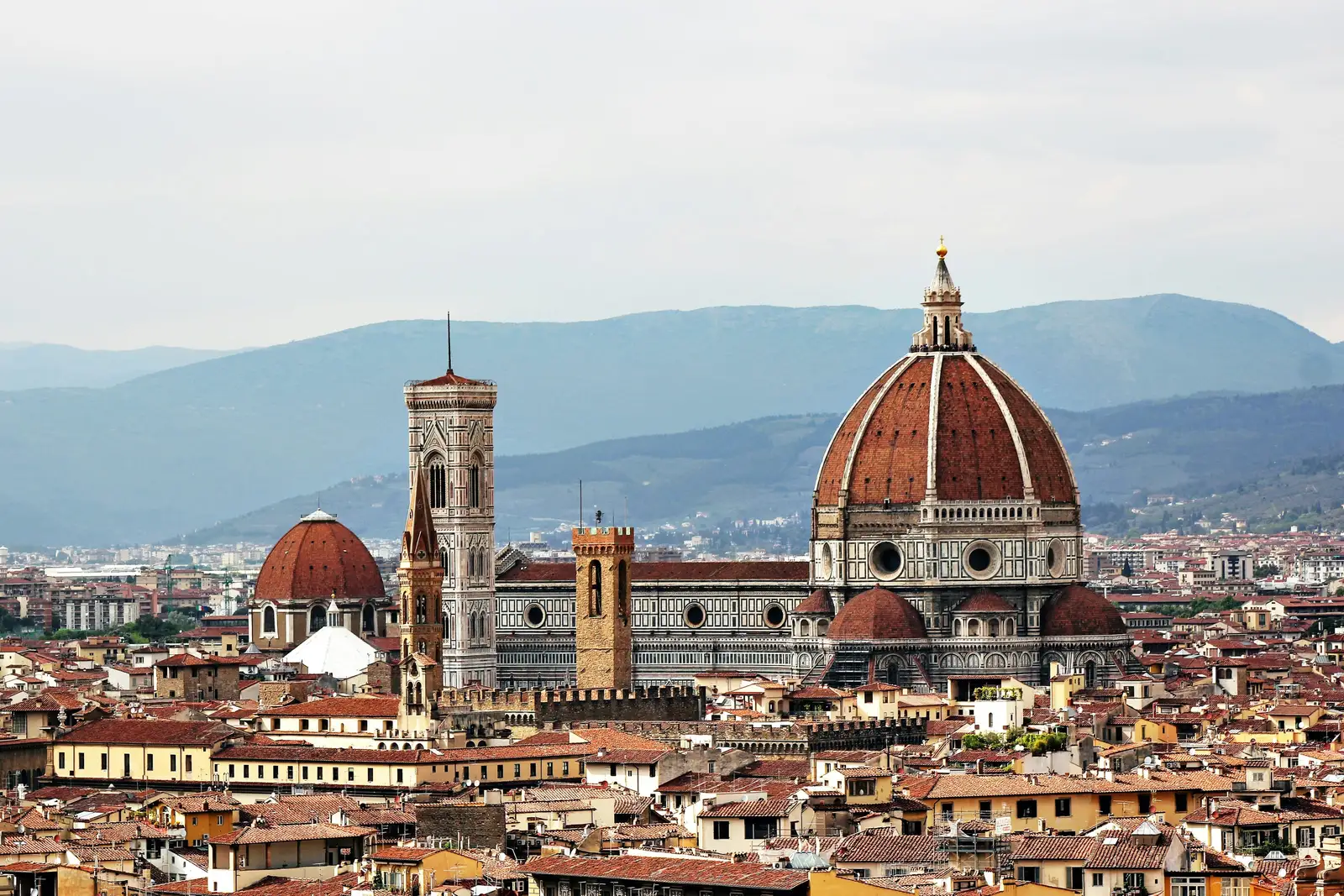
You cannot see Florence from inside Florence. The view everybody pictures, the dome standing above the rooftops with the hills behind, is a view from the hill, which means a wedding on the Fiesole ridge and a wedding in the centre are different products rather than different addresses.
Four Seasons Florence
Two Renaissance palaces joined by the Giardino della Gherardesca, eleven acres of walled garden in the middle of the city and the largest private garden in Florence. Either lawn seats 200 for dinner and the Conventino Ballroom 140 under a roof, with 120 rooms across the two palaces. The hotel holds three Michelin Keys, and its restaurant a Michelin star.
Villa Cora
A neoclassical villa of the 1860s on the hill above the Boboli Gardens, with a Moorish salon and a mirrored ballroom seating 100. Taken whole on a two-night minimum, its 41 rooms sleep about 100. Read the full Villa Cora wedding guide.
Belmond Villa San Michele
A fifteenth-century Franciscan monastery on the Fiesole hillside with a façade attributed to Michelangelo, and the whole of Florence below the garden wall. On a full buyout it takes 100 guests, with 39 rooms and suites.
Il Salviatino Wedding
A 15th-century villa on the Fiesole hillside in five hectares of garden, looking straight down the valley at the dome. It takes a wedding of up to 100, on the Terrazza.
Villa di Maiano
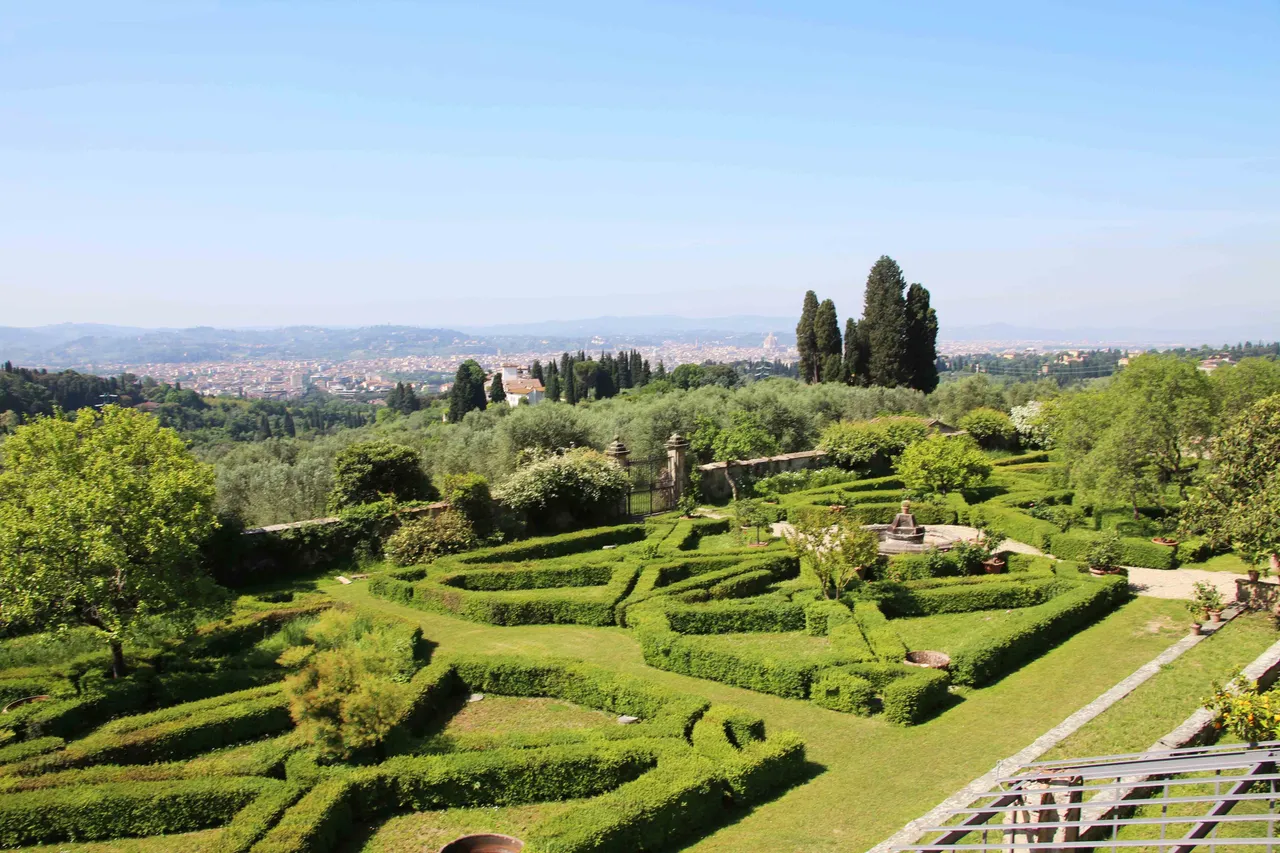
A fifteenth-century villa on the slope between Fiesole and Florence, twelve minutes from the centre, given its loggia tower by the Englishman John Temple Leader and a boxwood garden with the dome of the Duomo beyond the wall. The terrace garden seats 300 to 400 facing the city and the Tapestry Room 110 under a roof, and the legal civil ceremony is held on the estate.
Palazzo Vecchio Wedding
The seat of Florentine government since 1299, and the only venue here you cannot hold a reception in. The comune performs civil ceremonies in the Sala Rossa, which seats about 40, and in Vasari’s Salone dei Cinquecento, which takes 240 under a ceiling painted with the city’s own battles.
Villa La Massa Wedding
A Medici villa of the 16th century on a bend of the Arno at Candeli, twenty minutes east of the city and entirely out of it. Fifty-one rooms, mostly suites, with the halls seating 75, a hotel maximum of 110 and a small chapel for 30 to 40.
Palazzo Corsini al Parione Wedding
A Baroque palace on the Arno in the centre, still owned by the family, with a frescoed piano nobile, a ceremonial staircase and a grotto on the ground floor. It goes on sole use for about 100 guests and has no rooms at all.
Villa Le Fontanelle
A seven-room villa in the hills at Careggi, inside the city’s own boundary and fourteen minutes from the Duomo, with a salon seating 70 under a roof and gardens that take 140 with a marquee. Outdoor music stops at half past ten, and the dancing carries on in the salon until one. Florence airport is twelve minutes away by road, the shortest transfer on this page.
Villa Gamberaia
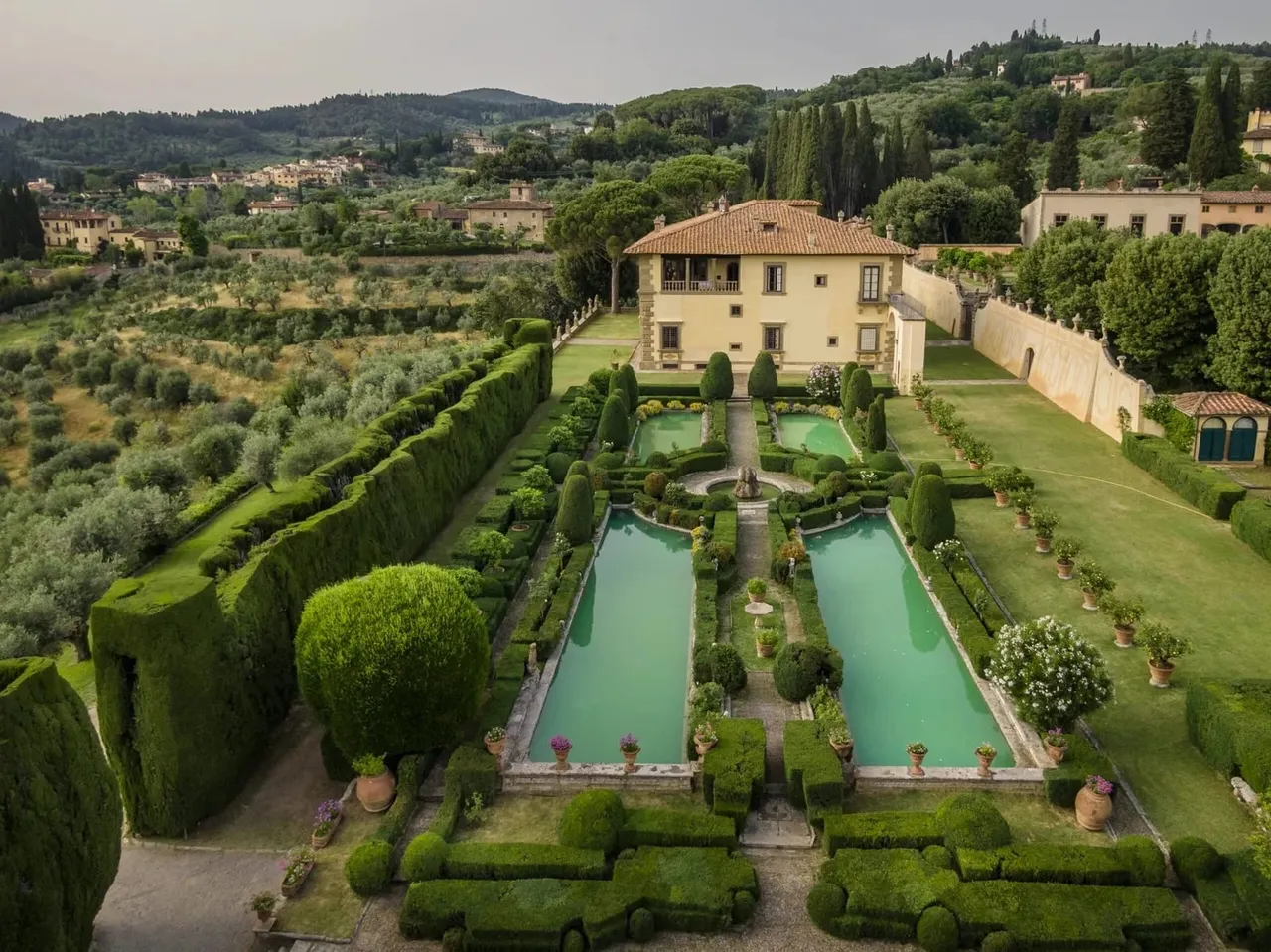
A seventeenth-century villa on the hill at Settignano, inside the city’s boundary and fourteen minutes above the centre, with one of the most celebrated gardens in Italy: four long pools, yew clipped into arches and Florence beyond the hedge. The estate is taken whole, seating 250 on its bowling green and 170 in the Limonaia, and eighteen bedrooms sleep 40.
Dimora Ghirlandaio
Five villas and a frescoed chapel around a Renaissance garden on the hills at Impruneta, twenty minutes from the centre, taken whole for 70 to 100 guests. Twenty rooms sleep 37, so the families stay inside the gate. Read the full Dimora Ghirlandaio wedding guide.
Villa Medicea di Lilliano
A Medici villa in the olive groves at Bagno a Ripoli, twenty minutes from the centre, with a formal garden and a banqueting hall seating 150. Its comune licenses it for the civil ceremony, so the legal wedding happens on the property.
Villa Mangiacane
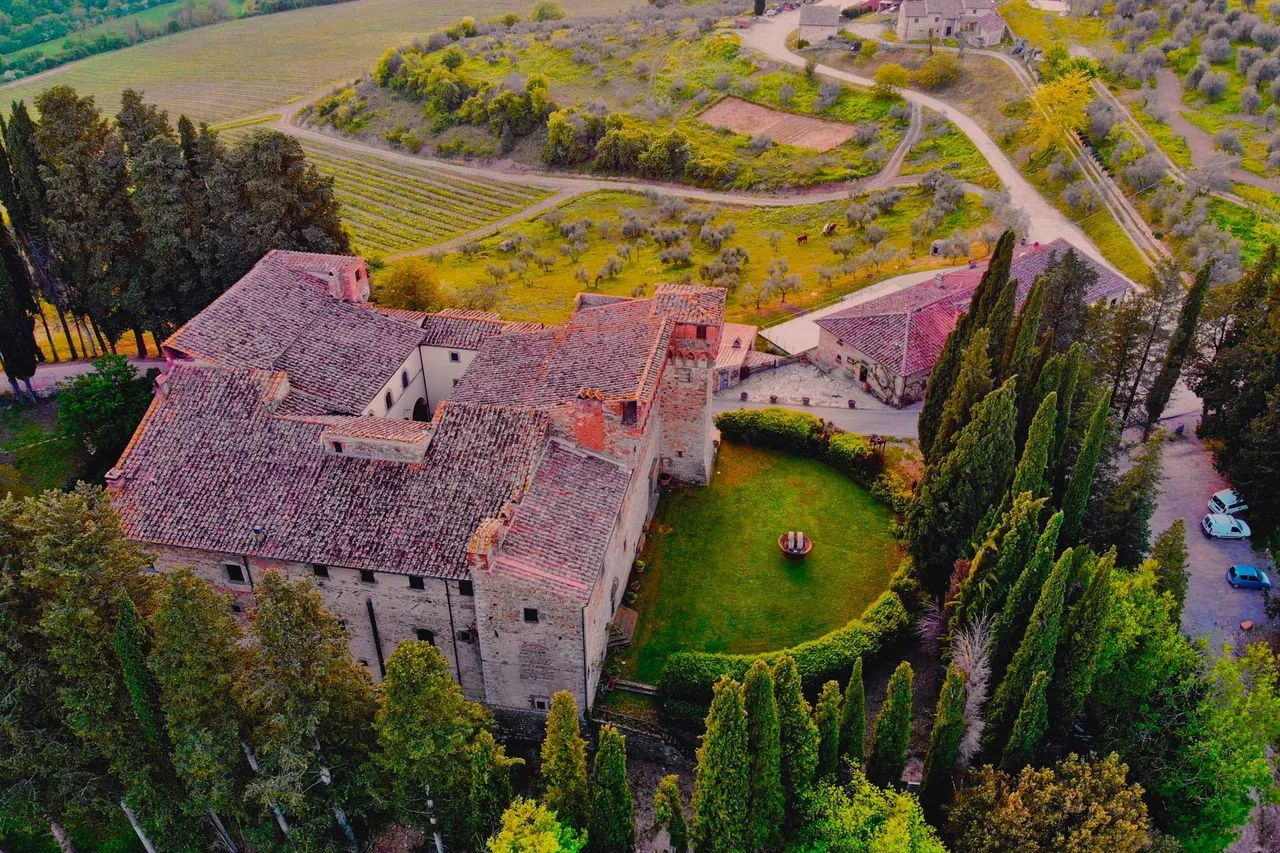
A Renaissance villa built by the Machiavelli family at Sant’Andrea in Percussina, in the Chianti hills at San Casciano but 28 minutes from the centre, with a loggia that looks back at the city. Its olive gardens seat 250, and 28 rooms sleep 60.
Castello del Trebbio
A working wine castle in the hills above Pontassieve, 29 minutes from the centre, with a walled courtyard and cellars under the building. Dinner seats 80, 51 guests sleep on the estate, and the bar stays open until two.
Venue guides in Florence
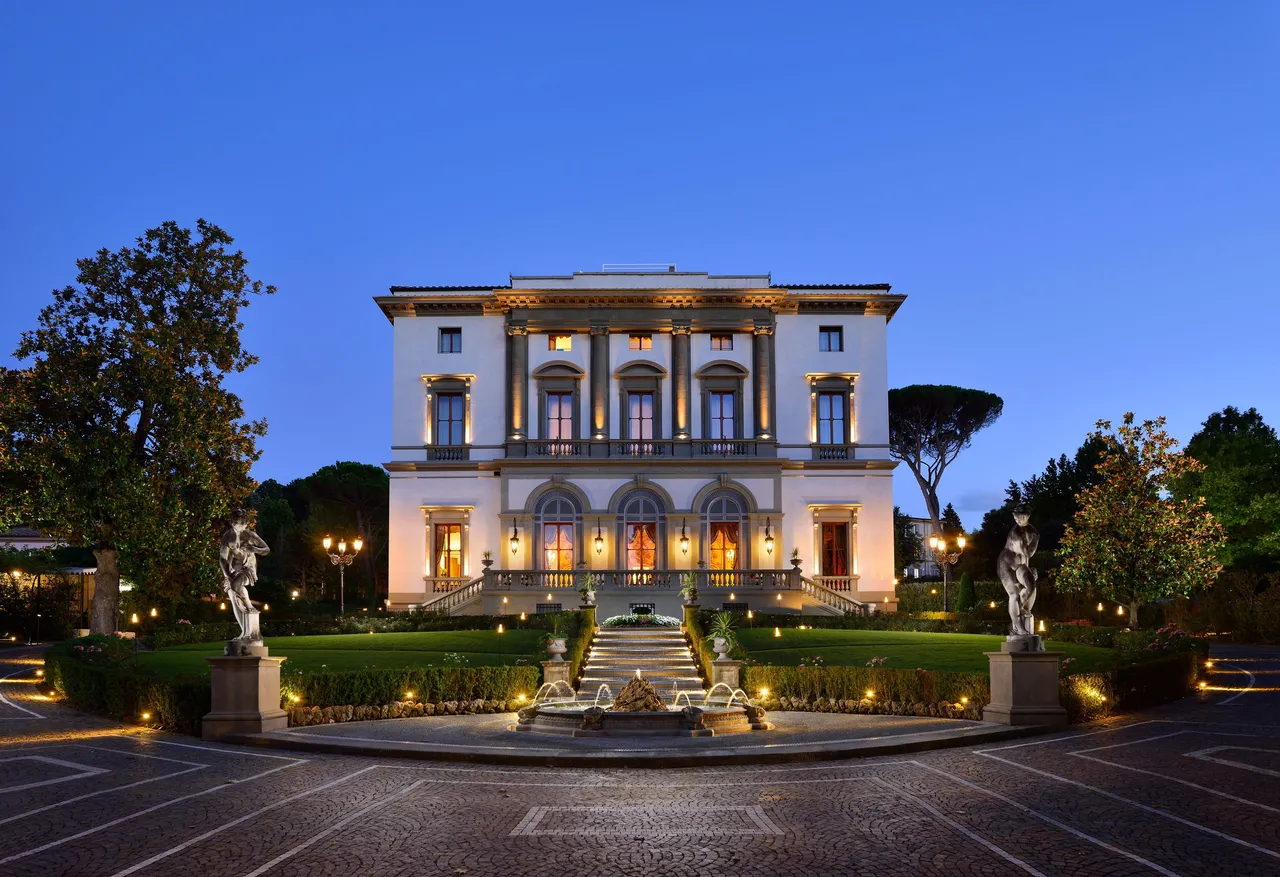 Villa Cora
- Maximum capacity
- 100 guests
- Starting budget
- €350,000+
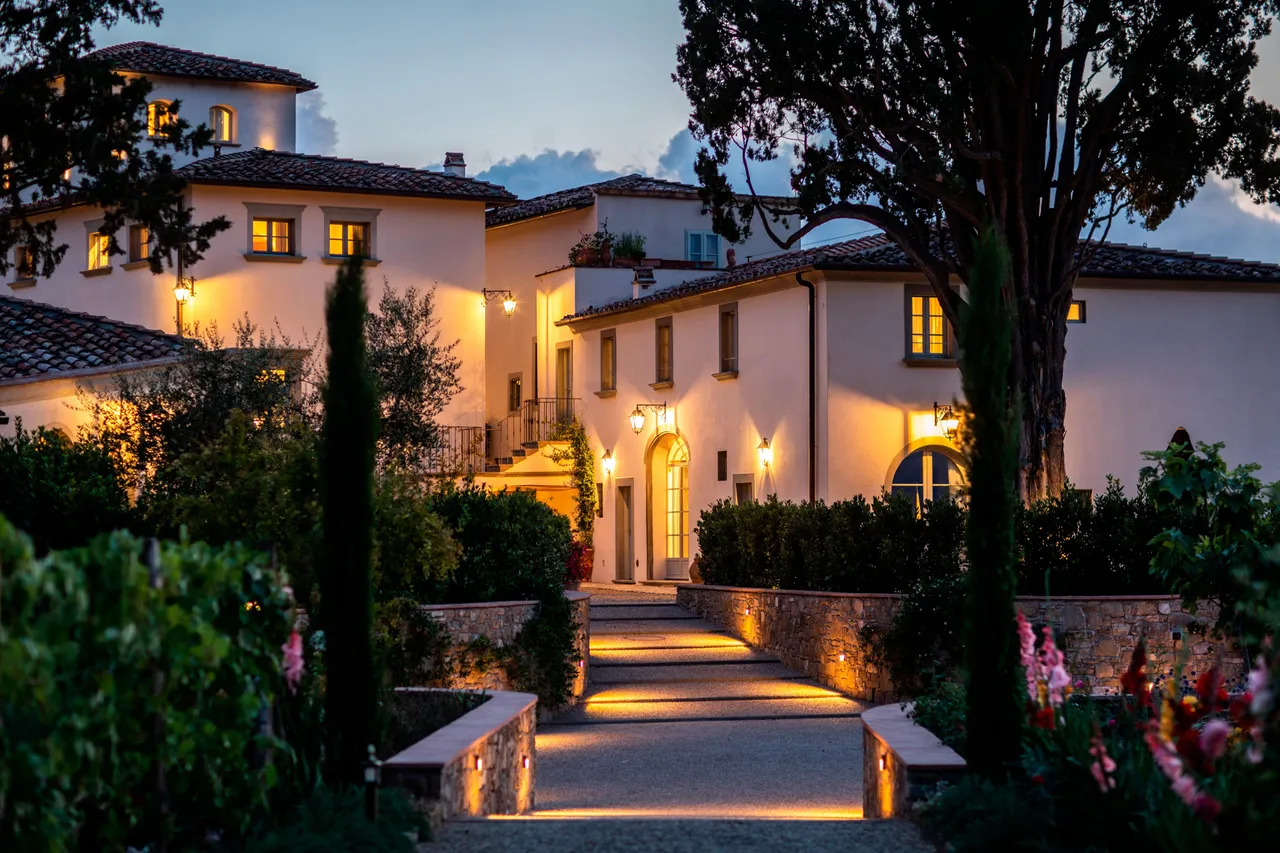 Dimora Ghirlandaio
- Maximum capacity
- 100 guests
- Starting budget
- €200,000+
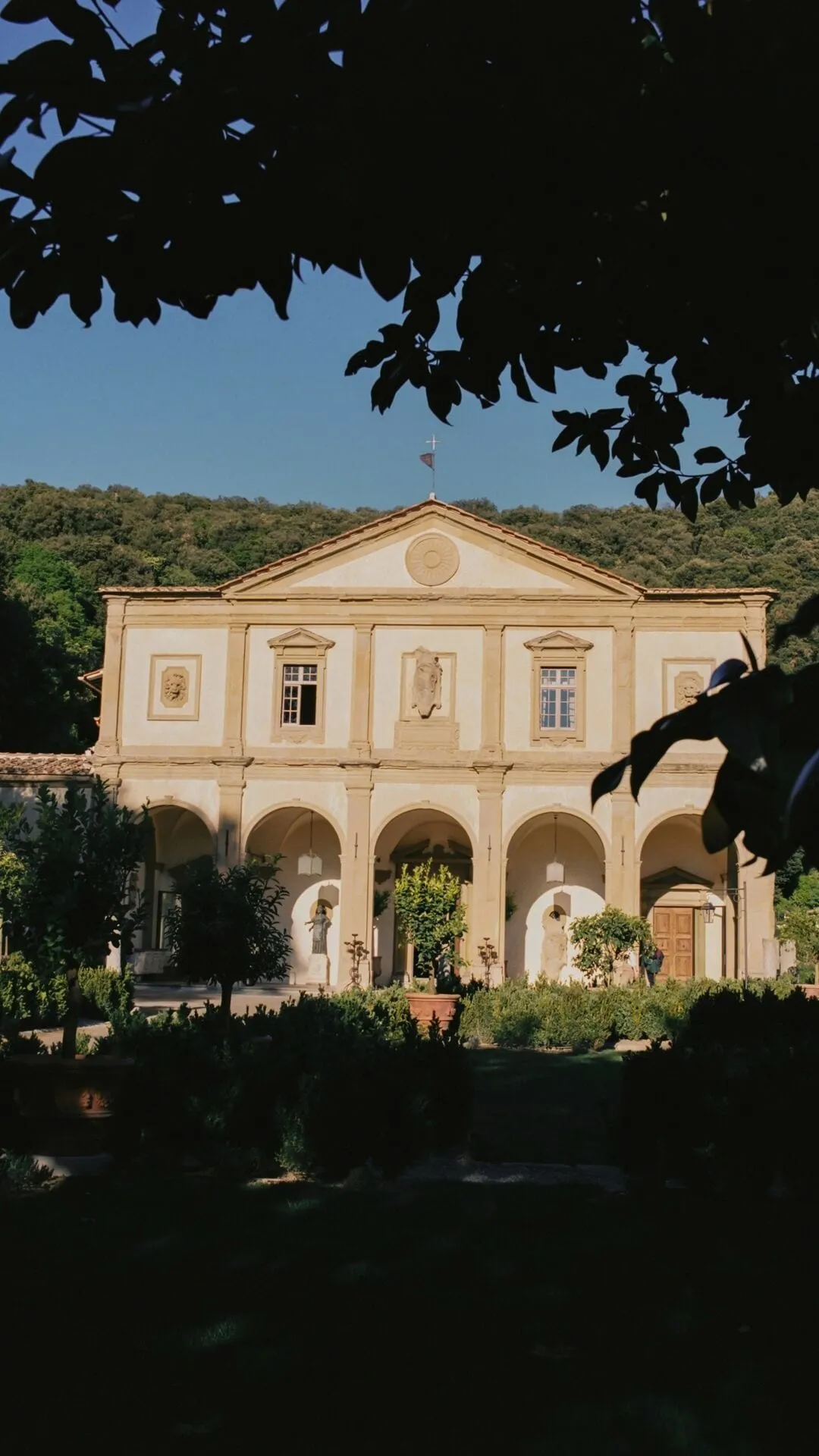 Belmond Villa San Michele
- Maximum capacity
- 100 guests
- Starting budget
- €800,000+
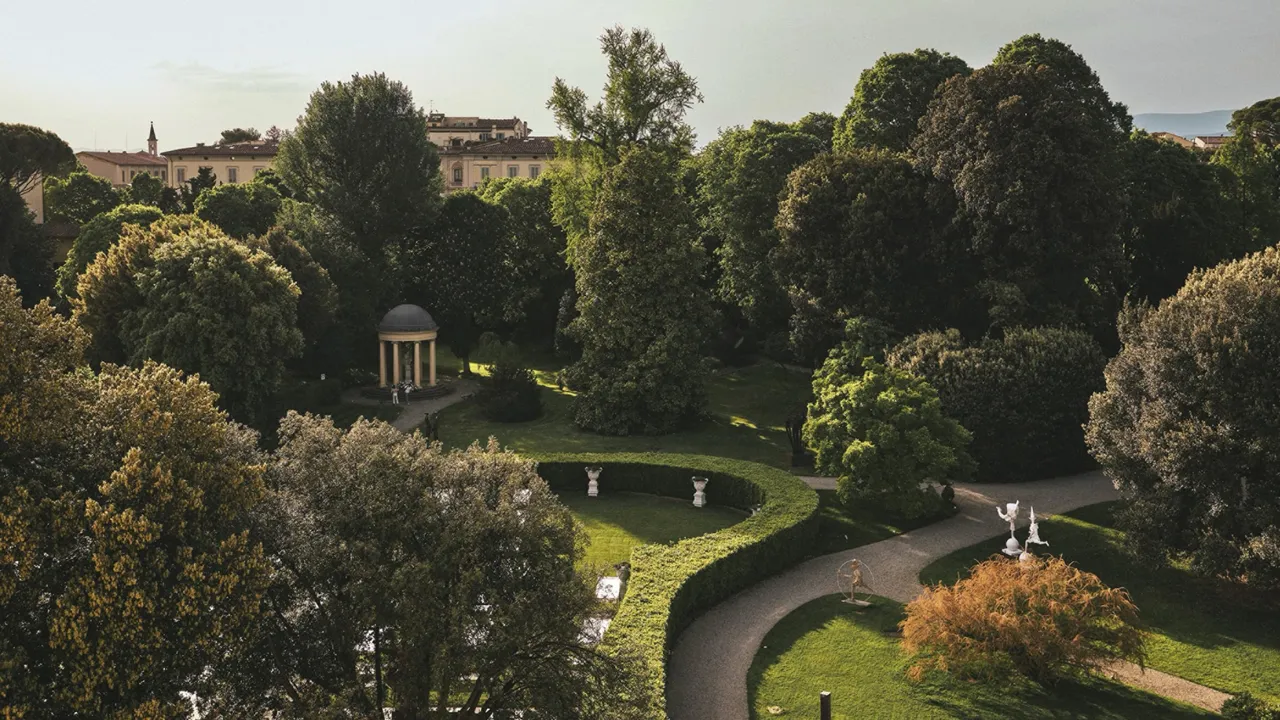 Four Seasons Florence
- Maximum capacity
- 200 guests
- Starting budget
- €250,000+
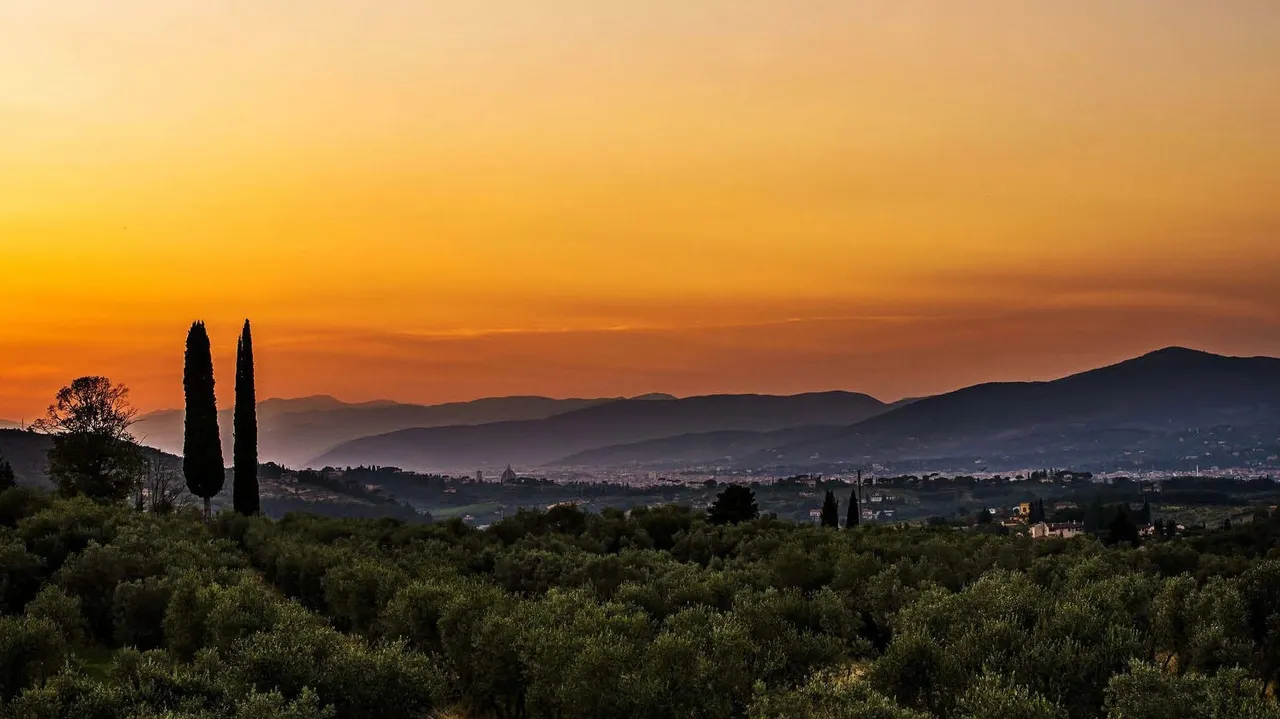 Villa Medicea di Lilliano
- Maximum capacity
- 150 guests
- Starting budget
- €150,000+
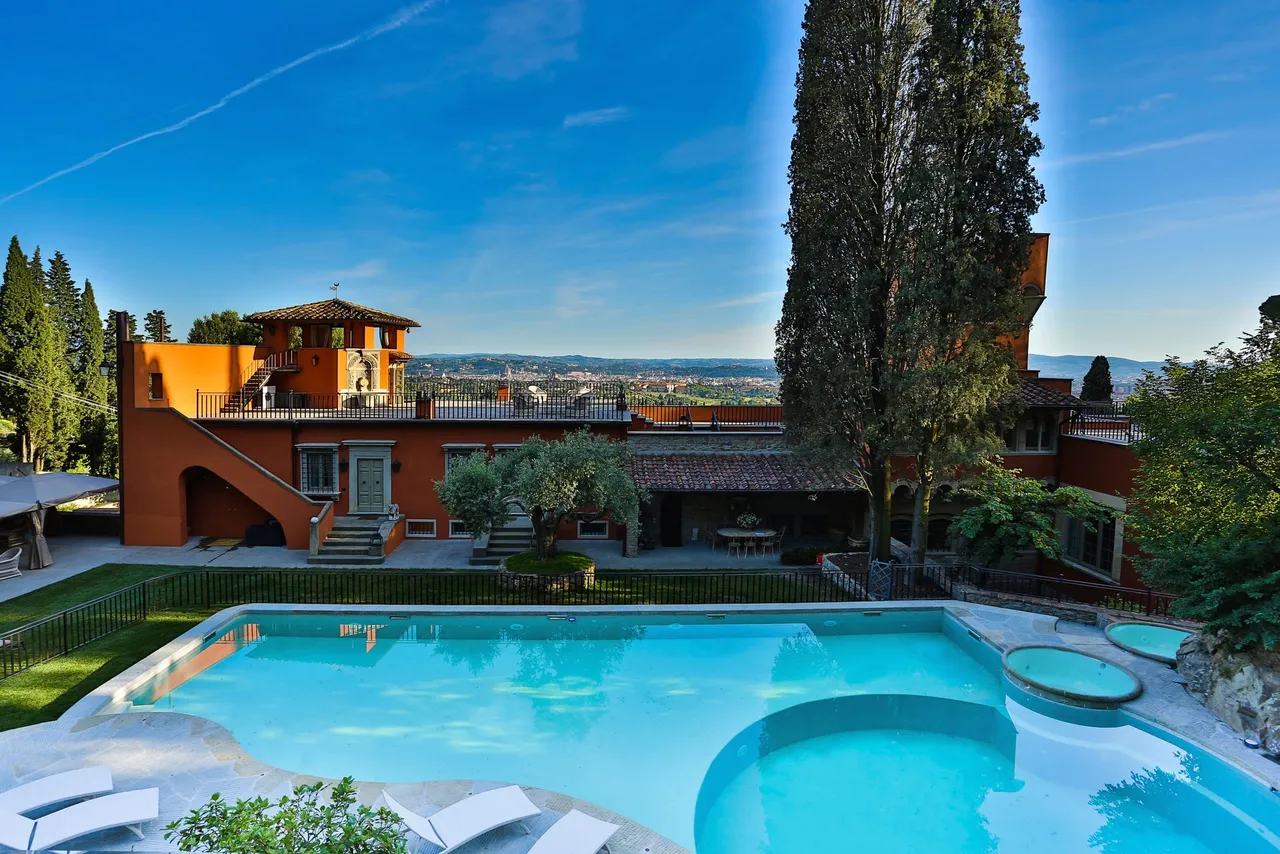 Villa Le Fontanelle
- Maximum capacity
- 140 guests
- Starting budget
- €150,000+
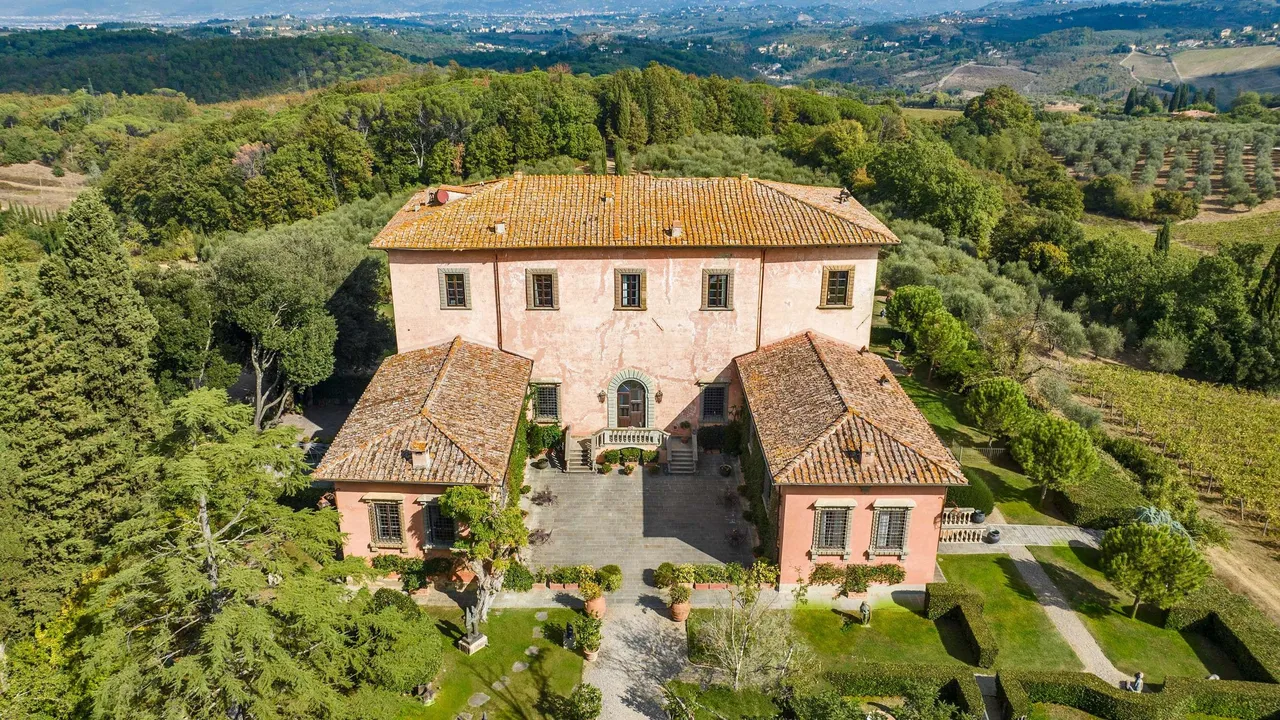 Villa Mangiacane
- Maximum capacity
- 250 guests
- Starting budget
- €300,000+
 Castello del Trebbio
- Maximum capacity
- 80 guests
- Starting budget
- €150,000+
 Villa di Maiano
- Maximum capacity
- 400 guests
- Starting budget
- €150,000+
 Villa Gamberaia
- Maximum capacity
- 250 guests
- Starting budget
- €120,000+
Where to Marry in Florence
Five positions, and choosing between them is most of the decision.
The city centre puts your guests inside the thing they came for. The Four Seasons, Palazzo Corsini and Palazzo Vecchio are here, everyone walks everywhere, and nobody hires a car. The costs are the delivery restrictions, the summer crowds and the earliest music hour of the five.
The Oltrarno hill, immediately south across the river, is the compromise that works. Villa Cora sits above the Boboli with a garden around it, close enough to walk down and far enough to have space.
The Fiesole ridge, fifteen minutes north-east and 300 metres up, is where the view is. Il Salviatino, Belmond Villa San Michele and Villa di Maiano all look down the valley at the dome, the air moves in August, and the noise rules are gentler. The trade is that everything becomes a short drive, including the walk your guests were hoping for.
Along the Arno at Candeli, twenty minutes east, is the fourth option and the quietest. Villa La Massa is Tuscan countryside on a riverbank that happens to be near a city.
The hills within half an hour are the fifth, and the one that has grown. Villa Le Fontanelle at Careggi, Villa Gamberaia at Settignano, Dimora Ghirlandaio at Impruneta and Villa Medicea di Lilliano at Bagno a Ripoli are all within twenty minutes of the centre; Villa Mangiacane at San Casciano and Castello del Trebbio above Pontassieve are just inside the half hour. Each is an estate with its own gates and gardens, close enough that guests can stay in the city and be driven out for the evening.
Beyond half an hour the countryside begins: the Chianti to the south, and the rest of the region on the Tuscany page.
One thing to weigh that has nothing to do with beauty. Florence is a restricted traffic zone, and a coach cannot simply pull up outside a palazzo in the centre. Where guests are staying and where they are celebrating decides whether that matters at all or shapes the whole evening.
Can You Legally Marry in Florence?
Yes, and this is the section worth reading twice, because Florence offers something almost nowhere else in Europe does and very few couples know it is available.
The comune performs civil ceremonies inside Palazzo Vecchio. Not in a municipal annexe, in the building itself.
There are two rooms. The Sala Rossa is the smaller, seats about 40, and runs on Wednesday, Thursday and Saturday mornings with one Saturday afternoon a month. The Salone dei Cinquecento is the other, and it is the great hall Vasari painted for Cosimo I, fifty-four metres long, where the Florentine Republic sat and where Michelangelo and Leonardo were once set to compete on opposite walls.
It seats 240 for a wedding.
The constraints are real and they are the reason to start early. The Salone runs on two Thursday afternoons a month, it closes in August, and the dates go a long way ahead. The comune charges a fee for non-resident foreign couples on top of the room hire, and the room itself is the more expensive of the two by a wide margin, running to several thousand euros rather than the few hundred a town hall usually costs.
Then the standard Italian paperwork, which is the same everywhere: a nulla osta from your own embassy stating there is no impediment, passports, birth certificates, sworn translations into Italian, and apostilles where documents were issued outside the EU. It realistically takes three to six months. An interpreter is required unless you both speak Italian.
In Venice, by contrast, the legal ceremony is also confined to municipal palaces, but the largest of them seats 70 and closes at one in the afternoon. Florence gives you a room that holds a whole wedding, and the whole wedding is legally married in it.
If the date is flexible and the Salone is free, we book it before anything else.
Planning a wedding in Florence?
INQUIREMusic Curfew and Noise in Florence
Set by the comune, and Florence is one of the stricter ones in Tuscany. That is worth stating plainly, because a couple who has read about Tuscan villas running until two in the morning will find the city a different proposition.
The reason is density. The historic centre is UNESCO-protected and residential behind every façade, the streets are narrow enough to funnel sound upward, and people live above the venues. Enforcement is not theoretical.
A rural villa an hour south and a palace on a Florentine street are not in the same conversation. The exception in the centre is the hotel with its own garden: the Four Seasons runs to one in the morning at 85 decibels, against a block of rooms above the ballroom.
Fiesole and Candeli sit between the two. Both are outside the city proper, both have grounds rather than neighbours over the wall, and both hold later hours than the centre without reaching what the open countryside allows.
The hills within half an hour each answer to their own comune. At Villa Mangiacane outdoor music stops at ten by municipal law and the party carries on indoors, while Castello del Trebbio’s bar and dance floor run to two. Villa Gamberaia, at Settignano inside the city’s boundary, keeps the Municipality of Florence’s half past ten outdoors and moves the dancing into its Limonaia, and at Villa di Maiano, in the comune of Fiesole, the garden runs to midnight before the party goes indoors.
We get the hour in writing at contract stage, and we have live music and amplified sound treated separately, because in the city they often carry different limits and a string quartet buys time a DJ does not.
This is one of the clearest cases on the site where the venue decision and the timeline decision are the same decision.
Getting Guests to Florence
Three airports, and the right one depends on where guests are flying from rather than on the venue.
Florence Peretola is fifteen minutes from the centre and the most convenient arrival in Tuscany. It is also small, with a short runway and a limited route map, and it is the first airport in the region to divert when the weather turns.
Bologna is about an hour away on a good motorway and has far better European connections. For a guest list scattered across Europe it frequently produces better flights at the cost of an hour on the ground, and we send people there more often than they expect.
Pisa is an hour and a half and useful for guests combining Florence with the coast or with western Tuscany.
None of the three carries a direct flight from the United States, so American guests connect through Rome, Milan or a European hub. That puts Florence at two legs where Venice and Milan are one, and it belongs in the first conversation when the guest list is substantially American.
Once here, the city is the easiest destination on this site to move around, because you do not move around it. Florence is walkable end to end in about half an hour, the venues in the centre are minutes apart on foot, and the transport plan for a city wedding is close to nothing.
The exception is the hill. A wedding at Fiesole with guests in the centre means cars or minibuses at both ends of the night, which is a real cost and the main practical argument for choosing one side of that decision rather than mixing them.
Season, Weather and August in Florence
May to October, and June and September are the two we push.
Florence is hotter than its latitude suggests and hotter than the countryside around it. The city sits in a basin with hills on three sides, the stone holds the heat, and there is no sea breeze and very little air movement at street level. August routinely passes 35 degrees and the evenings stay warm long after dark.
August is also when Florence itself leaves and everyone else arrives.
The shops shut, the good restaurants close for two or three weeks, and the streets are at their fullest with visitors. A wedding then can be done and it wants a hill, a garden and a late start, which is a large part of why Fiesole exists as an option at all.
September is the month we would take. The city comes back to work, the light softens, the evenings are still warm enough to eat outside, and everything that closed in August is open again.
October is genuinely lovely and carries real rain risk, and the indoor capacity of your venue stops being a footnote. May is beautiful and unsettled in the same way.
Where Guests Stay in Florence
This is where a Florence wedding beats almost every other destination on the site, and it is worth weighing against the higher venue costs.
Florence has real hotel depth at every level, all of it within walking distance of itself. A guest list of 120 can be spread across four hotels at four price points, everybody can walk to the venue, and nobody needs a transfer, a coach or a driver. Guests choose what they spend, which is the complaint people quietly have about a countryside wedding where the only options are the estate or a long drive.
That is a real saving and a better weekend.
Several of these venues sleep a substantial part of a wedding themselves. The Four Seasons has 120 rooms, Villa La Massa 51, Villa Cora 41 and Belmond Villa San Michele 39, so at any of them the wedding party and close family are on site. In the hills, Villa Mangiacane sleeps 60, Castello del Trebbio 51 and Villa Gamberaia 40.
The two palaces have no rooms at all, and Villa di Maiano is a venue for the day. In Florence that matters far less than the equivalent fact does in Venice or on the lakes, because the alternative is a five-minute walk, or from Maiano twelve minutes down the hill, rather than a boat.
We take the venue’s rooms for family, block two or three hotels within ten minutes on foot, and publish one guest page with walking times rather than drive times.
Magic Day Insights
The Salone dei Cinquecento comes before the date. Two Thursday afternoons a month, closed in August, and a room that seats 240 for a legally binding ceremony. Where a date can move to fit it, we recommend moving it.
The hill or the centre, not both. Guests in the city and a wedding at Fiesole means cars at both ends of the night. Either is good; the combination is what costs money and goodwill.
A city venue has no back-of-house. Deliveries run to a permit and a window inside the restricted traffic zone, builds start at six in the morning, and everything is carried. That is labour, and it is where the city premium actually goes.
Florence’s music hour is not Tuscany’s music hour. Anyone quoting you a rural villa’s curfew is describing a different comune. We get the number for the venue itself in writing.
Bologna beats Florence for European guests. An hour on the motorway usually buys a better flight than Florence’s short runway and thin route map can offer.
August needs a hill and a late start. The basin holds heat, the city is full, and half the good restaurants are shut. It can be done well and it cannot be done at street level at four in the afternoon.
The walk is the wedding gift. No transfers, no drivers, no midnight coaches. We price that against the countryside before anyone decides the city is expensive.
The ceremony is booked before the venue. The comune’s calendar is the least flexible thing in a Florence wedding, and everything else on the day can be arranged around it.
Common Questions
How much does a Florence wedding cost?
A Florence wedding runs €100,000 to €1,000,000 all-in for 40 guests, €100,000 to €1,000,000 for 80, and from €120,000 at 150. Catering is €200 to €400 a head. It costs more than the same wedding in the Tuscan countryside an hour south, and the reason is structural rather than snobbery: a city venue is a building on a street with no yard, no parking and a delivery window, so everything that arrives has to arrive on somebody else's schedule. Realistically a wedding lands near €250,000 at Villa Le Fontanelle, near €350,000 at the Four Seasons, near €550,000 at Villa Cora and near €1,000,000 at Belmond Villa San Michele. Magic Day weddings in Florence start from €100,000.
Can you legally get married in Florence?
Yes, and Florence offers something almost nowhere else does. Civil ceremonies are held by the comune at Palazzo Vecchio, either in the Sala Rossa, which seats about 40, or in the Salone dei Cinquecento, Vasari's hall where the Florentine Republic met, which takes 240. The Salone runs on two Thursday afternoons a month and closes in August. You need a nulla osta from your embassy, sworn translations and apostilles, and the comune charges a fee for non-residents on top of the room.
What are the best wedding venues in Florence?
Fourteen on this page, across the city and the hills within half an hour. The Four Seasons has the largest private garden in Florence and seats 200 on its lawns and 140 in its Conventino Ballroom. Villa Cora sits above the Boboli with 41 rooms. On the Fiesole ridge, Il Salviatino, Belmond Villa San Michele and Villa di Maiano all look down on the whole city, and Villa Gamberaia at Settignano has one of the most celebrated gardens in Italy. Palazzo Corsini al Parione is a Baroque palace on the Arno with no rooms, and Villa La Massa is a Medici villa on the river twenty minutes east. Further out, Villa Mangiacane at San Casciano seats 250 in its olive gardens 28 minutes from the centre.
What time does music have to stop at a Florence wedding?
Earlier than in the Tuscan countryside, and the gap is wide enough to change which venue you choose. The comune sets the hour, Florence is a dense UNESCO centre where people live above every venue, and enforcement is real. A rural villa an hour south often runs to one or two in the morning, and in the centre that hour belongs to the hotel with its own garden: the Four Seasons holds a curfew of one in the morning against a block of rooms above the ballroom. Fiesole and Candeli sit between the two. We get the hour in writing before the deposit.
How many guests can you have at a Florence wedding?
Up to 400 at Villa di Maiano, twelve minutes out on the Fiesole hillside, whose terrace garden seats 300 to 400 facing the city. Villa Mangiacane seats 250 in its olive gardens 28 minutes out, Villa Gamberaia 250 on its bowling green at Settignano, Villa Medicea di Lilliano 150 and Villa Le Fontanelle 140 with a marquee. In the centre the Four Seasons seats 200 on its lawns and 140 in its Conventino Ballroom, while Villa Cora above the Boboli, Belmond Villa San Michele and Il Salviatino on the Fiesole ridge take 100. The Salone dei Cinquecento seats 240 for the ceremony itself, which is the largest legal ceremony room in Tuscany by a distance.
Which airport is best for a Florence wedding?
Florence for convenience, Bologna for choice. Florence airport is fifteen minutes from the centre and small, with a short runway and a limited route map, so it is the easiest arrival when it works and the first to divert when the weather turns. Bologna is about an hour away by motorway and has far better European connections. Pisa is an hour and a half. None of the three carries a direct flight from the United States.
When is the best time to get married in Florence?
June and September. The season runs May to October and Florence is hotter than people expect, sitting in a river basin with hills on three sides that hold the heat in: August regularly passes 35 degrees with no breeze at street level. It is also when the city is fullest. September gives you warm evenings and a working city again, and October is beautiful with real rain risk.
Do you need a wedding planner in Florence?
For a city wedding, yes, and for reasons that are logistical rather than creative. Venues in the historic centre have no back-of-house, no parking and restricted vehicle access, so every delivery runs to a permit and a window. There is also a legal ceremony held at Palazzo Vecchio on the comune's calendar rather than yours, a nulla osta that takes three to six months, and a music hour stricter than the countryside's.
Planning a wedding in Florence?
Thank you — we have it.
One of our planners will be in touch personally, usually within one working day.