
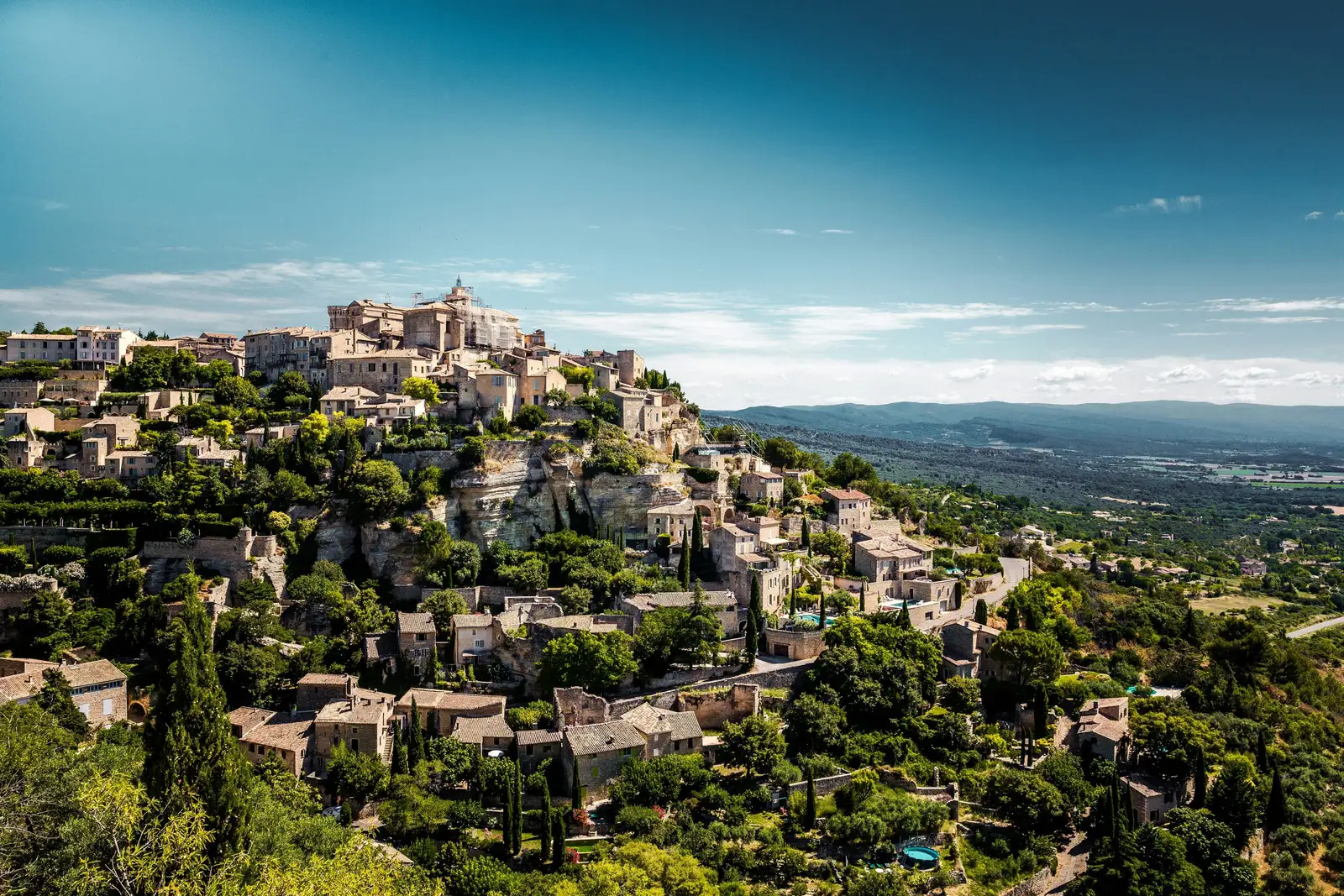
What a Provence Wedding Costs
A Provence wedding runs €100,000 to €350,000 all-in for 40 guests, €100,000 to €800,000 for 80, and from €200,000 at 150. Catering is €150 to €400 a head before drinks. Magic Day weddings in Provence start from €100,000.
The hire an estate quotes buys the house and its land for a weekend, and none of what a wedding needs. So here is where a wedding at each of these properties realistically lands, all-in, with the figure it starts from:
- Château La Coste: near €1.7 million, from €1.5 million
- Airelles Gordes, La Bastide: near €800,000, from €650,000
- Château de Tourreau: near €800,000, from €450,000
- Château d’Estoublon: near €750,000, from €500,000
- Crillon le Brave, Le Mas des Poiriers, Villa Baulieu, Château de Berne, Château de Fonscolombe and Château de la Gaude: near €500,000, from €350,000
- Domaine de Capelongue: near €500,000, from €350,000
- Château de Sannes and Domaine de Canaille: near €350,000, from €250,000
- Château Martinay: near €300,000, from €200,000
- Château La Tour Vaucros and Château les Crostes: near €250,000, from €150,000
- Mas d’Arvieux: near €200,000, from €120,000
- Château de Cassis and Bastide de Puget: near €200,000, from €120,000 and €100,000
What moves the number is how much of the wedding has to be built.
An estate taken whole gives you a house and its land. A kitchen comes in on a truck, so does the furniture, so does the marquee if the forecast turns, and so do the cars that move everyone at the end of the night. A 50-room hotel with a Michelin-starred kitchen already has most of that standing, and charges for it in a different column. Two properties forty minutes apart can quote hire figures that differ by half and land within €20,000 of the same total.
The season moves things less here than it does on the coast. What moves them is the week: Provence in the third week of August is a different operation from Provence in late September, and only one of those needs a plan for 36 degrees at four in the afternoon.
Wedding Planner Provence
Magic Day has been established in Aix-en-Provence at 17 Bd de la République since 2014.
Magic Day has run Provence from an office in Aix-en-Provence since 2014, and the company has planned weddings in Europe since 2008. We work the whole of it, from the Alpilles to the Var interior, at 40 guests and at 200.
What a venue’s hire covers here divides cleanly, which the Riviera’s does not.
At Fonscolombe, Airelles Gordes, la Gaude or Berne you get rooms, a kitchen and the people who run a hotel, and at Berne, Fonscolombe and Gordes you can buy the whole property with them. At Tourreau you get the estate, and at Estoublon the estate with a staffed house standing in it. At La Coste you get neither, because it stays open to the public and sells you the evening. Neither gives you someone to plan the wedding, because that is not what either is for.
What falls to a Provence wedding planner is the same in both cases, and there is one item on the list that belongs to this region alone. Design, catering from a list you often cannot leave, production, entertainment and accommodation are the usual four. The fifth is distance: guests sleeping across four villages, suppliers driving an hour each way, and no replacement within reach for anything that fails on the day.
Being here rather than visiting is most of the value. We see these estates between weddings rather than on a site visit, we know which caterers are on which list this year, and Aix is twenty minutes from three of the ten properties above when a question needs an answer in person.
There is a case for a Provence wedding planner who has worked the region rather than the country. The département sets your curfew. The room count sets your guest list before your guest list does.
The Mistral sets what can be hung and where dinner sits. And the heat between June and September sets the hour your ceremony starts. Every one of those is easier to design around than to discover in week eleven.
Provence Wedding Venues
Twenty-six properties take a full wedding across the Alpilles, the Luberon, the Vaucluse, the Aix countryside, the Var interior and the coast at Cassis. They photograph more alike than they are, and each of them has a page of its own with the figures in full.
The figure that separates them is not the one couples read first.
Every venue list in Provence leads with seated capacity, and seated capacity is rarely what binds here. There is no Nice in Provence, and not many venues have a city of a thousand hotel rooms twenty minutes from the ceremony. Guests sleep on the estate or they drive a dark road at midnight, and so the number that shapes the whole wedding is how many beds the property has.
Château d’Estoublon takes 250 and sleeps 20. Château de Fonscolombe caters 130 and has 50 rooms. Those are two completely different weddings, and nothing in the photographs tells you which is which.
What a property sleeps and what it seats are two different numbers, and in Provence they rarely match.
For beds
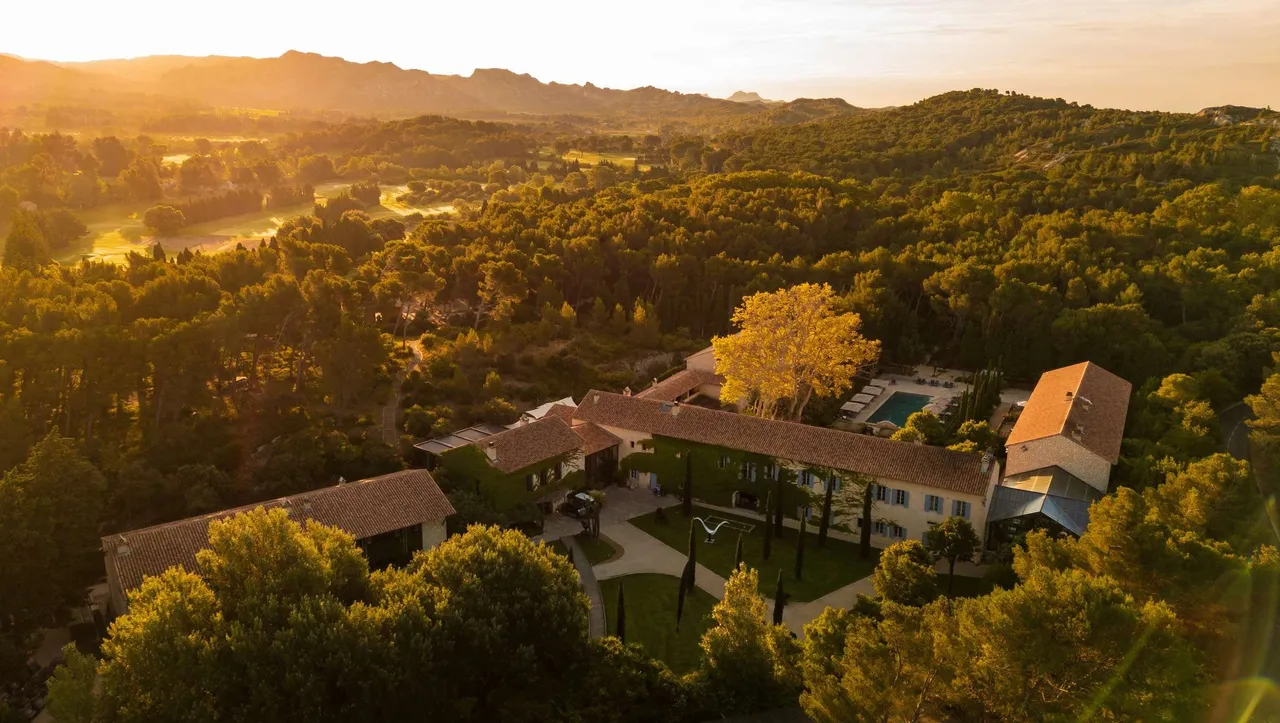
Domaine de Manville below Les Baux sleeps 120 of the 130 guests it will host, the highest proportion in Provence, across a hotel and nine houses in an olive grove with a golf course threaded through it. Château de Fonscolombe twenty minutes north of Aix has 50 rooms for 110 people against 130 catered, five-star and Relais & Châteaux, with a classified chapel and a Michelin star. Domaine de Capelongue opposite Bonnieux sleeps 130 against a 150-guest ceiling. Domaine de Sarson above Grignan sleeps 110 at sixty-nine euros a head a night, the cheapest accommodation attached to any venue we work with.
Crillon le Brave and Airelles Gordes both sleep a wedding of 80 outright, and both sit inside a village rather than at the end of a lane, so the guest list walks home. Gordes is a Palace, one of fewer than thirty in France.
For numbers
Villa Baulieu near Rognes takes 350 in a Romantic-era park of fountains and a maze, with a temple d’amour above it, inside the crater of Provence’s only volcano, and sets no end time for the party. Château d’Estoublon below Les Baux takes 250 across two hundred hectares of olive grove and also has no closing hour, but it sleeps 20, so a wedding there is a transfer operation as much as a wedding and we plan it as one from the first conversation.
Le Mas des Poiriers on the island in the Rhône opposite Avignon seats 200 on the lawn in 65 acres of pear orchards. Château de Sannes on the southern Luberon seats 200 in an orangery beside its pond, with a French garden of the 1670s around it.
For a late night
Château les Crostes above Lorgues states in writing that there are no restrictions on music hours at all, and Le Mas de la Rose outside Orgon sets no closing hour in its brochure either. Château de Berne in the Var and Bastide de Puget at Meyreuil both run to five in the morning. Château La Tour Vaucros at Sorgues dances until four in the Grande Salle, and Domaine de Fontenille at Lauris publishes its hours precisely: half past ten outdoors, four in the morning inside.
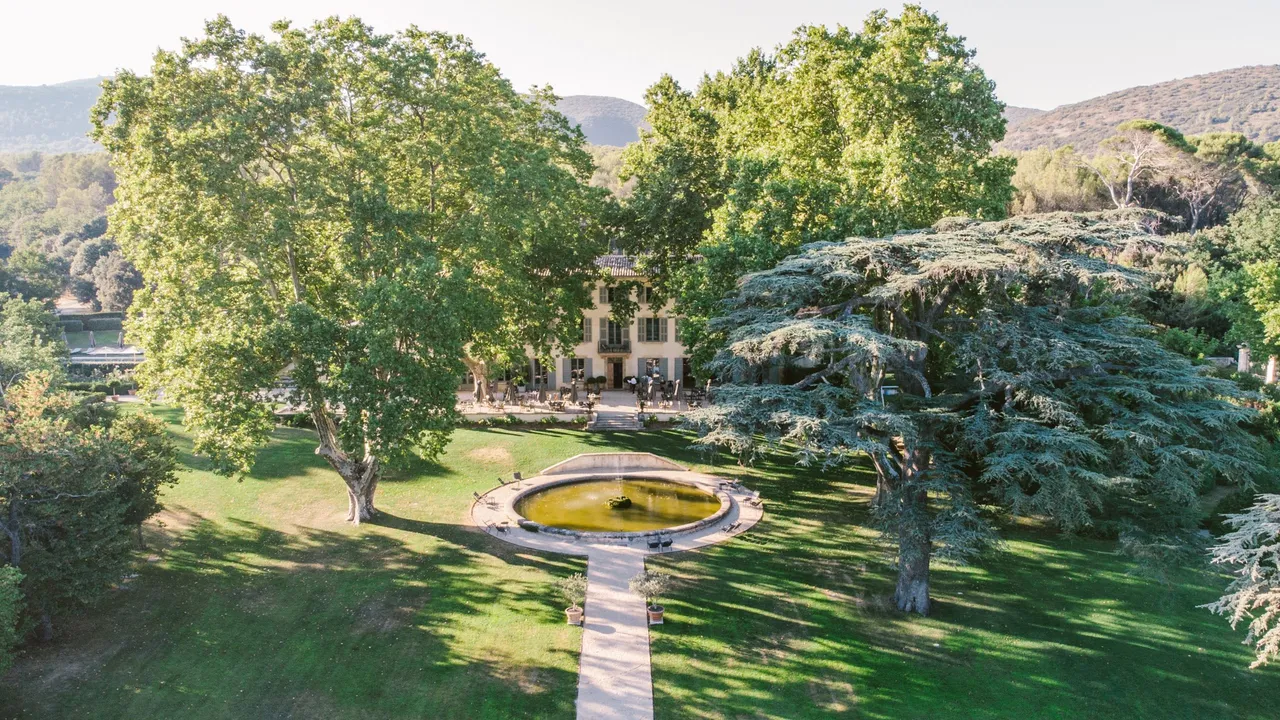
Fontenille is also the clearest illustration of the wet-weather problem in Provence. Its indoor rooms hold sixty against a reception capacity of 120, so every larger wedding there buys a stretch tent, and we always put that tent in the first budget rather than the last.
For Aix at the end of the day
Château de la Gaude is ten minutes from the middle of Aix, which nothing else in Provence can offer: guests fill hotels in a real city with restaurants and a Saturday market, drive ten minutes to an 18th-century bastide with a listed French garden and a Michelin star, and go back somewhere with life in it.
Château La Coste at Le Puy-Sainte-Réparade is the one we suggest when a couple has already told us they find châteaux interchangeable: two hundred hectares of organic vineyard that Patrick McKillen has been filling with Ando, Nouvel, Gehry, Piano, Rogers and Niemeyer since 2002. The trade is that the estate sells tickets every day of the year, so the wedding gets the evening and the public gets the day.
For the coast
Domaine de Canaille sits on sixty private hectares under Cap Canaille inside the Calanques national park, fifteen minutes on foot from the harbour at Cassis, with a four-hundred-square-metre terrace over the water and a path down to its own beach. It takes four weddings a year and asks for four nights.
Château de Cassis is the fortified château on the rock above the same port, with a keep and its ramparts, and a pool garden inside the walls. Its hire runs from six in the evening to four in the morning, and its assembly authorisation allows three cars on the property, so everybody else comes up from the town.
For a smaller wedding
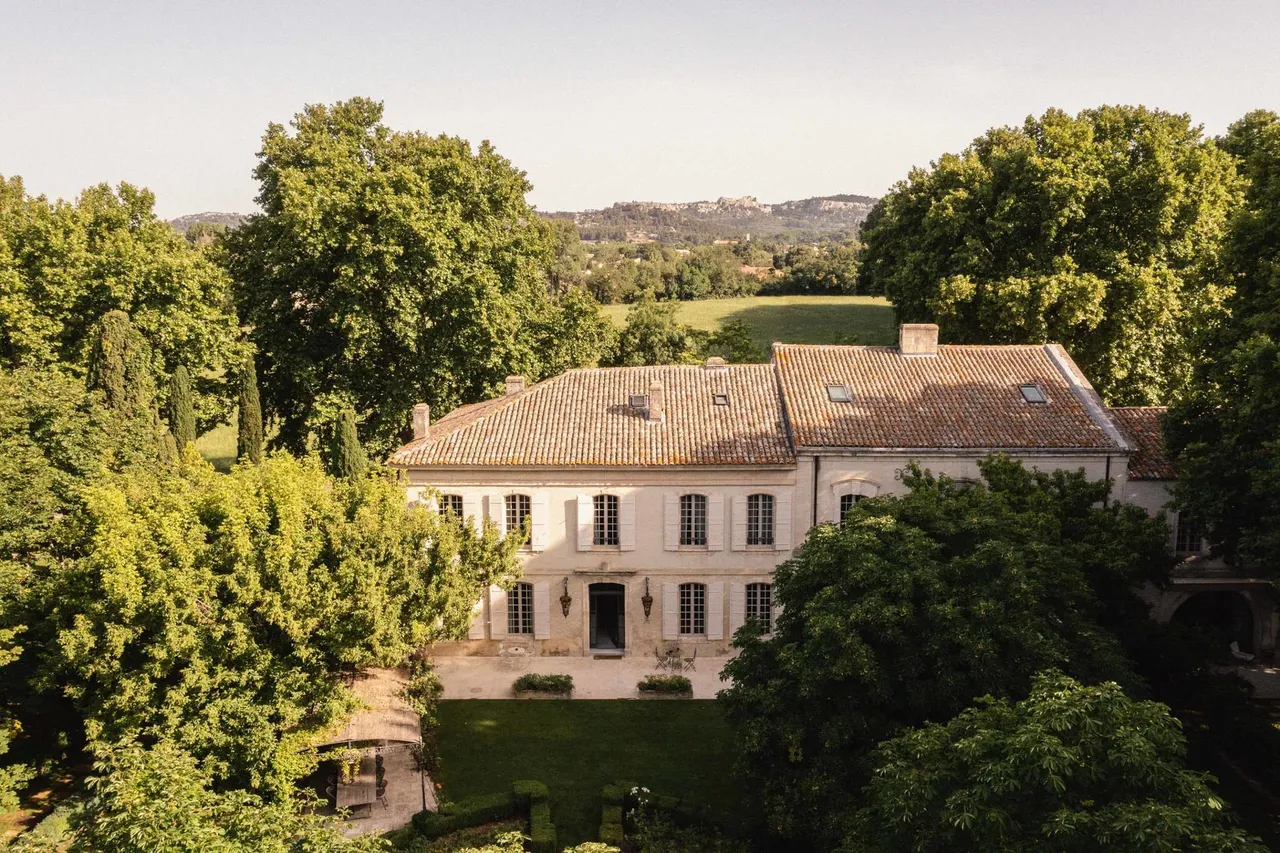
Mas de Chabran at Maussane-les-Alpilles takes a handful of weddings a year for forty guests, in low season only, on a three-night minimum. Mas d’Arvieux in the Alpilles is seventeen minutes from Avignon TGV, and its lavender weeks in June and early July are the dearest of its year, above high summer. Château Martinay below Mont Ventoux sells one figure per month covering the estate and both nights with all twelve bedrooms, charges nothing per head, and takes twelve receptions a year.
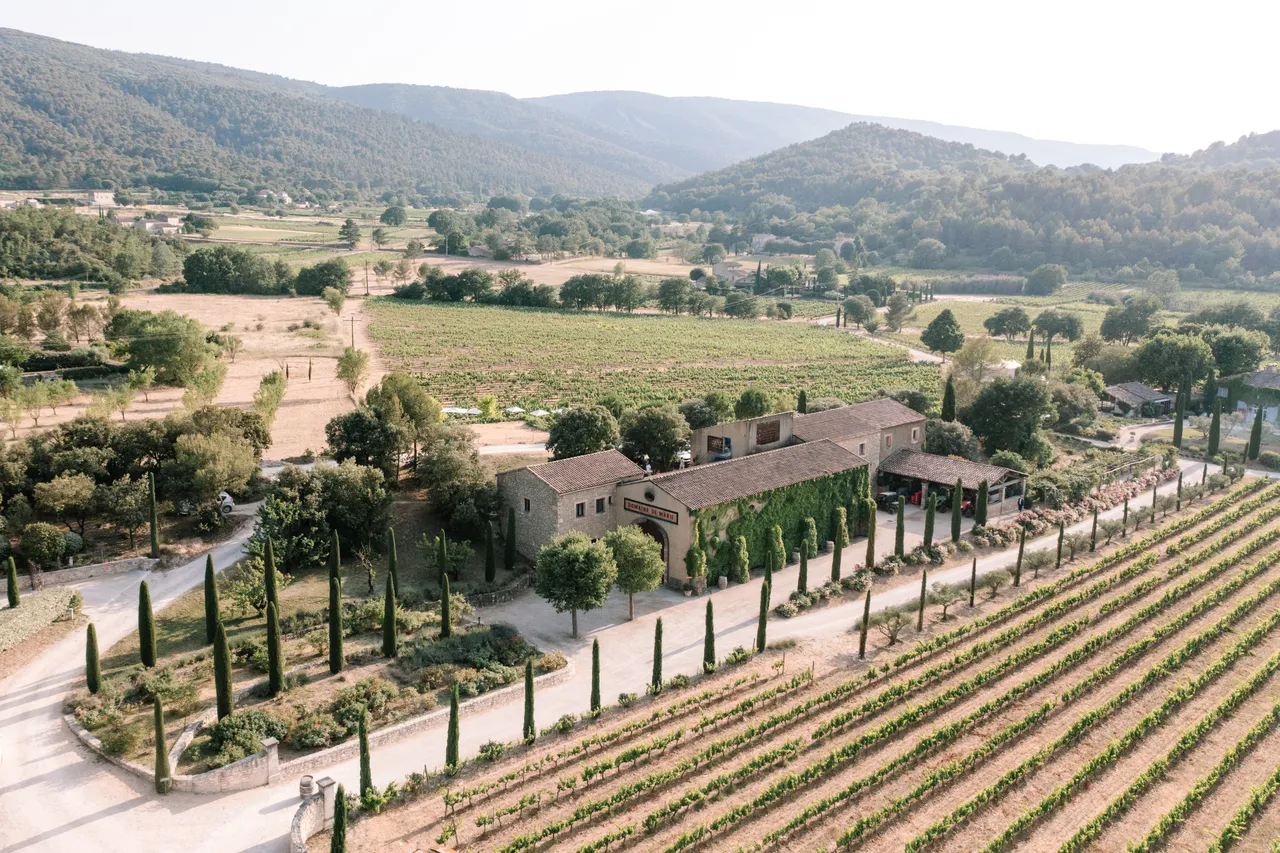
La Bastide de Marie stands in its own vineyard below Ménerbes and sleeps 46, and it bills every meal on a minimum of seventy adults, which gives it a floor as well as a ceiling.
Taken as a bare house
Château de Tourreau near Sarrians is twenty acres behind iron gates, taken whole for four days with no hotel guests and no second party behind the hedge: sixteen bedrooms for 29, a chapel for 70 and dinner for 150 on the lawn. It is the property here we know most closely, and the one we send a wedding to when the couple wants the place to themselves more than they want a concierge.
La Bastide de Laurence outside L’Isle-sur-la-Sorgue charges no venue fee at all. The house is rented by the week or for three nights, an event adds three required services under two thousand euros, and the caterer and everything on the floor arrive from outside.
Venue guides in Provence
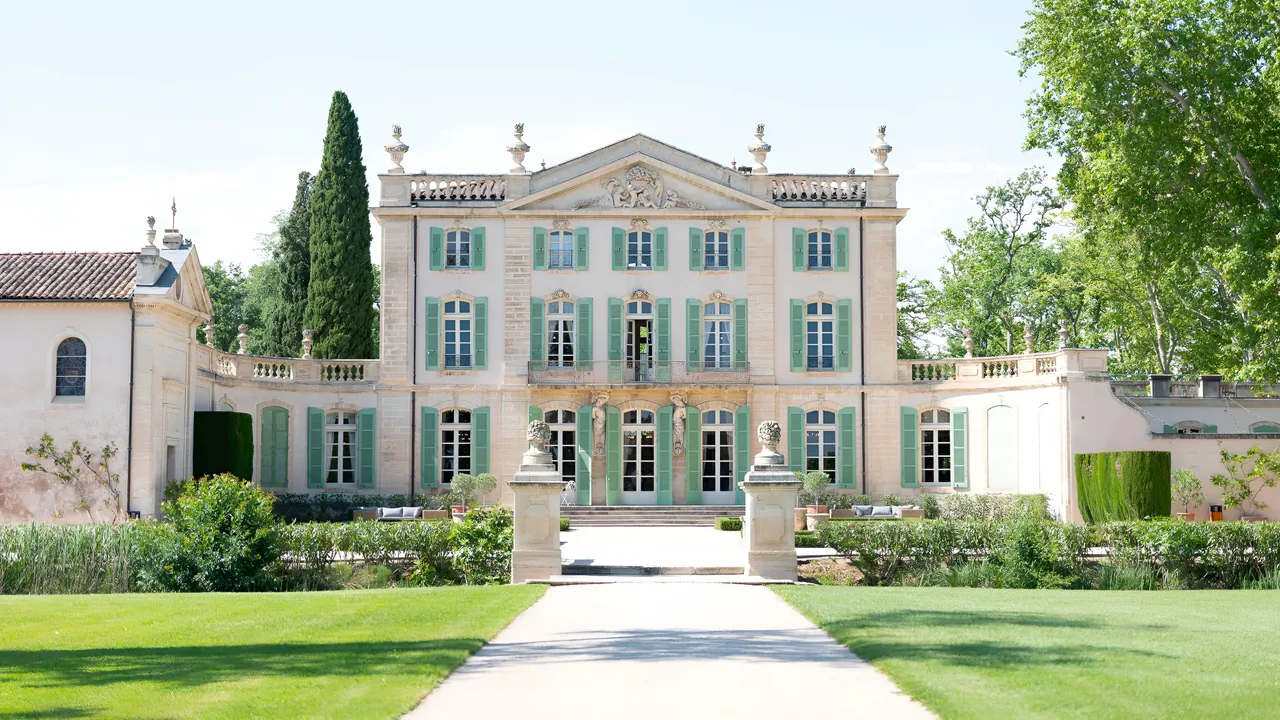 Château de Tourreau
- Maximum capacity
- 150 guests
- Starting budget
- €450,000+
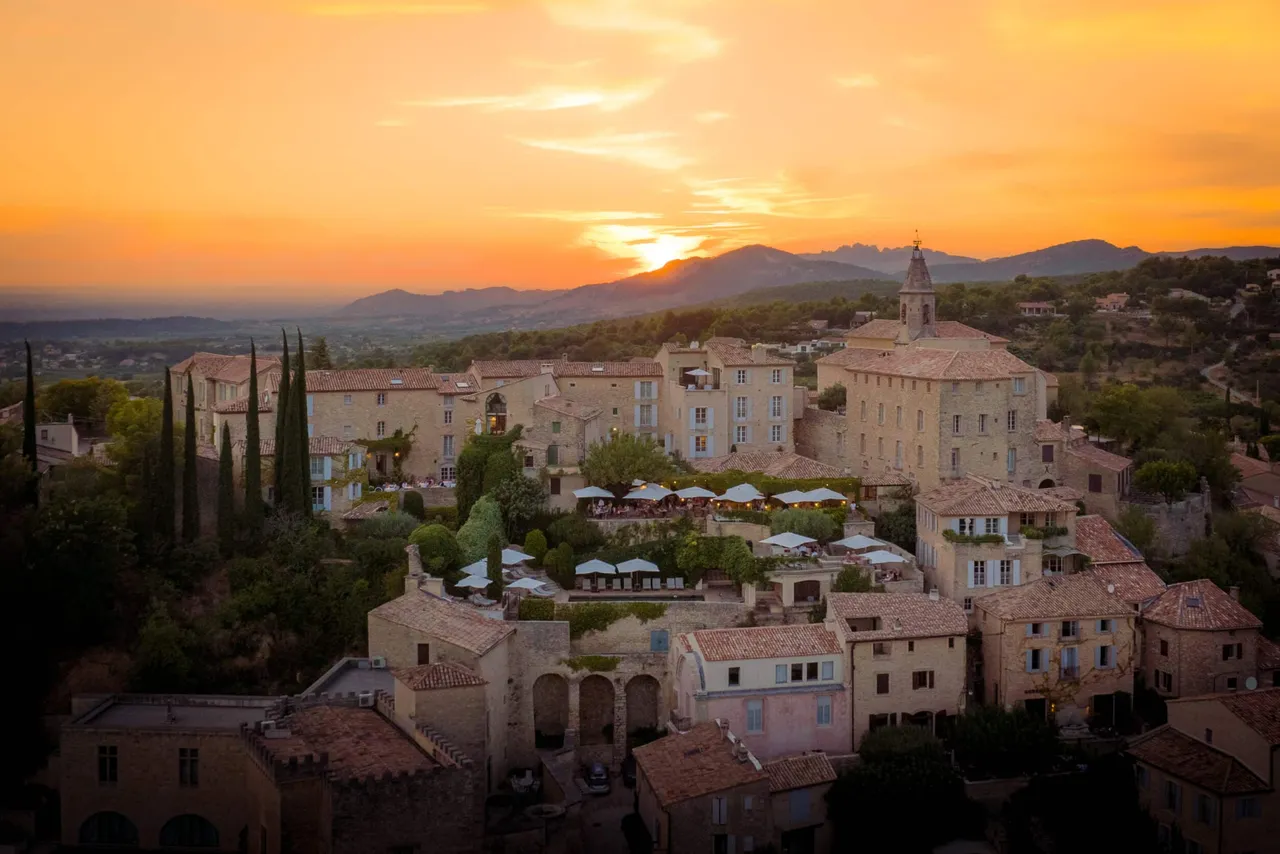 Crillon le Brave
- Maximum capacity
- 80 guests
- Starting budget
- €350,000+
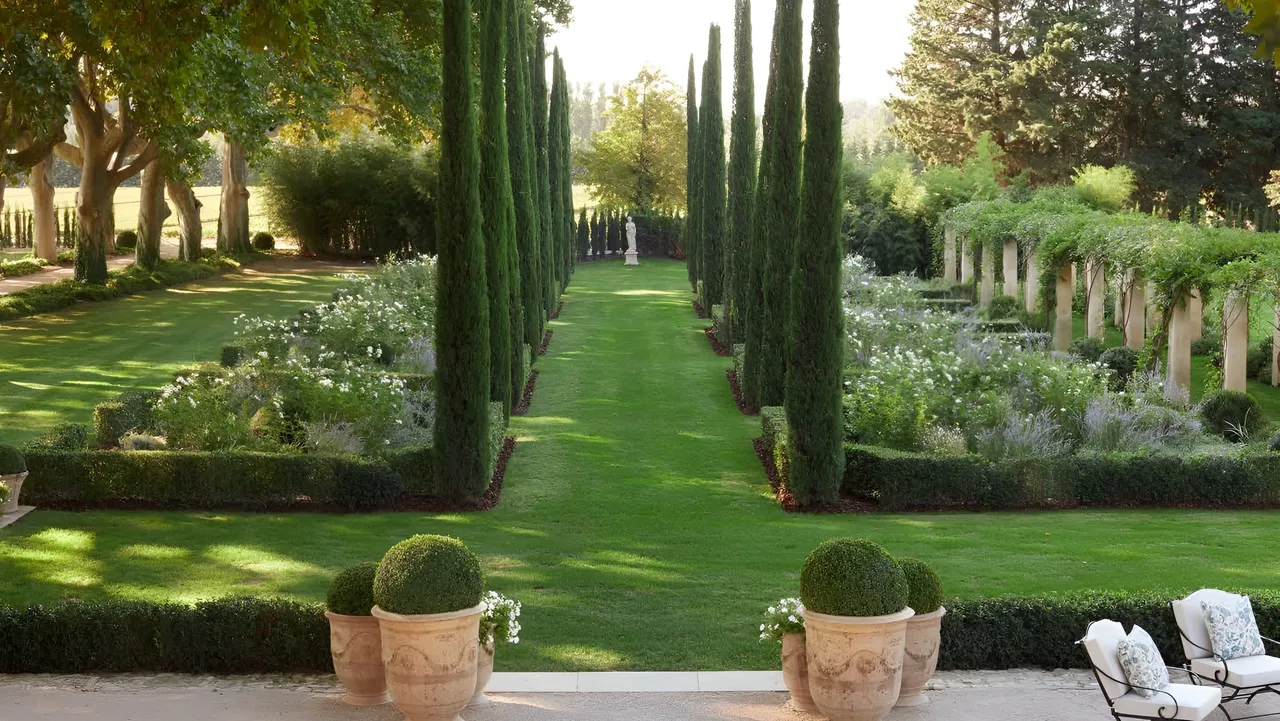 Le Mas des Poiriers
- Maximum capacity
- 200 guests
- Starting budget
- €350,000+
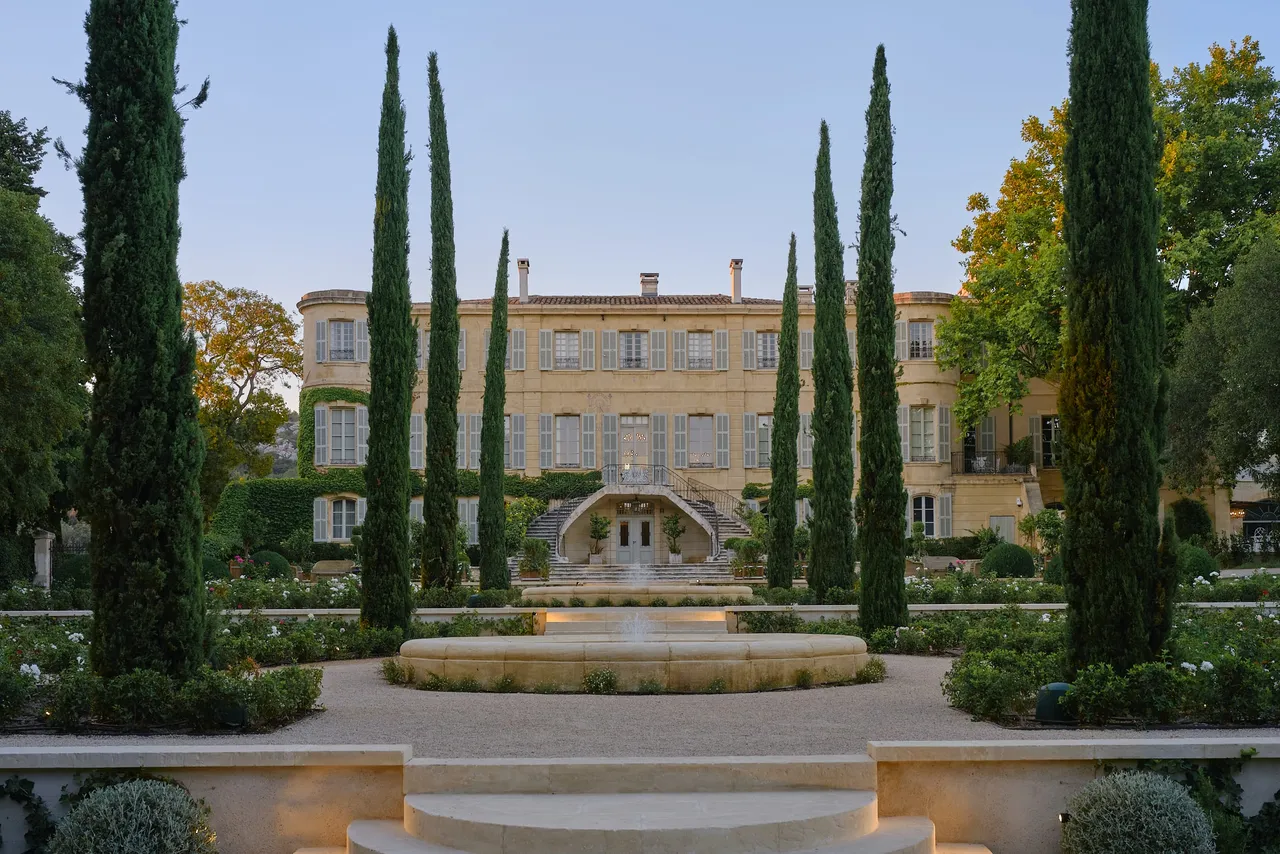 Château d'Estoublon
- Maximum capacity
- 250 guests
- Starting budget
- €500,000+
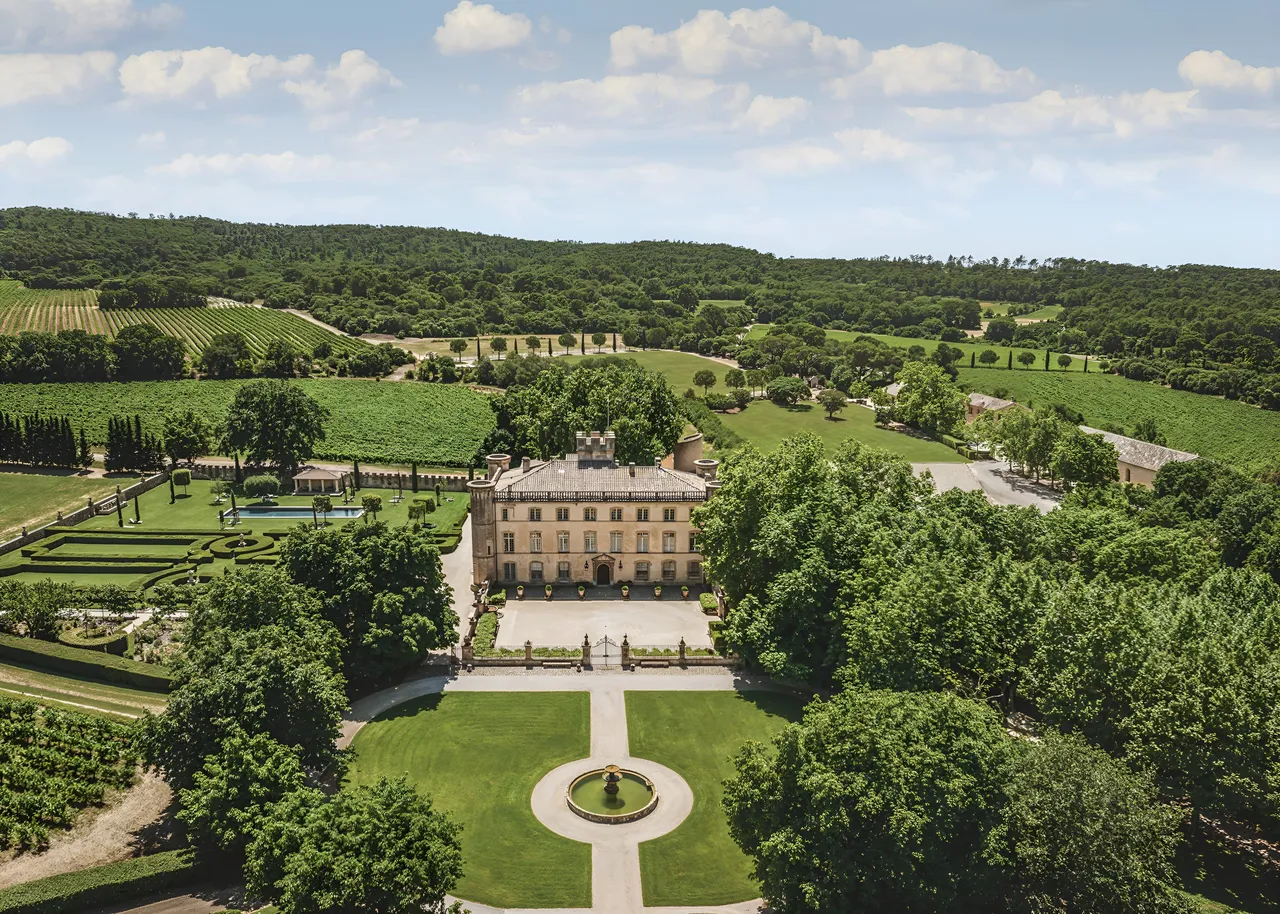 Villa Baulieu
- Maximum capacity
- 350 guests
- Starting budget
- €350,000+
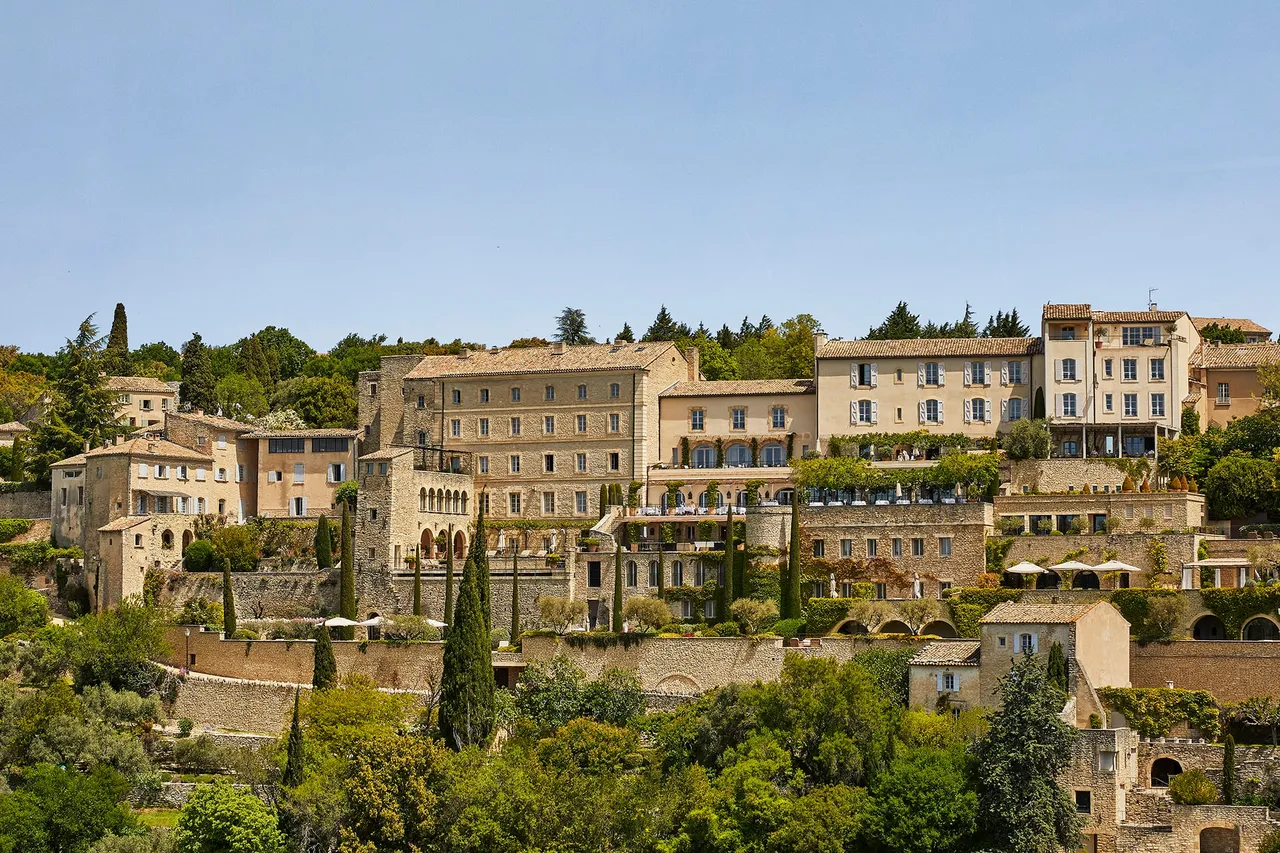 La Bastide de Gordes
- Maximum capacity
- 80 guests
- Starting budget
- €650,000+
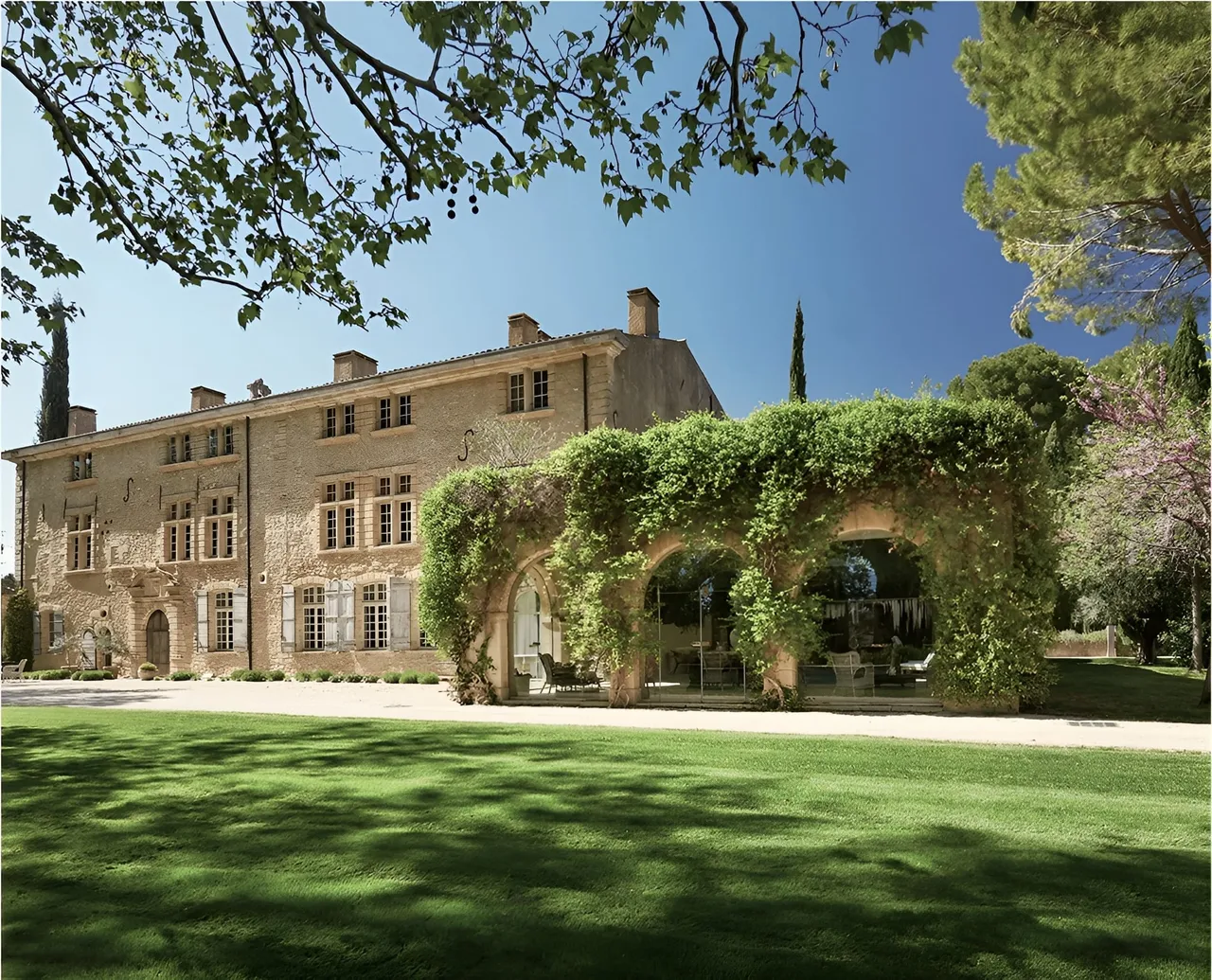 Château de Sannes
- Maximum capacity
- 200 guests
- Starting budget
- €250,000+
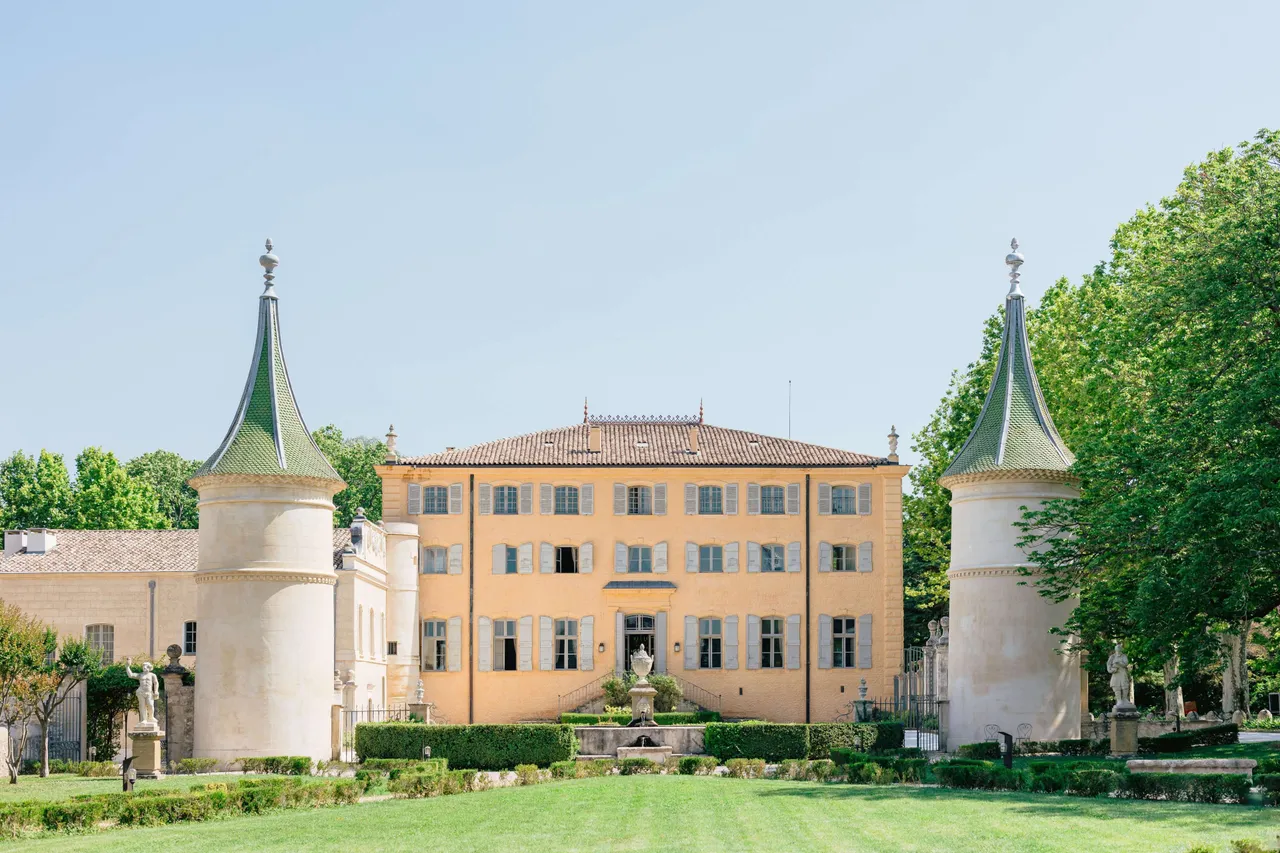 Château de Fonscolombe
- Maximum capacity
- 130 guests
- Starting budget
- €350,000+
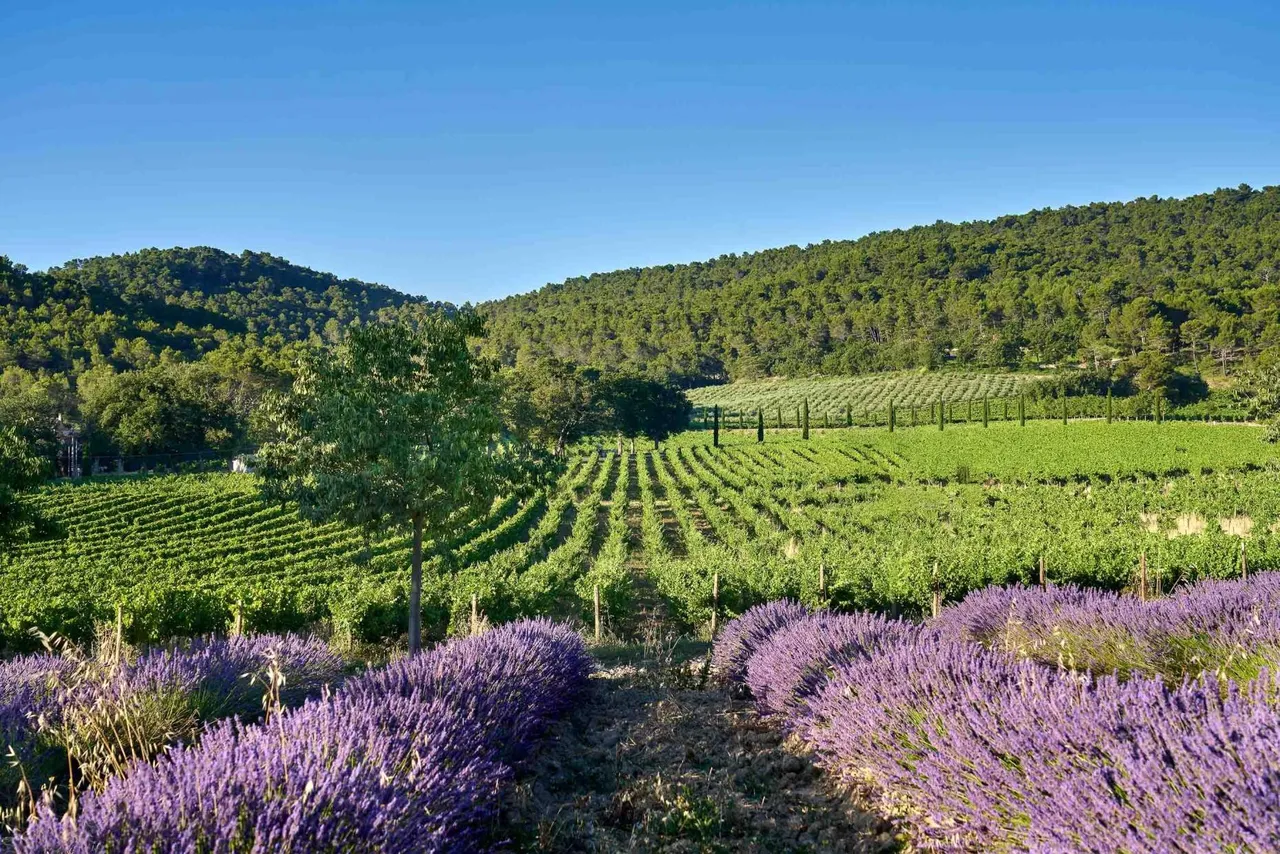 Château La Coste
- Maximum capacity
- 200 guests
- Starting budget
- €1,500,000+
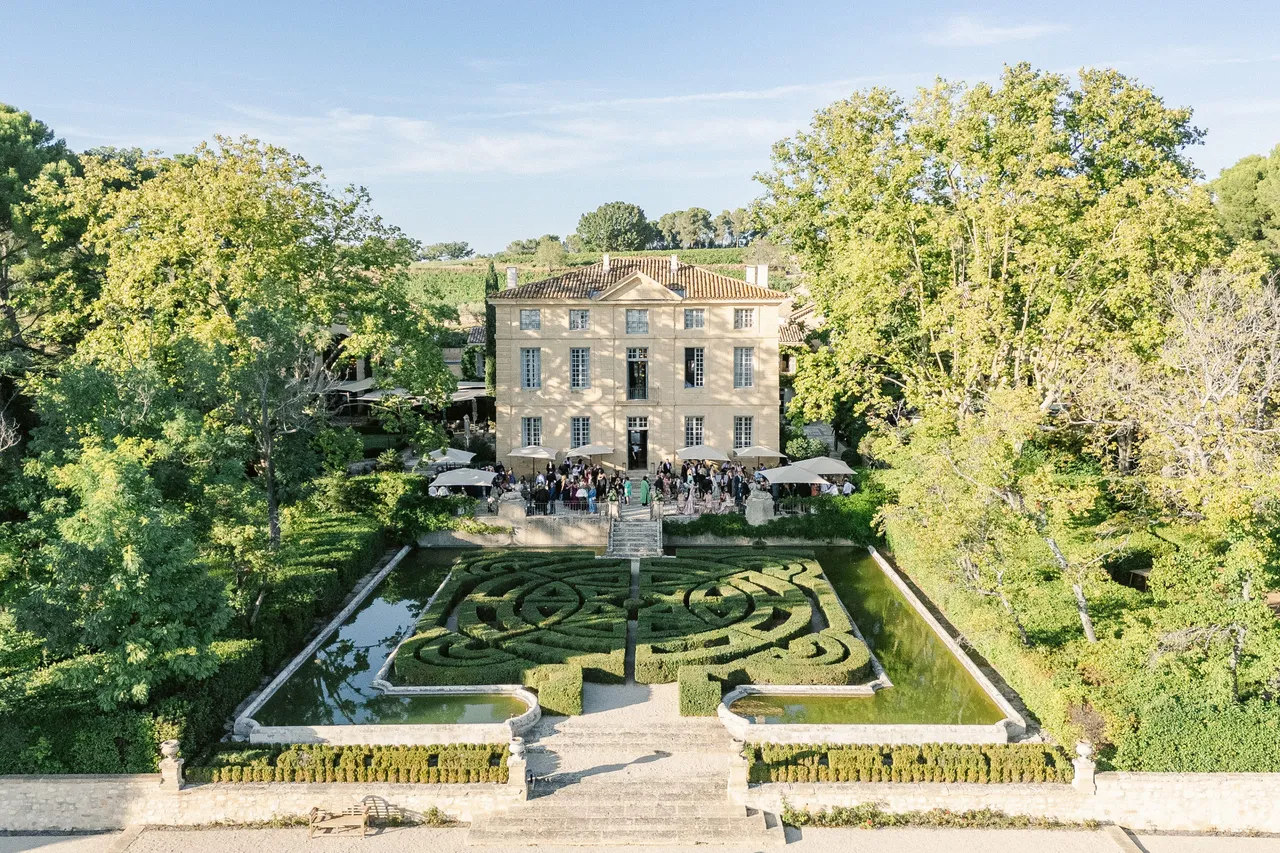 Château de la Gaude
- Maximum capacity
- 150 guests
- Starting budget
- €350,000+
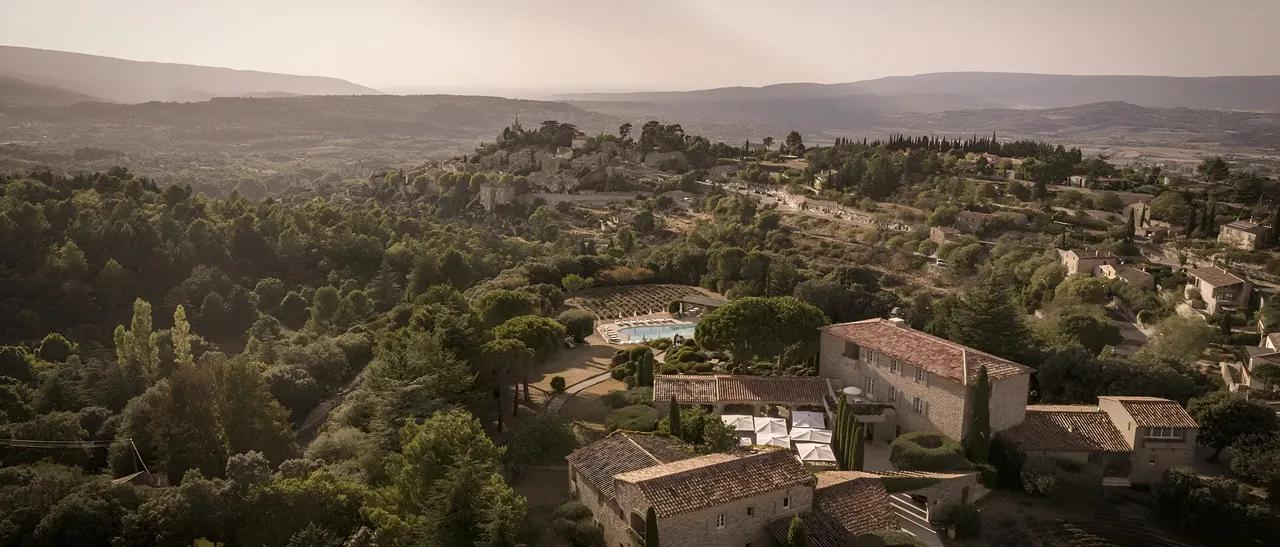 Domaine de Capelongue
- Maximum capacity
- 150 guests
- Starting budget
- €350,000+
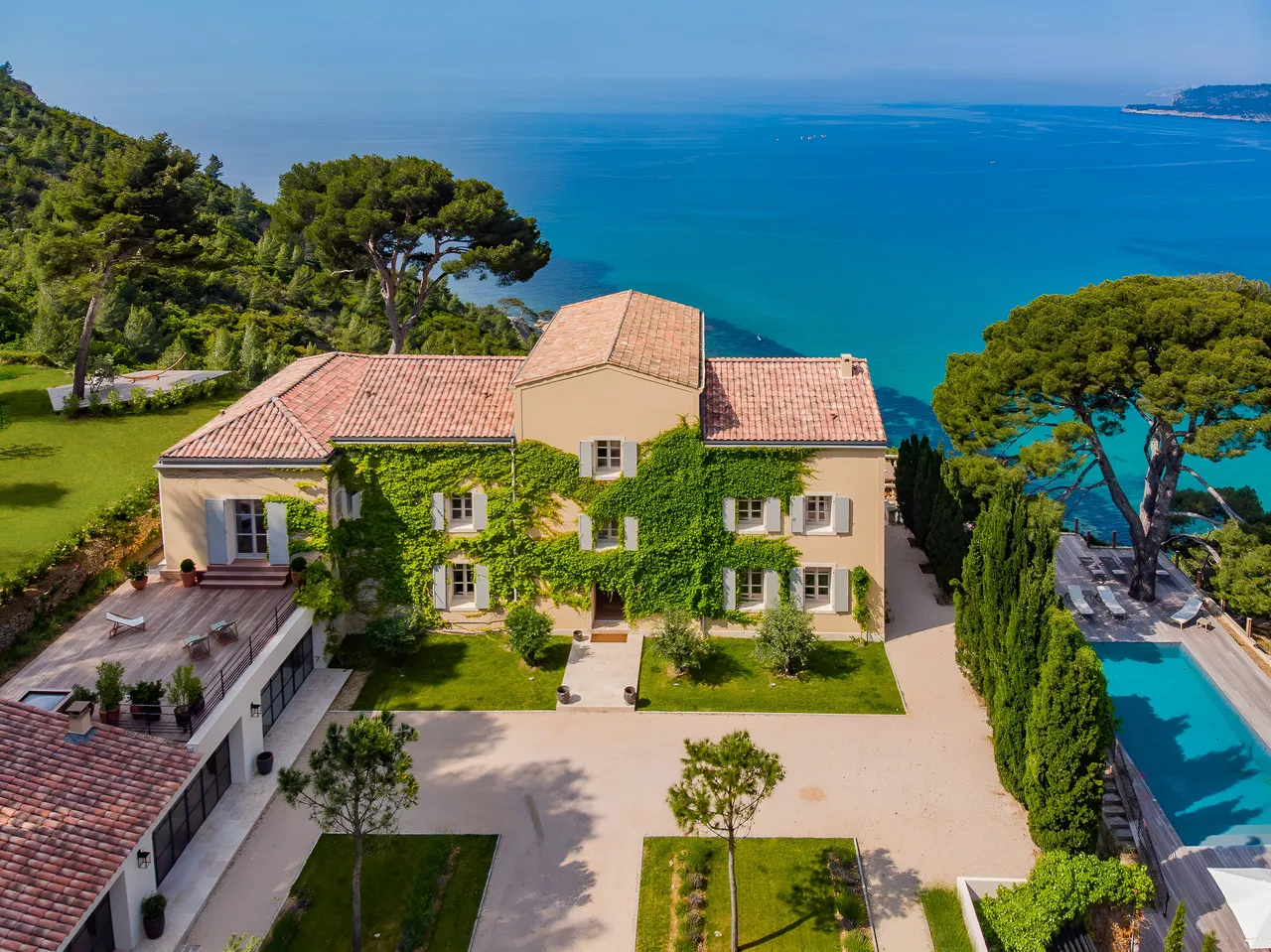 Domaine de Canaille
- Maximum capacity
- 110 guests
- Starting budget
- €250,000+
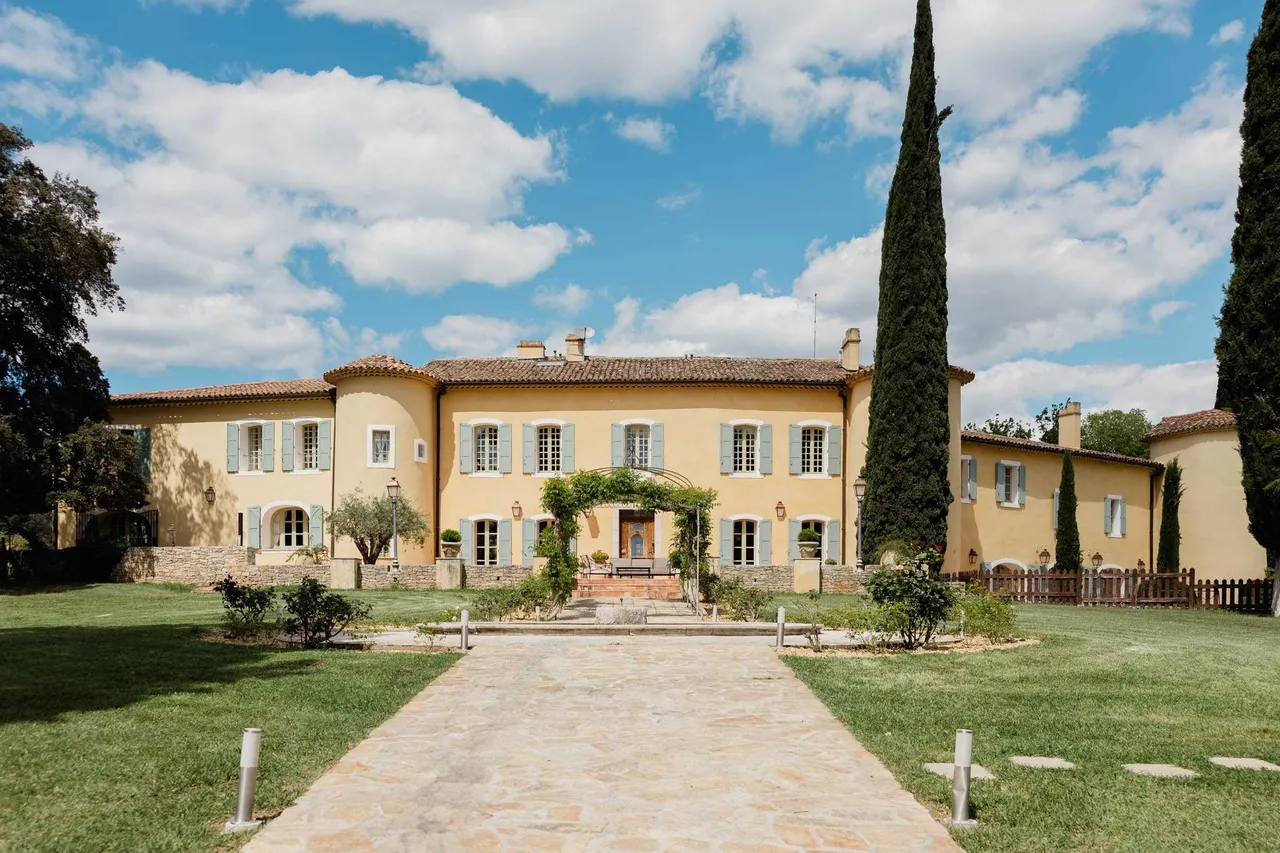 Château les Crostes
- Maximum capacity
- 150 guests
- Starting budget
- €150,000+
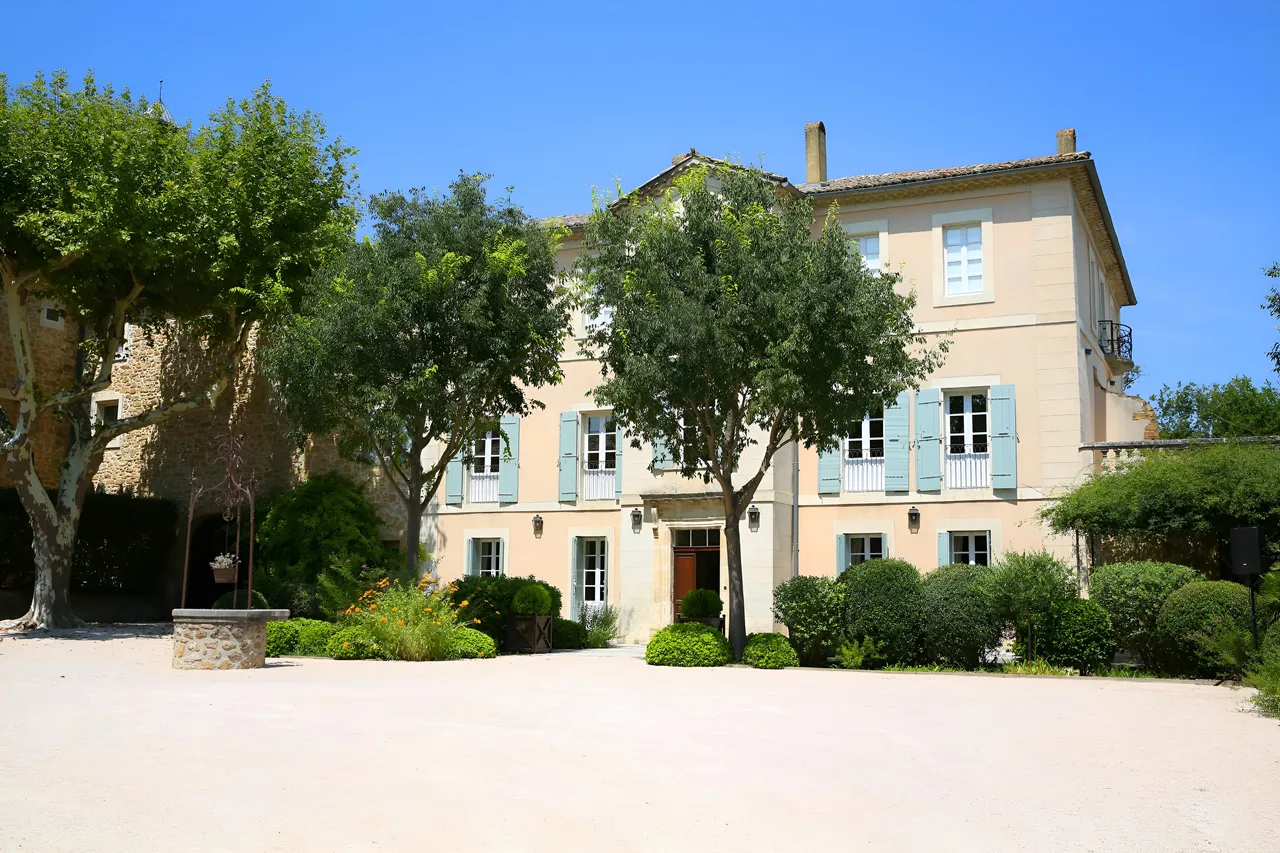 Château La Tour Vaucros
- Maximum capacity
- 200 guests
- Starting budget
- €150,000+
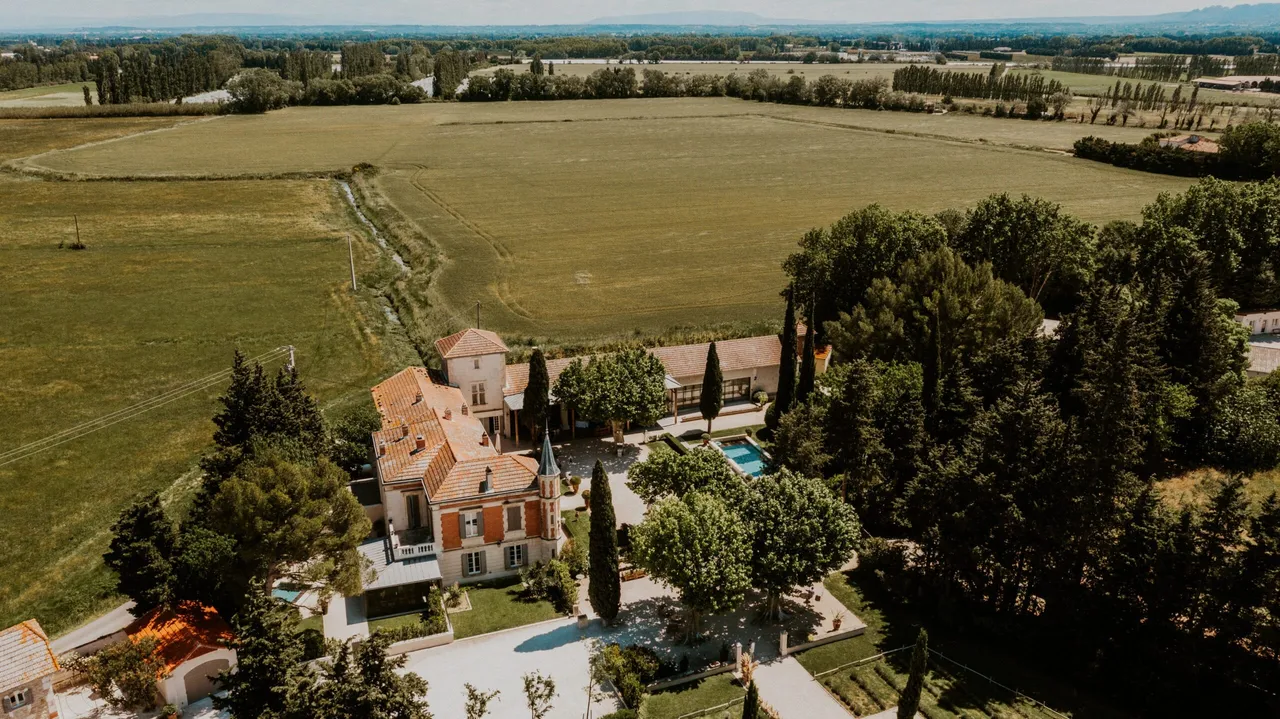 Mas d'Arvieux
- Maximum capacity
- 150 guests
- Starting budget
- €120,000+
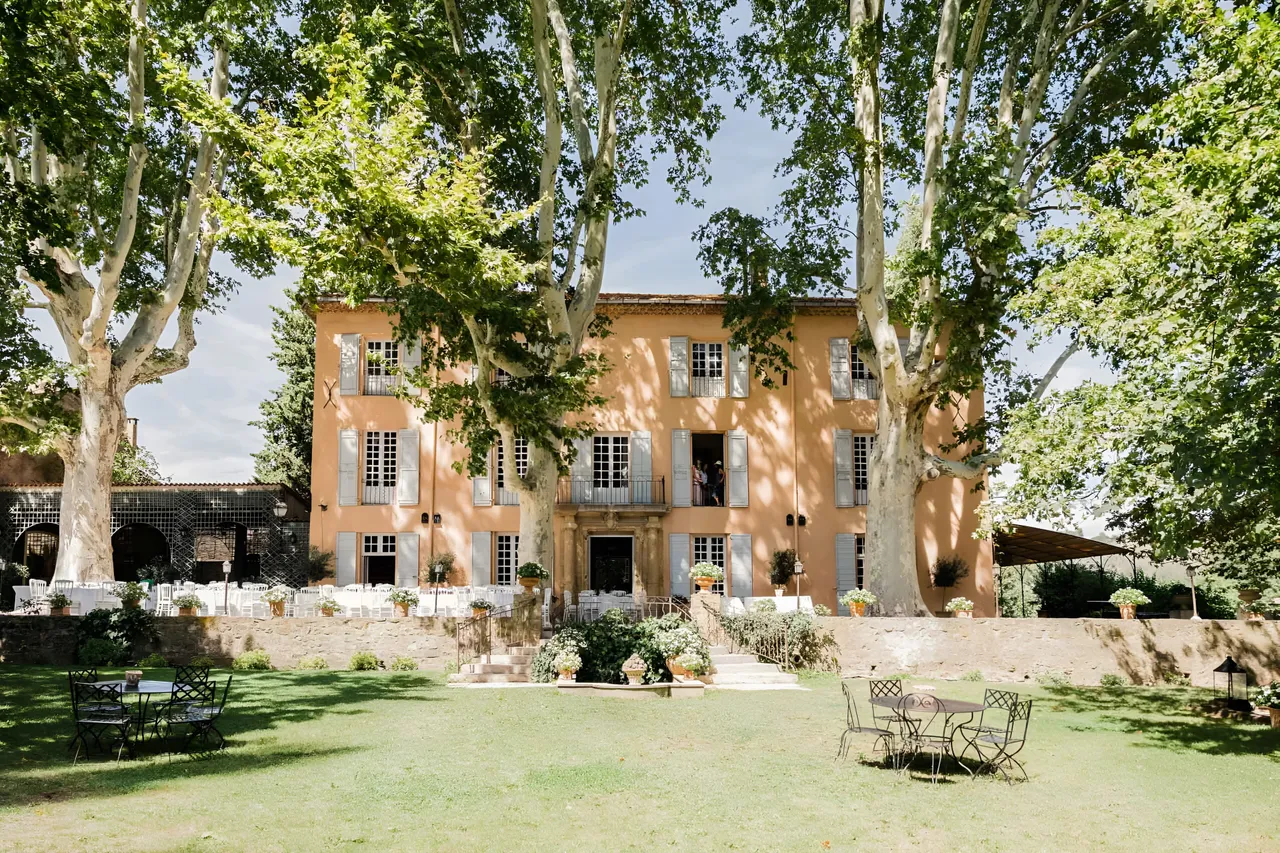 Bastide de Puget
- Maximum capacity
- 180 guests
- Starting budget
- €100,000+
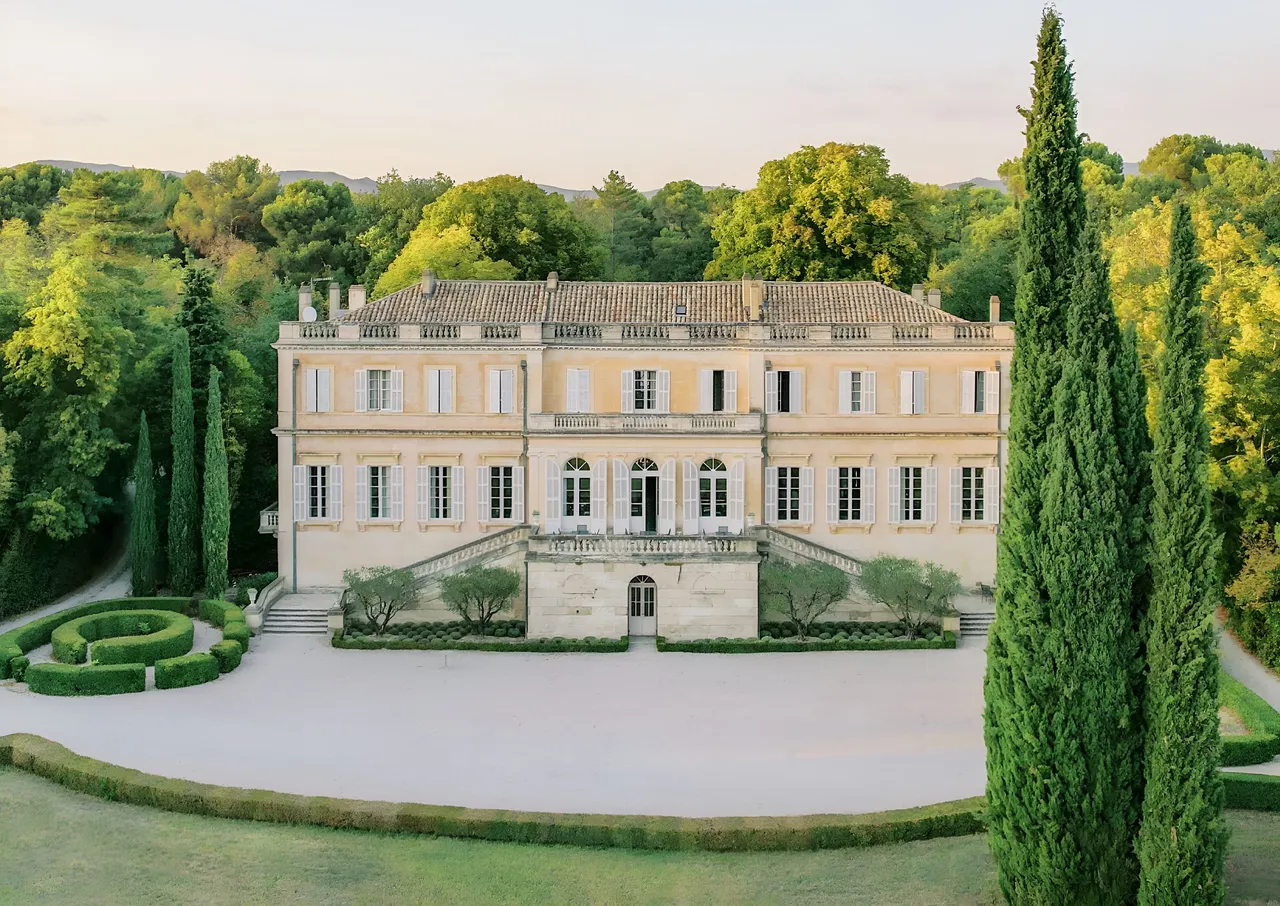 Château Martinay
- Maximum capacity
- 120 guests
- Starting budget
- €200,000+
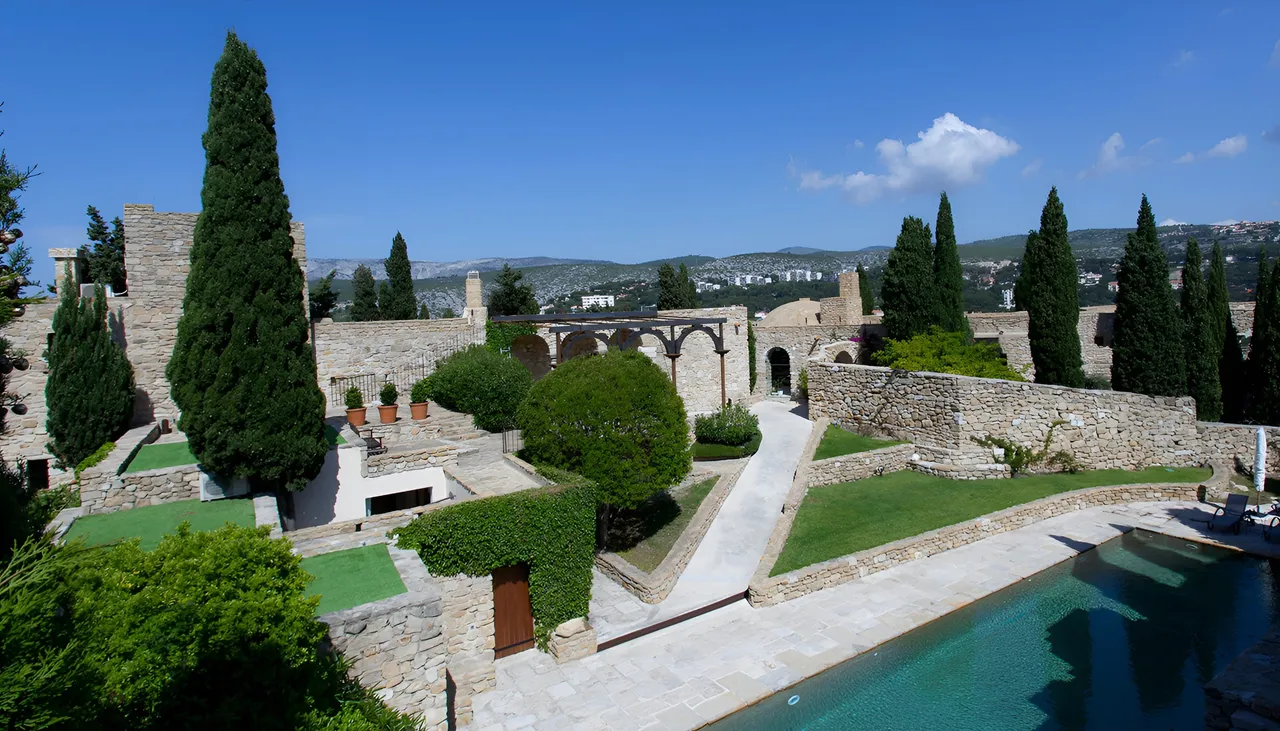 Château de Cassis
- Maximum capacity
- 130 guests
- Starting budget
- €120,000+
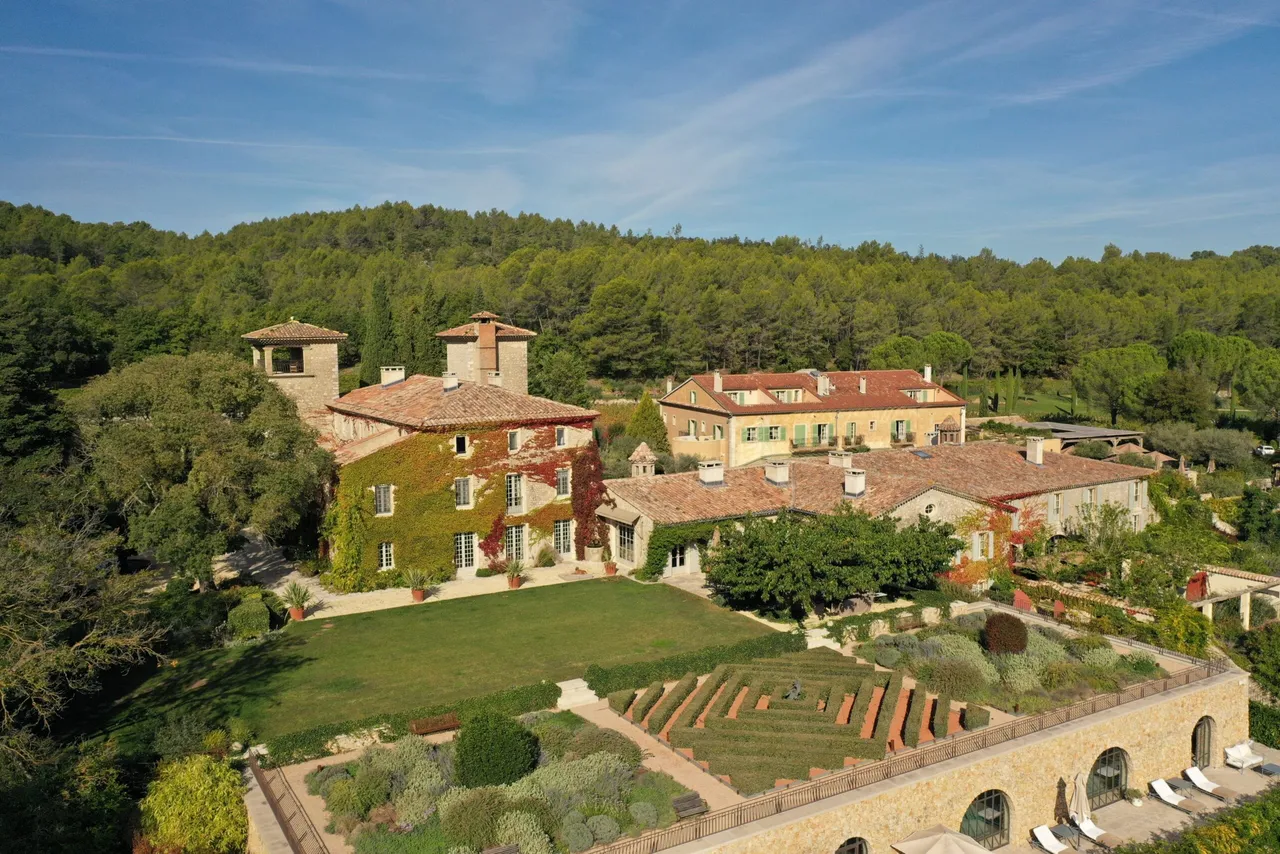 Château de Berne
- Maximum capacity
- 120 guests
- Starting budget
- €350,000+
 Domaine de Manville
- Maximum capacity
- 130 guests
- Starting budget
- €200,000+
 Domaine de Fontenille
- Maximum capacity
- 120 guests
- Starting budget
- €250,000+
 La Bastide de Marie
- Maximum capacity
- 90 guests
- Starting budget
- €300,000+
 Mas de Chabran
- Maximum capacity
- 40 guests
- Starting budget
- €150,000+
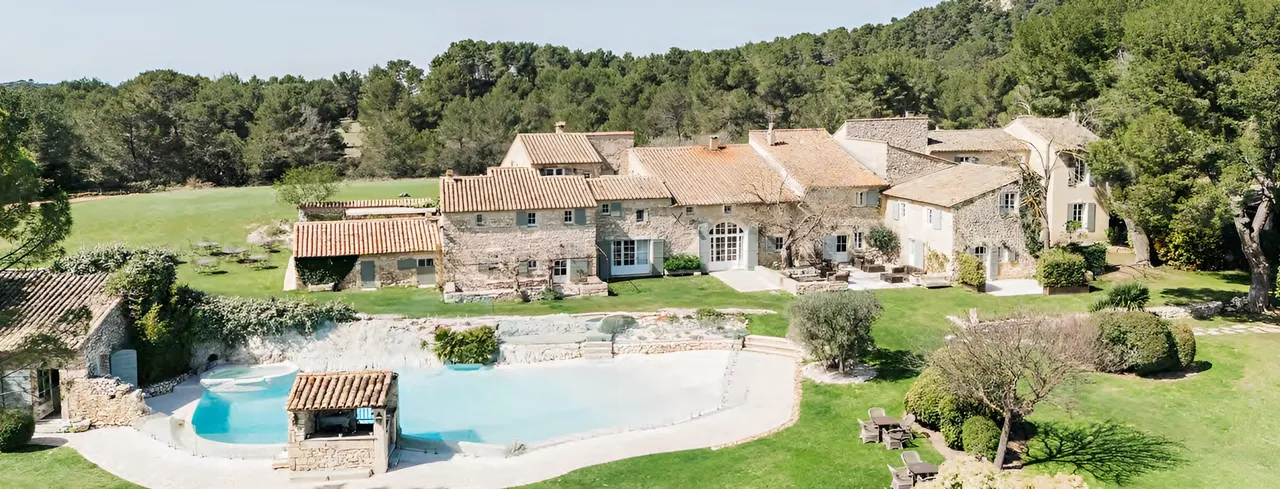 Le Mas de la Rose
- Maximum capacity
- 150 guests
- Starting budget
- €100,000+
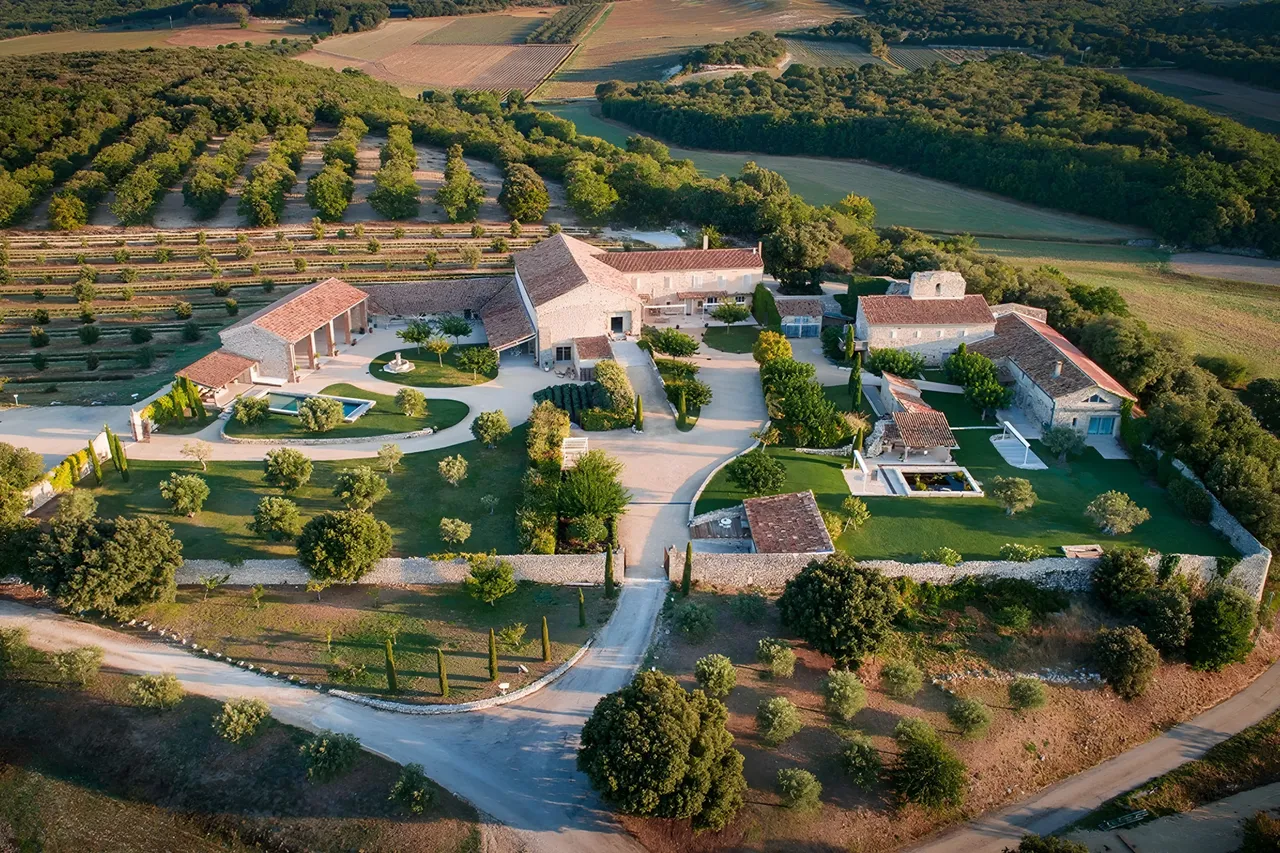 Domaine de Sarson
- Maximum capacity
- 110 guests
- Starting budget
- €100,000+
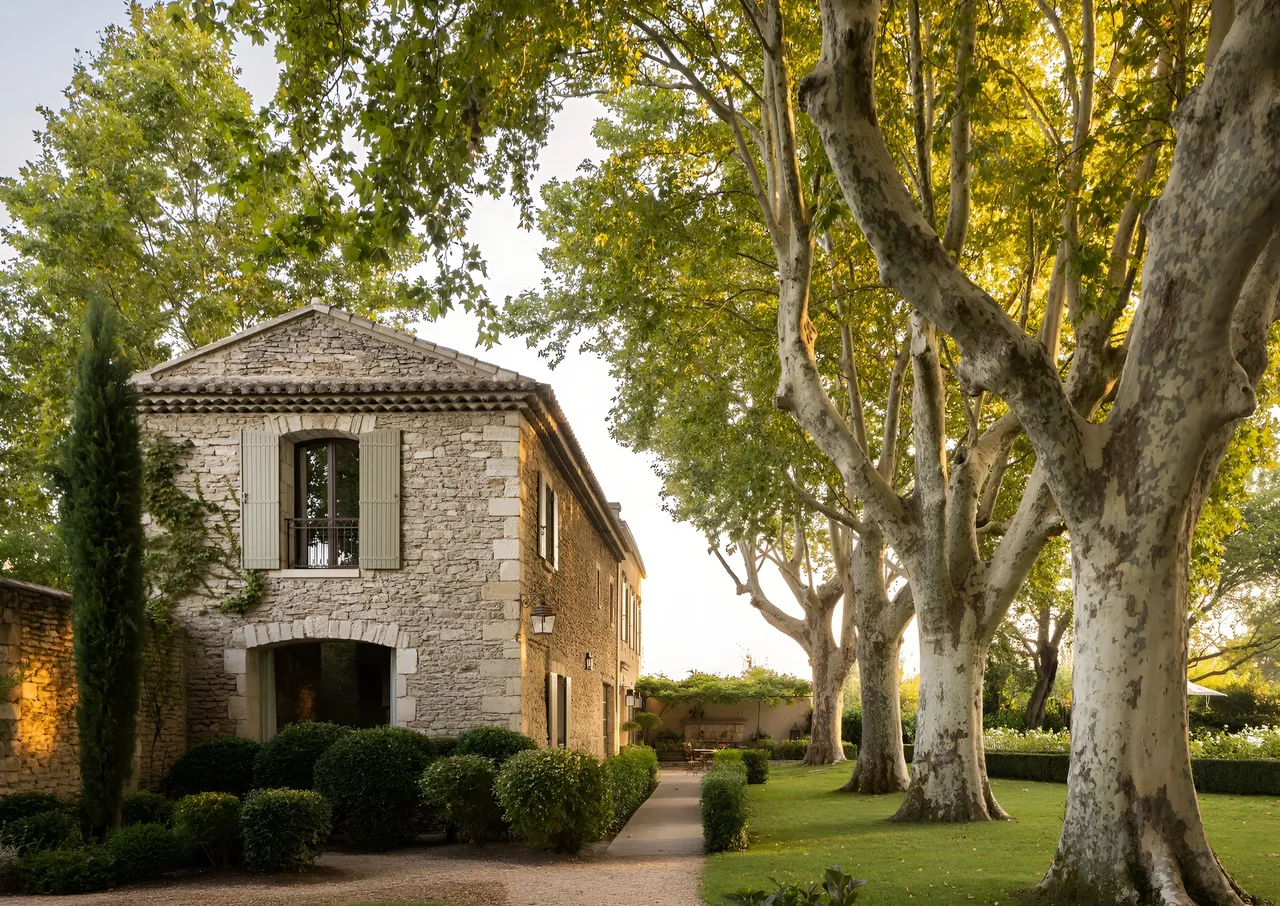 La Bastide de Laurence
- Maximum capacity
- 80 guests
- Starting budget
- €100,000+
Where to Marry in Provence
Provence reads as one place and works as seven. Each has a different landscape, a different drive time, and in four cases a different département deciding when your music stops.
The Alpilles are the limestone spine between Arles and Saint-Rémy: Les Baux on its rock, olive groves below, and the light every painter came for. Château d’Estoublon is here, Mas d’Arvieux at the western end towards Tarascon, Le Mas de la Rose at the eastern end above Orgon, Mas de Chabran at Maussane and Domaine de Manville below Les Baux itself. This is the most photographed part of Provence and the least supplied with beds, so the Alpilles wedding is nearly always split between an estate and a village. Manville is the exception that proves it, because it sleeps almost everybody.
The Luberon is higher, greener and cooler, a string of hill villages from Gordes through Bonnieux to Ménerbes, and it has its own page because it is the part of Provence that can sleep a whole wedding. Airelles Gordes is here, Domaine de Capelongue on the hillside opposite Bonnieux, La Bastide de Marie in its vineyard below Ménerbes, Domaine de Fontenille at Lauris on the Durance side, and Château de Sannes on the range’s southern side near Ansouis and Lourmarin. La Bastide de Laurence sits at its western edge outside L’Isle-sur-la-Sorgue. The altitude is a real advantage in August and a real risk in May, and the roads between the villages are beautiful and slow.
The Vaucluse plain runs north from Avignon towards Mont Ventoux, through Carpentras and the Côtes du Rhône villages. Château de Tourreau is here, Château Martinay on the other side of Carpentras, Château La Tour Vaucros at Sorgues half an hour from Avignon, and Crillon le Brave twenty minutes east on the first slopes of Mont Ventoux. Le Mas des Poiriers is at its southern end, on the Île de la Barthelasse across the Rhône from Avignon. It is flatter, less visited, closer to Avignon’s TGV station than anywhere else on this page, and the least expensive part of Provence to put a wedding in.
The Aix countryside runs north from Aix to the Durance and east to the Montagne Sainte-Victoire: Le Puy-Sainte-Réparade, Rognes, Meyreuil, and Aix itself on the doorstep. Five of these venues are here, all within half an hour of one another, and three of them carry a Michelin star or Michelin Keys. It is the answer when guest accommodation matters more than isolation, because Aix has a city’s worth of it, and it has its own page for that reason.
The Var interior is the wooded country around Lorgues and Cotignac on the way to the sea. Château de Berne is here and Château les Crostes fifteen minutes from it, on two hundred hectares with no music curfew at all. It is closer to the coast than to Avignon, which shapes both the guest list and the weekend around it.
The Drôme provençale is the northern end of it, above Vaison-la-Romaine in lavender country between the Ventoux and the Rhône. Domaine de Sarson is here, on the heights above Grignan, and it is the one part of Provence on this page that sits in another region administratively and another world practically: Marseille airport is an hour and 49 minutes away and the station you want is Montélimar. The rates are the lowest on this page and the journey is the longest, which is the whole trade.
The coast at Cassis is the last of them and the only one on the water: the calanques, the Cap Canaille and a fishing port half an hour from Marseille. Château de Cassis stands on the rock above the port and Domaine de Canaille on sixty hectares the other side of the cape. This is Provence with a sea view rather than the Riviera, and the drive to Nice is over two hours.
The practical version: the Alpilles for the landscape, the Luberon for the summer heat, the Vaucluse for value, Aix for guests, the Var if half the wedding wants a beach on the Friday, the Drôme if the budget matters more than the drive, and Cassis if it wants the sea in the photographs.
Can You Legally Marry in Provence?
No, in almost every case. French law puts the civil ceremony at the mairie, and one of you must have lived in the commune for 30 days before the banns are published. That rules out most foreign couples, and no château here can change it.
What happens instead is straightforward. Couples marry legally at home some weeks before, usually at a registry office, and hold a symbolic ceremony in Provence that carries the whole weight of the day.
Provence does offer something the coast largely does not, which is chapels. Fonscolombe and Tourreau both have one on the estate, Tourreau’s holds 70, and a blessing inside a building that has been used for the purpose since the 18th century is closer to what most couples pictured than a lawn is.
A Catholic ceremony is a separate question, because the church requires the completed civil marriage first and the parish will ask for the certificate.
Planning a wedding in Provence?
INQUIREMusic Curfew and Noise in Provence
No prefectural order in Provence names an hour, and the region is spread across three départements that write their rules differently.
Château de Tourreau, Château Martinay, Château La Tour Vaucros, Domaine de Capelongue and Airelles Gordes are in the Vaucluse, whose order bans loudspeakers outdoors at venues unless the mayor grants an exception. At Airelles Gordes that shapes the evening rather than ending it: the garden is held to 90 decibels until half past ten, and the dancing then moves into a ballroom with no sound limit at all. Martinay does the same at ten, into its art deco rooms, and runs to four.
Estoublon, Fonscolombe, La Coste, la Gaude, Château de Cassis, Domaine de Canaille, Mas d’Arvieux and Bastide de Puget are in the Bouches-du-Rhône, which bans them outside venues and in their courtyards and gardens. Puget is the clearest case of what that means in practice: dinner is outdoors under the trees and the music never is, so the dancing is in the salons from the start and runs to five in the morning. Château de Berne and Château les Crostes are in the Var.
The Var’s own arrêté, of 20 September 2002, names no hour for music at all: what it sets is a noise threshold measured at a neighbour’s property, tightening at 22h. An hour in the Var therefore comes from the commune or from the contract.
On the Saint-Tropez peninsula it is 23h across all four communes. At Château de Berne, in Flayosc, it is the contract, and it runs to 2h or 5h depending on which formula you take. Everywhere else the hour that binds is the venue’s own, from 22h outdoors at Martinay through 23h at la Gaude and Capelongue, midnight at Château de Cassis and two in the morning at Domaine de Canaille, to nothing at all at Estoublon and Château les Crostes, neither of which sets an end time and neither of which has a neighbour close enough to need one. We get it in writing before a venue is signed rather than after.
Most properties also run a decibel limiter, set around 90 to 95 dB(A) against a legal ceiling of 102 dB(A), and monitored by a technician who is not on your side of the argument. A limiter is not a curfew. It caps the band all night, including the part you were counting on.
We build the evening backwards from whichever binds first, and in Provence the after-party has a particular problem: there is usually nowhere to move it to. On the coast the party goes into a town that is still awake at one in the morning. Out here the nearest one is thirty minutes away and closed. The answer is an indoor room on the estate, agreed in the contract, rather than a hope.
Getting Guests to Provence
Provence is harder to reach than the Riviera and easier to reach than couples expect, and the reason is the train.
Marseille Provence is the airport to give guests. It is 30 minutes from Aix and about an hour from the Vaucluse estates, and it carries direct UK routes. For the US it is a connection through Paris or Amsterdam, and that is the honest cost of choosing Provence over the coast: Nice has the direct flights and Marseille does not.
Avignon takes private aviation and sits 30 minutes from the northern properties. Nîmes and Toulon cover a handful of European routes. Nice is two hours away by road and is worth considering for guests who can only fly direct.
The TGV is the answer nobody offers. Avignon TGV and Aix TGV are both a little under three hours from Paris, and for European guests the train beats the plane on total journey time once the airport is counted. Both stations are closer to most of these châteaux than any airport is, and a guest page that leads with the train rather than the flight is the one people follow.
Once here, everyone drives. Provence has no useful public transport between villages, the roads are single carriageway and slower than they look, and the distances between an estate, a hotel and a restaurant are all twenty to forty minutes. We plan transport as a fixed cost from the first meeting rather than as something to solve in month nine.
Season, Weather and the Mistral
April to October, with June and September the two months worth paying for.
Then two things that are specific to inland Provence, and both of them surprise people who booked on photographs.
The heat is real. July and August regularly pass 35 degrees in the Alpilles and the Vaucluse, and unlike the coast there is no sea breeze to take the edge off at six o’clock. An unshaded ceremony at four in the afternoon in August is something you do once. We move summer ceremonies to seven, put dinner under trees rather than on a lawn, and treat shade as a design requirement rather than a preference.
The Mistral is the other. It comes down the Rhône valley for something like a hundred days a year, hardest in spring and autumn, and it hits the western half of Provence hardest of all. The Alpilles and the Vaucluse are in its path and the Var interior is largely out of it.
It is a florals and structures problem, not a rain problem. Nothing hangs overhead where the Mistral blows, marquee anchoring is a specification rather than an afterthought, and a candlelit dinner outdoors needs hurricane glass and a plan B. It also clears the sky completely, which is why the most beautiful light in Provence often arrives on the most difficult day to work in.
Late September and early October are the harvest, and several of these estates will build a welcome event around it. May is cheaper and lovely and carries the highest Mistral risk of the year.
Where Guests Stay in Provence
This is the question that should come before the venue, and it almost never does.
There are not many cities here holding a thousand rooms twenty minutes from the ceremony. Aix and Avignon are the two, and Aix is the reason three of these eleven venues sit within twenty minutes of it. Everywhere else, guests sleep on the estate, in a village hotel with fifteen rooms, or in a rented house.
So the room count is the number that shapes the wedding. Fonscolombe with 50 rooms and Airelles Gordes with 40 can hold most of a guest list on site, and Crillon le Brave, with 43 across its village houses, sleeps its whole wedding of 80. Tourreau sleeps 29 on a private estate and Le Mas des Poiriers 16 on its island, which is the wedding party and the family and no one else. Estoublon sleeps 20 against a seated capacity of 250, and Villa Baulieu 24 against gardens for 350; that gap is a transfer operation.
Rented houses work better here than anywhere else in France. The Luberon and the Alpilles have more of them than they have hotel rooms, families take one between them for a week, and it costs less than the equivalent in hotel nights.
We hold the blocks, take the houses early, publish one guest page with the options priced by tier, and run cars all night so nobody drives an unlit road after dinner.
Thank you so much! The whole weekend was perfect. When we are back from our honeymoon, let's talk about my dad's birthday party.
Magic Day Insights
The contract decides your timeline. Three départements here and none of them writes an hour, so the hour that binds is the venue’s. We have it before a property reaches a shortlist, because it decides the shape of the evening.
Beds before seats. The single most common Provence mistake is choosing a venue on its seated capacity and discovering the accommodation question afterwards, at which point the transfer budget is a surprise rather than a decision.
Shade is a build item. In July and August the ceremony site has to be shaded or moved, and a plane-tree avenue is worth more than a lawn with a view. Several of these estates have one; that is not decoration.
Approved lists. Most properties here keep a closed list for catering and mean it. The good ones are booked eighteen months out for June and September, and we read it before a venue is signed rather than after.
Harvest. A late-September wedding coincides with the vendange at every wine estate on this page. It makes a superb welcome event and it also means the estate is working, so agree what access looks like rather than assuming.
Fireworks. Restricted through the summer for fire risk across all three départements, and refused outright in much of the Alpilles and the Luberon, which are forest. Drone shows and projection are what we use instead.
Water. Provence has hosepipe restrictions most summers, and in a bad year that reaches marquee air-conditioning and the state of the lawn you booked. We check what is in force for the date.
Common Questions
How much does a Provence wedding cost?
A Provence wedding runs €100,000 to €350,000 all-in for 40 guests, €100,000 to €800,000 for 80, and from €200,000 at 150. Catering is €150 to €400 a head. Realistically a wedding lands near €200,000 at Bastide de Puget or Château de Cassis, near €500,000 at most of the estates and hotels on this page, and near €1.7 million at Château La Coste. What moves a Provence budget is how much of the wedding has to be built: an estate taken whole with 16 bedrooms needs a kitchen, a marquee and a fleet of cars in a way a 50-room hotel does not. Magic Day weddings in Provence start from €100,000.
What are the best wedding venues in Provence?
Nineteen properties across the Alpilles, the Luberon, the Vaucluse, the Aix countryside, the Var interior and the coast at Cassis take a full wedding, and beds separate them more usefully than looks do. Château de Fonscolombe has 50 rooms and Airelles Gordes 40, so both sleep most of a wedding, and Crillon le Brave sleeps the whole of its wedding of 80. Château de Tourreau sleeps 29 on 20 acres taken whole, Château de la Gaude 66, Château d'Estoublon 20, Villa Baulieu 24, Château Martinay 24 and Le Mas des Poiriers 16, and Château de Cassis 20 on its rock above the port. Château La Coste and Château de Berne add art, architecture and wine to the question. What a property sleeps and what it seats are different numbers, and in Provence they rarely match.
Can you legally get married in Provence?
Not as a foreign couple in most cases. French law puts the civil ceremony at the mairie, and one of you must have lived in the commune for 30 days before the banns are published. Couples marry legally at home first and hold a symbolic ceremony in Provence, which is what almost every wedding here is. Several of these estates have their own chapel, at Fonscolombe and Tourreau among others, and a blessing in one of them is the ceremony most couples picture anyway.
What time does music have to stop in Provence?
It depends which département you are in, and Provence spans three, but in none of them does the département itself name an hour. The Vaucluse and the Bouches-du-Rhône arrêtés ban loudspeakers outside a venue unless the mayor allows them; the Var's sets a noise threshold that tightens at 22h and names no hour at all. So the hour that binds is the commune's or the property's, from 23h outdoors at Château de la Gaude to five in the morning at Château de Berne with the estate taken whole, and at Château d'Estoublon no end time at all. Most properties also run a decibel limiter, so the band's peak is capped all night rather than only at the end.
How many guests can you have at a Provence wedding?
Up to 350 in the gardens of Villa Baulieu and 250 at Château d'Estoublon; Château de Sannes and Le Mas des Poiriers take 200, and Château de Tourreau, Château de Fonscolombe and Château de la Gaude 150. Airelles Gordes and Crillon le Brave are the smallest at 80, which is what their beds carry. The seated number is rarely what binds, though. Estoublon takes 250 and sleeps 20, so a wedding at its ceiling puts 230 people in cars after midnight along a road with no streetlights. We build most Provence weddings at 80 to 130, which is the range where the better properties can seat and sleep the same wedding.
Which airport is best for a Provence wedding?
Marseille Provence, which is 30 minutes from Aix and about an hour from the Vaucluse estates. It carries direct UK routes and connects through Paris or Amsterdam for the US, which is the honest limitation compared with Nice. Avignon takes private aviation and sits 30 minutes from the northern properties. The better answer for European guests is often the TGV: Avignon and Aix are both a little under three hours from Paris, and the station is closer than the airport to most of these châteaux.
When is the best time to get married in Provence?
June and September. July and August are genuinely hot here in a way the coast is not, regularly past 35 degrees inland, and an outdoor ceremony at four in the afternoon in August is a decision you make once. May is beautiful and cheaper, with the Mistral more likely. Late September and early October hold up well and coincide with the harvest, which several of these estates will build a welcome event around.
Do you need a wedding planner in Provence?
At an estate taken whole, yes, because the property is a house and 20 acres and nothing else. At the hotels the answer is still yes, for a different reason: they run a hotel well, and a wedding is not a hotel. What is specific to Provence is the logistics of distance. Guests sleep across four villages, suppliers drive an hour each way, and the nearest replacement for anything that fails is in Avignon or Marseille. Magic Day has run Provence from an office in Aix-en-Provence since 2014.
Planning a wedding in Provence?
Thank you — we have it.
One of our planners will be in touch personally, usually within one working day.