
What a Capri Wedding Costs
A Capri wedding runs €60,000 to €300,000 all-in for 40 guests, €150,000 to €700,000 for 80, and from €400,000 at 150. Catering is €250 to €450 a head before drinks. Magic Day weddings in Capri start from €100,000.
Then the line that makes Capri different from every other page on this site: the beds usually cost more than the wedding.
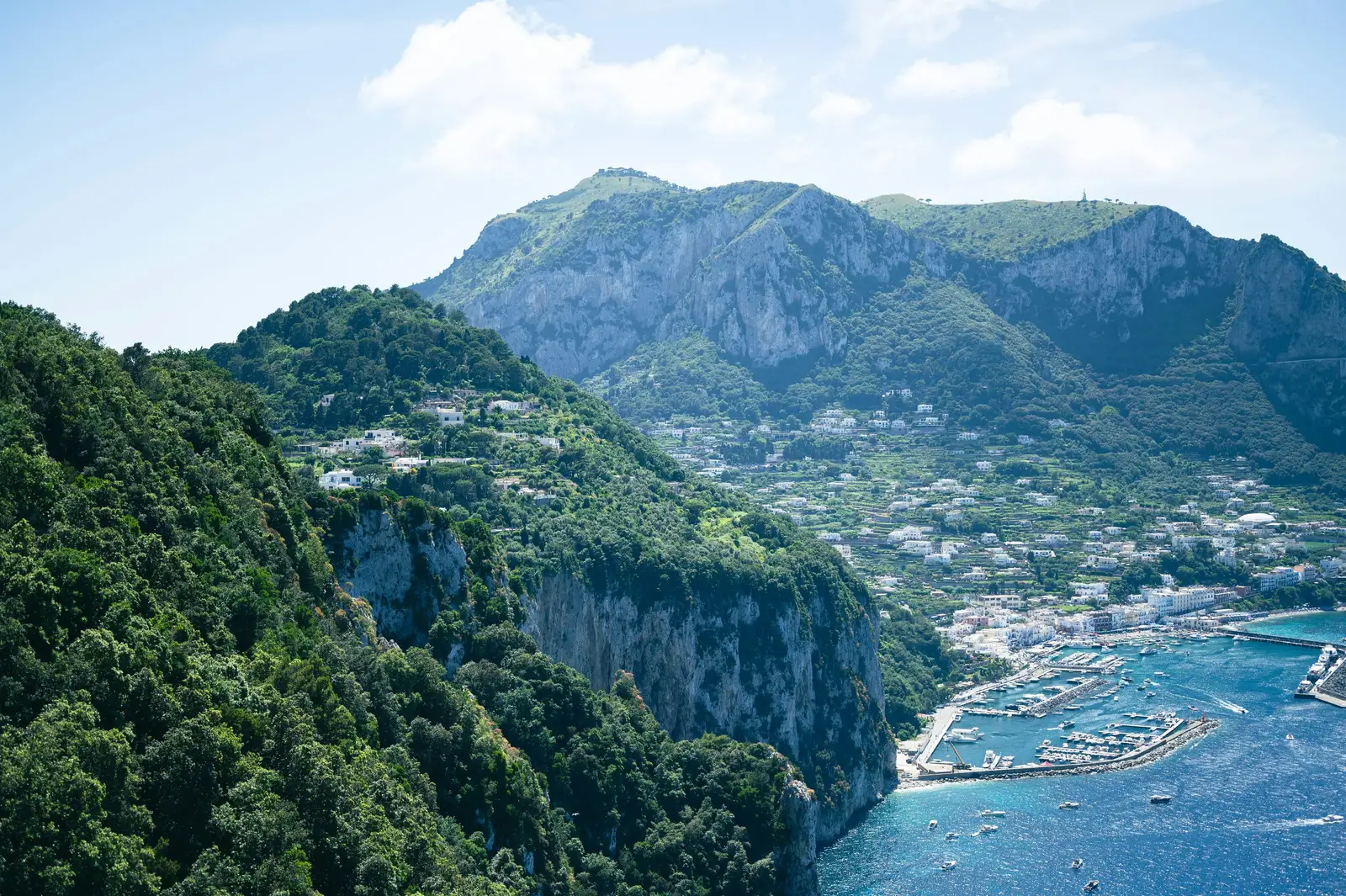
Capri is four square miles with a permanent population of about fourteen thousand and a hotel stock to match. There is no capacity to add, no countryside to build in and no cheaper island next door. In season the island is at or near full, and rates reflect an inventory that cannot grow.
So a guest list of 150 is not a venue problem here. It is a rooms problem.
That inverts the arithmetic couples arrive with. On the Amalfi Coast or in Tuscany, the venue is the number and the accommodation is a line beneath it. On Capri the accommodation is frequently the largest single item in the budget, and it is the one that has to be secured first, because a wedding date without a hundred rooms held against it is not really a date.
Everything else compounds from the same fact. Supplies cross the bay by ferry and then move by trolley, so labour costs more here than anywhere. Flowers, furniture and production all arrive on somebody else’s timetable.
What Capri gives back is that it needs nothing. The island is the design, and a wedding that arrives with a heavy scheme is fighting the only thing anybody came for.
Capri Wedding Venues
Eight properties, described briefly. The hotels are the class that earns its own page eventually, so the capacity by space and the hire belong there.
Read the rooms column beside the seated one, and read it first.
On most pages in this set the rooms column is a footnote. Here it is the argument, because the island cannot absorb a guest list the way a city can. A venue that sleeps its own wedding is worth more on Capri than a venue that seats a larger one.
Grand Hotel Quisisana
The island’s grande dame, opened in 1845 and standing a minute from the Piazzetta with the sea below its gardens. It has 148 rooms, which is more than a quarter of Capri’s serious bed stock in one building, and a Grand Hall seating 150.
Anacapri town hall
The municipality of Anacapri, a thousand feet above the harbour in a Mediterranean building with a garden and an antique cloister. It is a ceremony venue only, and the cloister takes up to 150, which is three times what the town hall down in Capri can hold.
Certosa di San Giacomo
A Carthusian monastery founded in 1371, the oldest building on the island, with cloisters and a church above the sea on the southern side of Capri town. It takes about 100.
Villa Lysis
A neoclassical villa built in 1905 on the cliff at the north-eastern point, above the Bay of Naples, with columns, a garden and a view back to Vesuvius. It holds 80, has no rooms, and is administered by the Comune di Capri, so the hire is set rather than negotiated.
Capri Palace Jumeirah
A hotel high in Anacapri with white arcades, an art collection and a view over the whole bay from the western side of the island. It has 72 rooms and suites, and its seated capacity is worth asking for directly.
Hotel Caesar Augustus
A former villa on the cliff edge at Anacapri, with a terrace that hangs three hundred metres above the sea and is among the most photographed in Italy. There are five terraces to choose between for a ceremony and no published capacities for any of them.
Hotel Punta Tragara
A Le Corbusier design on the point above the Faraglioni, in Capri town, looking straight down at the three rocks. Forty-four rooms and suites, art deco throughout, and quieter than its position suggests.
JK Place Capri
A twenty-two-room house above Marina Grande, at the harbour end rather than up in the town, which makes it the easiest arrival on the island. It suits a small wedding taken whole rather than a large one.
Where to Marry in Capri: Two Towns, Two Town Halls
The island is four square miles and it is two municipalities, and that fact decides more about a Capri wedding than any view does.
Capri town is the one people picture: the Piazzetta, the funicular up from the harbour, the shopping streets and the cliffs to the Faraglioni. The Quisisana, the Certosa, Villa Lysis and Punta Tragara are all here. It is denser, busier and closer to the boats.
Anacapri is the higher half, a thousand feet up the western side, reached by a road of switchbacks or by chairlift to Monte Solaro. It is quieter, greener and less visited, and the Capri Palace and Caesar Augustus are both here.
Marina Grande is the harbour, where everything and everyone lands. JK Place sits above it.
Then the thing almost nobody mentions until it is too late to use.
The two towns have separate town halls with separate ceremony rooms, and they are not the same size. Capri’s marriage hall, in a courtyard off the Piazzetta, takes about 50. Anacapri will marry you in its wedding hall, its garden or an antique cloister, and the cloister holds 150.
Fifteen minutes up the hill triples the number of people who can watch you get married.
For a wedding of 80 or more that wants the legal ceremony in front of everybody rather than a symbolic one, that is the whole decision, and it should be made before a venue is chosen rather than after.
Can You Legally Marry in Capri?
Yes, in either municipality, and the choice between them is a capacity decision rather than an aesthetic one.
Capri town hall sits just off the Piazzetta. You cross the square and go through into a quiet courtyard, and the marriage hall behind it is simple and elegant and holds about 50 people.
Anacapri town hall is a Mediterranean building high on the western side with a garden and an antique cloister, and it will take up to 150.
That gap is the largest ceremony-capacity difference between two adjacent municipalities anywhere on this site, and it exists on an island you can cross in a quarter of an hour.
The paperwork is the standard Italian set: a nulla osta from your own embassy stating there is no impediment, passports, birth certificates, sworn translations into Italian, and apostilles where documents were issued outside the EU. Allow three to six months, and an interpreter is required.
For context on where this sits nationally, Rome will marry you in a room seating twenty and Florence in one seating 240. Anacapri’s 150 is at the generous end, which is a strange thing to be able to say about a village on a cliff.
The Certosa and Villa Lysis are both municipal property, which raises a question worth putting to the comune early: whether a civil ceremony can be performed at either rather than only at the town hall. It is not something to assume, and the answer would change the day.
Planning a wedding in Capri?
INQUIREMusic Curfew and Noise in Capri
Set by the comune, and on Capri that means asking the right one of two.
Neither is generous, and the reason is the island rather than the rules. Four square miles of limestone with cliffs on every side reflects sound rather than absorbing it, the towns are built tightly up their hillsides, and people live above and behind every venue. There is no equivalent here of a Tuscan villa with a field on all sides.
Capri town is the denser of the two and Anacapri the more spread out, which generally means the higher village is the more forgiving.
Ask for the hour in writing at contract stage, confirm which comune the venue falls in, and ask separately about live music against amplified sound.
Then the piece of Capri timing that has nothing to do with licences. The last public boats leave in the evening, and after them the island belongs to the people staying on it. That is the opposite of the problem the Italian lakes have, where the last launch ends the night. Here, if your guests are sleeping on Capri, nobody is going anywhere and the constraint is purely the noise rule.
Getting Guests to Capri
There is no airport and there is no bridge. Everything comes by sea, and that single fact should shape the schedule.
Naples Capodichino is the airport, with good European connections and some transatlantic service, about twenty minutes from the Naples ferry terminals. From there it is roughly 50 minutes by hydrofoil to Marina Grande.
Sorrento is the shorter crossing at 20 to 25 minutes, and for guests already on the Amalfi side it is the better route.
Private boat transfer is the third option and the one we use for the wedding party and anyone on a tight connection. It costs more and it does not queue.
Now the part that has to be planned rather than hoped. Crossings are weather-dependent, and services from both ports are cancelled or curtailed when the sea gets up. It is not common in summer and it is not rare either.
So we do not let guests arrive on the morning of the wedding. The rule is that everybody is on the island the day before, minimum, and that suppliers coming from the mainland cross a day earlier still. A wedding that depends on a Saturday morning hydrofoil has built a single point of failure into itself for no reason.
Once on the island there are no cars for visitors. Guests move by funicular from the harbour, by small open taxi, or on foot, and luggage moves by porter. It is charming and it is slow, and a hotel five minutes away on a map can be twenty with bags.
Season, Weather and the Day-Trippers
April to October, and the season is set by the ferry timetable as much as by the weather. Services thin out sharply at both ends, and a wedding in March or November is planning around a boat schedule that may not be there.
June and September are the two we push.
July and August bring the heat and the crowds, and Capri’s crowds have a shape worth understanding. The island receives a very large number of day visitors who arrive on the morning boats and leave on the evening ones, so between roughly ten and five the Piazzetta and the main streets are full, and after the last departures the island empties and becomes a village again.
That daily rhythm is a gift to a wedding, and it is why Capri weddings are evening weddings.
A ceremony at six and dinner at eight puts your guests on an island that has just been handed back to the people staying on it. The photographs everyone wants of empty streets and quiet terraces are taken after the day boats have gone, not before.
September is the month we would take. Warm sea, thinner crowds, the timetable still full, and a low sun that turns the cliffs the colour of the stone they are.
Where Guests Stay in Capri
This is the first thing to solve and the reason a Capri wedding needs a longer runway than most.
The island’s hotel stock is small, good and expensive, and it does not grow. In season the better properties are booked a year ahead, and there is no overflow: no budget tier, no countryside, no next town along. If your guest list cannot be housed, the date does not work, however available the venue is.
So the order of operations here is the reverse of everywhere else. Rooms first, then venue, then everything else.
The Quisisana at 148 rooms is the one property that can house a substantial share of a wedding on its own, which is a considerable part of why it takes so many of the island’s weddings. Punta Tragara has 44 and JK Place 22, both of which cover a wedding party rather than a guest list.
A realistic plan for 100 guests is three or four hotels across both towns, held early, with the wedding party where the reception is.
The alternative worth raising with a couple early is Sorrento. It is 20 to 25 minutes by boat, has far more stock at every price, and turns the wedding into a crossing for guests rather than a stay. It is not as good, and it is sometimes the difference between a Capri wedding happening and not.
Magic Day Insights
Book rooms before the venue. On Capri the bed stock is the binding constraint, and a date without accommodation held against it is not a date. This is the single biggest difference between planning here and anywhere else in Italy.
Anacapri’s cloister takes 150, Capri’s hall takes 50. If the legal ceremony matters and the guest list is large, that decides which half of the island you are in.
Nobody arrives on the morning. Guests come the day before at the latest, suppliers a day before that. Crossings are cancelled often enough that a Saturday hydrofoil is not a plan.
Design for the evening. The day boats leave around five and the island becomes itself again. Ceremony at six, dinner at eight, and the streets in your photographs are empty because they actually are.
Ask the comune about the Certosa and Villa Lysis. Both are municipal property. Whether the comune will perform the legal ceremony at either rather than at the town hall is a question worth its answer.
Everything moves by trolley. No cars for visitors means porters, funiculars and small open taxis. Load-in takes longer, costs more and needs its own schedule.
Bring less. The island is the design. A heavy floral scheme on a terrace above the Faraglioni is money spent fighting the view.
Sorrento is the pressure valve. Twenty-five minutes by boat, with real hotel capacity at every price. It is worth putting on the table early rather than as a rescue in month six.
Capri Wedding Planner
Magic Day has been established in Naples at 12 Via Giotto since 2015. By appointment only.
Magic Day has planned weddings across 11 countries since 2008, and Capri is the one where the logistics start before anybody reaches the venue. A wedding planner in Capri is running a supply chain across water and a hotel block across an island that has no spare rooms.
What a venue’s hire covers here is the ordinary split: the hotels come with a kitchen and a staff, and the Certosa and Villa Lysis come with a building and a permission. What is different is everything upstream of that. Flowers, furniture, lighting and staff all cross the bay by ferry and then move up the hill by funicular or trolley, on a timetable set by the sea, and there is no possibility of sending a van back for what was forgotten.
Then the two municipalities. Different ceremony rooms, different capacities, different noise hours, both to be asked separately, on an island small enough that most people assume it is one place.
And then the Italian administration, unchanged and sequential: a nulla osta from your embassy, sworn translations, apostilles, an interpreter, and three to six months of it.
Tell us the guest count and the month, and the first thing we will do is find out whether the island can sleep your wedding. Everything else follows from that answer.
Common Questions
How much does a Capri wedding cost?
A Capri wedding runs €60,000 to €300,000 all-in for 40 guests, €150,000 to €700,000 for 80, and from €400,000 at 150. Catering is €250 to €450 a head. What makes a Capri budget different from anywhere else in Italy is that accommodation, not the venue, is usually the largest line. The island has a small and finite bed stock, it is expensive in season, and it books a year ahead. Magic Day weddings in Capri start from €100,000.
Can you legally get married in Capri?
Yes, and the island gives you two choices because it is two municipalities. The town hall in Capri, just off the Piazzetta, has a marriage hall holding about 50. Anacapri, a thousand feet higher, will marry you in its wedding hall, its garden or an antique cloister taking up to 150. You need a nulla osta from your embassy, sworn translations and apostilles, and an interpreter. Fifteen minutes up the hill triples the room.
What are the best wedding venues in Capri?
Eight worth knowing, split between the two towns. The Grand Hotel Quisisana beside the Piazzetta has 148 rooms and a Grand Hall for 150. The Certosa di San Giacomo is the island's 14th-century monastery and takes 100, and Villa Lysis is a neoclassical villa above the sea for 80. Up in Anacapri, the Capri Palace and the Caesar Augustus both sit on the cliff, and Punta Tragara looks straight at the Faraglioni.
What time does music have to stop at a Capri wedding?
It is set by the comune and there are two of them on one small island, so the answer depends on which half you are in. Capri town is dense, built up the hillside and residential behind the shopfronts. Anacapri is more spread out and sits higher. Neither is a place where sound disappears, because the island is four square miles of rock with cliffs that reflect it. Get the hour in writing from the venue and confirm which comune it falls in.
How many guests can you have at a Capri wedding?
Up to 150 in the Grand Hall at the Quisisana, which is the practical ceiling for a reception on the island, and 100 at the Certosa di San Giacomo. Villa Lysis takes 80. The number that binds first is not seats but beds: Capri's hotel stock is small and expensive, so a wedding of 150 is an accommodation exercise across most of the island's good hotels rather than a venue question.
How do guests get to Capri?
By sea, and only by sea. There is no airport and no bridge. Guests fly into Naples Capodichino, then take a ferry or hydrofoil from Naples or Sorrento, which runs about 50 minutes from Naples and 20 to 25 from Sorrento. Private transfer by boat is the alternative. Crossings are weather-dependent and services do get cancelled, so guests arriving on the morning of the wedding is a risk we do not take.
When is the best time to get married in Capri?
June and September. The season runs April to October and it is bounded by the ferries as much as by the weather: services thin out sharply either side of it, and a March or November crossing is not a plan. July and August are hot, extremely crowded during day-trip hours and the most expensive time to house a guest list. September gives you warm sea, a calmer island and a timetable that still works.
Do you need a wedding planner in Capri?
More than almost anywhere. There are no cars for visitors, so everything moves by funicular, small open taxi or porter's trolley, and every crate of glassware has crossed the bay on a ferry first. Add two municipalities with different ceremony rooms, a bed stock that books a year out, and a sea that can cancel your suppliers' crossing. Magic Day has planned weddings across 11 countries since 2008.
Planning a wedding in Capri?
Thank you — we have it.
One of our planners will be in touch personally, usually within one working day.